


Arita Ceramic Vases
These arita ceramic vases bring centuries of Japanese kiln tradition into a room, valued for their painted palettes and substantial forms.

Arita Ceramic Vases
When you search for arita ceramic vases, you encounter works spanning from the seventeenth century through the nineteenth century, encompassing the Edo and Meiji periods. These pieces appear as ginger jars, bottle shapes, spill vases, and larger floor-standing vessels.
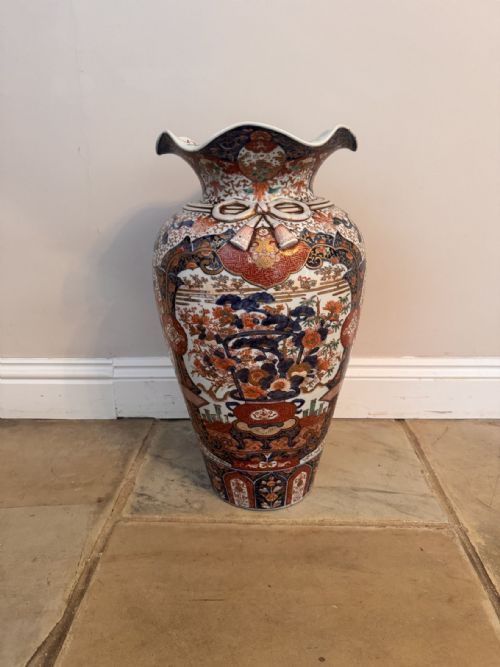
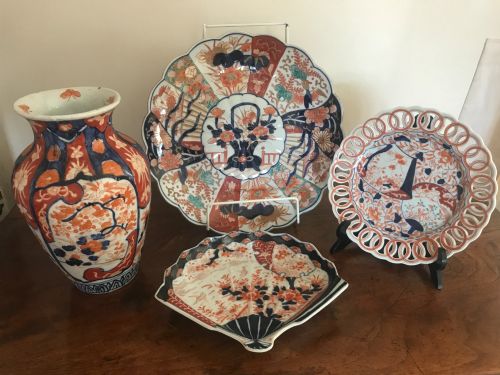
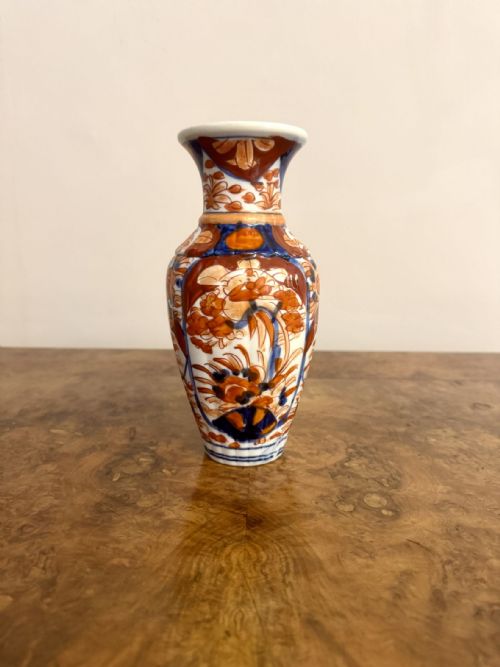
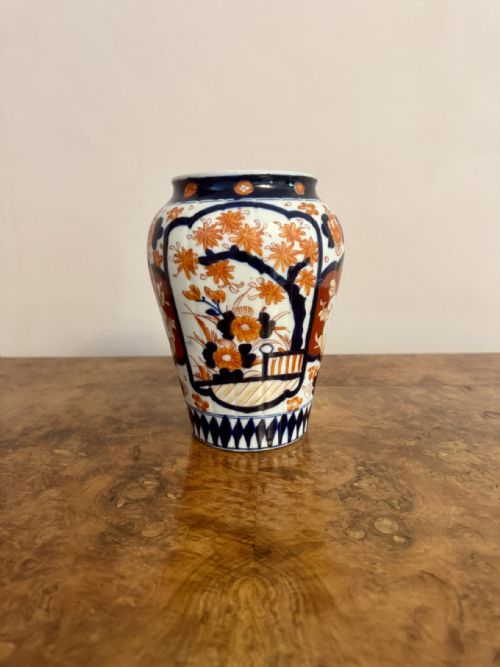
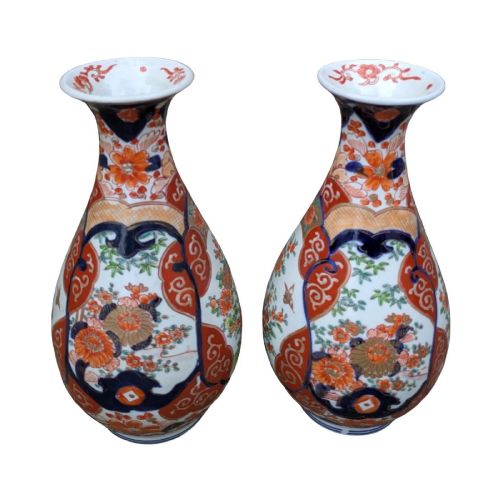
The most common examples on this page date to the nineteenth century and display the rich Japanese Imari palette. Alongside these, earlier pieces from the seventeenth and eighteenth centuries show blue and white designs or Kano style painting.
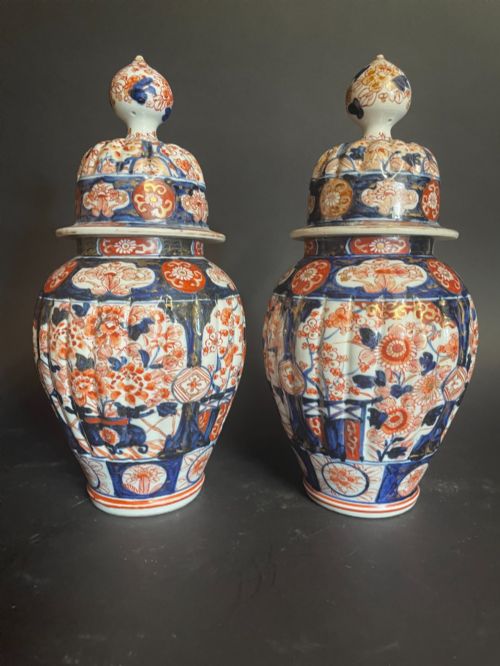
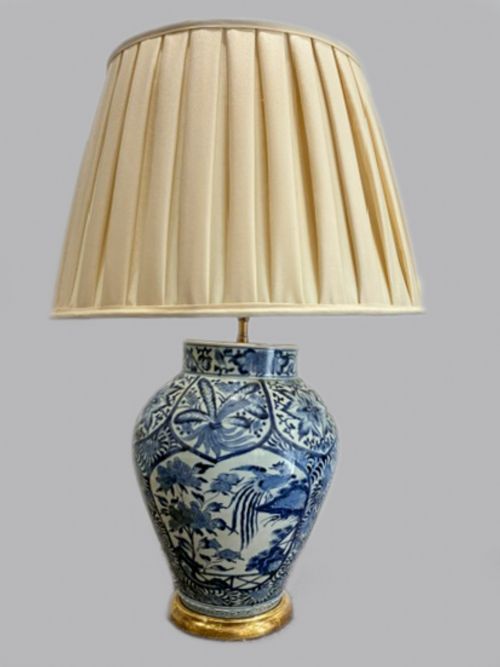
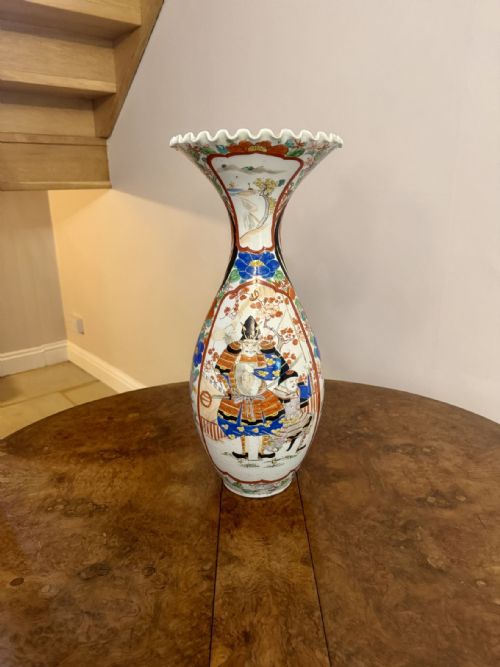
Some items arrive converted to lamps or formed as garnitures of matching jars and covers. The selection ranges from compact wine bottles to tall vessels exceeding ninety centimetres in height.
How they were made
The makers formed these vessels in porcelain, applying glaze and enamel decoration by hand before firing. Many seventeenth and eighteenth-century examples rely on blue and white underglaze pigments, while later pieces incorporate the characteristic Imari palette of iron red, cobalt blue, and gold leaf.
Artisans also integrated other media into certain items, mounting porcelain bodies with brass or placing them on fitted stands. Some surviving examples show adaptation into lamps using silk fabric shades and wiring.
Materials appearing across the inventory include porcelain, glaze, enamel, gold leaf, brass, silk, and gilt fabric.
What varies in quality
Quality in these ceramics rests on the precision of the hand-painted brushwork and the depth of the glaze colours. Pieces from top workshops show crisp detail in the floral and panel designs, whereas lesser examples display hurried or muddy application.
The scale and ambition of the piece also define the tier, with large matched pairs, garnitures of three, and hexagonal forms sitting at the upper end of the range. Surviving lids on jars and original uncompromised forms add weight to a piece.
Fukagawa
The Arita Ceramic Vases Glossary
- Arita
- The Japanese town in Hizen province where porcelain production began in the early seventeenth century. It remains the historical heartland for these wares.
- Imari
- A style of Japanese export porcelain decorated in underglaze blue, iron red, and gilt. The name derives from the port from which the ceramics were shipped.
- Garniture
- A set of three or more matching vases or jars designed to sit together on a mantelpiece or cabinet. They often consist of a central jar flanked by smaller matching vessels.
- Edo Period
- The period in Japanese history lasting from 1603 to 1867, characterised by economic growth and stability under the Tokugawa shogunate. Pieces from this era often show early blue and white or Imari designs.
- Meiji Period
- The era spanning from 1868 to 1912, marked by the opening of Japan to Western trade. Ceramics from this time tend toward larger decorative floor vases and intricate Imari patterns.
Arita Ceramic Vases: Frequently Asked Questions
How do I date an arita ceramic vase?
Dating relies on stylistic clues, such as whether a piece uses early seventeenth-century blue and white motifs or nineteenth-century Imari polychrome enamel. Reference to the Edo or Meiji periods helps place the piece within its historical manufacturing era.
Form and glaze characteristics also guide the timeline, as seventeenth-century bottles and beaker vases differ significantly in weight and painting style from later nineteenth-century floor-standing vessels.
Were these vases made for export?
Many of these ceramics were produced specifically for export to European markets via Dutch and other trading companies. The bold Imari palettes and decorative jars were tailored to Western taste.
At the same time, domestic production ran alongside export wares, though the surviving examples found in trade today frequently reflect the forms that appealed abroad.
What is a garniture?
A garniture is a matched set of three or more vases or lidded jars designed to be displayed together as a decorative unit. These sets often feature a central vessel flanked by smaller matching counterparts.
Finding a complete garniture from the nineteenth century is less common than finding single vases or pairs.
Can I use an antique vase as a lamp?
Several pieces arrive already converted to lamps, having been adapted with electrical fittings while retaining their original porcelain bodies. This practice has a long history among collectors seeking to display antique ceramics in living spaces.
If you choose to convert an unconverted vase, consult a specialist to ensure the mounting does not drill into or damage the porcelain.
What is the difference between Imari and blue and white?
Blue and white arita ceramics rely on cobalt oxide under a clear glaze, creating a monochrome blue design on a white porcelain ground. This style predominates in seventeenth-century pieces.
Imari pieces add iron red enamel and gold leaf over or alongside the cobalt blue, producing a richer, multicoloured surface that became prominent in later periods.