




Arita Blue White Vase
An arita blue white vase brings cobalt painted porcelain from Japan into your home, offering centuries of ceramic history and delicate floral or figurative decoration.
Arita Blue White Vase
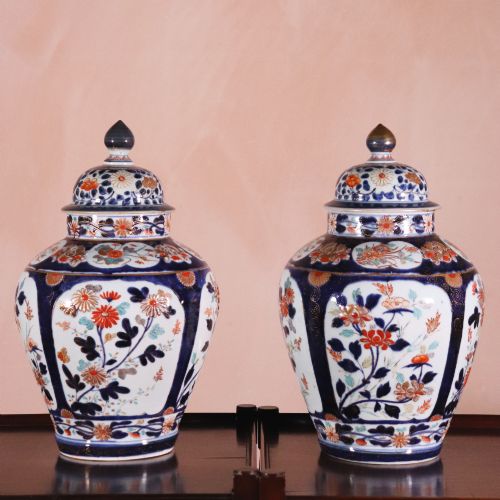
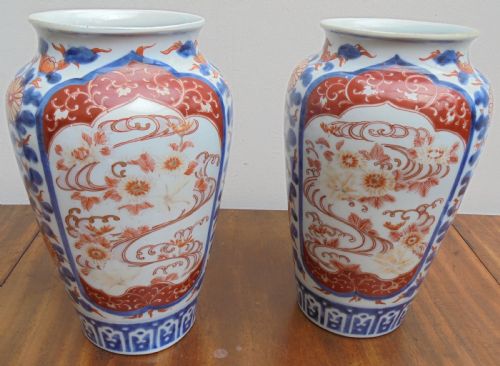
An arita blue white vase represents traditional Japanese porcelain production centred in the Hizen province, spanning from the Edo period through to the Meiji era and the twentieth century. These vessels range from simple wine bottles and trumpet-shaped beaker vases to large lidded temple vessels and grand urns.
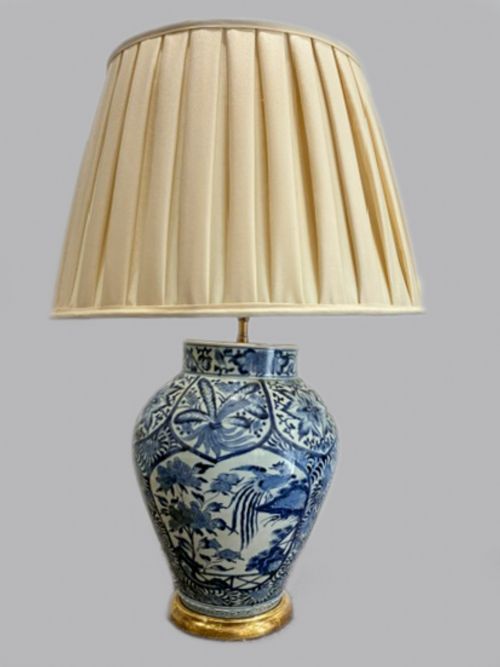
Buyers seeking this phrase encounter pieces dating across multiple centuries, including seventeenth-century creations, eighteenth-century examples with Imari palettes, and nineteenth-century items. Many historic vessels have undergone conversion into table lamps with brass fittings, retaining their original porcelain bodies while serving modern lighting functions.
The forms vary considerably across the selection, featuring slender bottle shapes, robust jars, and tall display pieces. Each item reflects the evolving aesthetic demands of both domestic Japanese markets and international export trades during successive imperial periods.
How they were made
The creation of these objects relies on fine porcelain clay shaped on the potter's wheel or formed in sections, then fired at high temperatures. Artisans apply cobalt oxide pigment beneath a transparent glaze to achieve the signature blue and white coloration during the kiln firing.
Later decorative additions sometimes incorporate enamel pigments and giltwood accents over the fired glaze, particularly in Imari style variations. Additional mounting materials such as brass and silk occasionally appear on pieces adapted into lamps or fitted with custom display bases.
Arita Blue White Vase Retail Price Guide 2026
Typical asking prices for arita blue white vase among the pieces listed under this phrase on Sellingantiques today, from the lower quarter to the upper quarter. They describe what is for sale here now, not the wider market.
Several centuries ago, a quiet Japanese kiln fired a simple wine bottle that eventually crossed oceans to spend its retirement illuminating a modern writing desk.
What varies in quality
The refinement of the cobalt painting distinguishes finer works, where brushwork shows exceptional control, clarity, and depth beneath the glaze. Superior porcelain bodies display smooth surfaces with minimal firing imperfections and well-balanced proportions.
Historical alterations, such as conversion into lamps or the addition of mounts, influence the integrity of the original vessel. Pieces retaining their original lids and untouched porcelain structures command greater interest among collectors of historic ceramics.
The Arita Blue White Vase Glossary
- Arita
- A Japanese town and production centre renowned for pioneering porcelain manufacture in the seventeenth century. Kilns in this region supplied both domestic users and European export markets.
- Edo period
- The historical epoch in Japan lasting from sixteen hundred and three to eighteen hundred and sixty-eight. This era encompasses the early development and classic phases of Arita porcelain.
- Meiji period
- The era of Japanese history spanning from eighteen hundred and sixty-eight to nineteen hundred and twelve. Production during this time often featured bolder scales and elaborate decorative programmes.
- Imari
- A style of Japanese export porcelain characterised by a palette of underglaze blue combined with iron red and gilt. Named after the port from which these wares were shipped.
- Beaker vase
- A straight-sided vessel shape widening towards the rim, often inspired by ancient Chinese bronze ritual vessels. This form appears frequently in early Arita blue and white assemblages.
Arita Blue White Vase: Frequently Asked Questions
How do I date an arita blue white vase?
Dating relies on stylistic markers, potting techniques, and the character of the cobalt pigment used beneath the glaze. Seventeenth-century examples often exhibit specific forms like trumpet beakers, while later nineteenth-century pieces display heavier potting and denser decoration.
Changes in trade patterns and kiln technology across the Edo and Meiji periods further help narrow down the decade of production for individual pieces.
Were these vessels made for export?
Many of these ceramics were produced specifically for export to European markets through trading companies operating in Asia. This international trade influenced the shapes and decorative motifs adopted by the Japanese kilns.
Export wares often catered to Western preferences for large display pieces and lidded temple jars suitable for stately interiors.
Can converted lamp aritas be restored?
Pieces converted into table lamps frequently retain their primary porcelain bodies, though wiring holes or brass fittings may be present. Professional conservators can sometimes address alterations, but many buyers choose to preserve the lamp conversion as part of the object's history.
Evaluating a converted piece involves checking how securely the mountings attach to the ceramic without causing structural damage.
What is the difference between Arita and Imari?
Arita refers to the geographical production region where the porcelain clay was mined and fired, encompassing various decorative styles. Imari is a specific aesthetic subcategory originating from the same kilns that incorporates red enamel and gilding alongside blue and white.
All Imari wares from this tradition are Arita porcelain, but not all Arita pieces feature the polychrome Imari palette.