

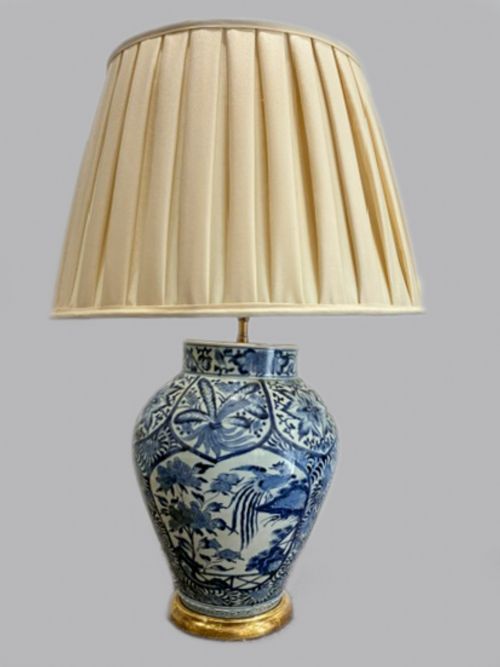
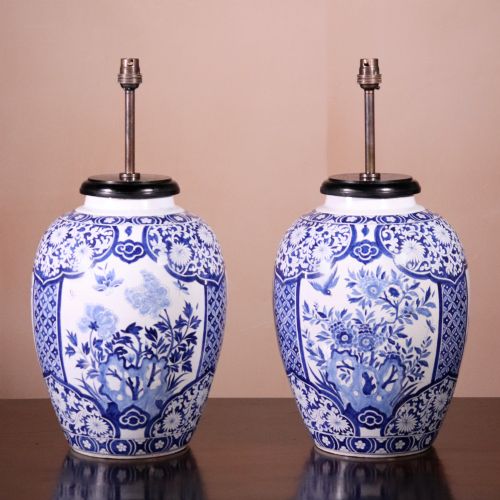


Asian Blue White Lamp
These asian blue white lamp selections are historic vases and jars brought into the electric age, offering deep indigo decoration on white porcelain.
Asian Blue White Lamp
An asian blue white lamp is typically a converted porcelain vessel from the seventeenth, eighteenth, or nineteenth centuries, mounted as a table lamp. The forms include jars, twin-handle vessels, and tall vases originating from China and Japan.
Buyers encounter single pieces and matched pairs bearing traditional painting under a clear glaze. Many examples reflect the export trades and stylistic influences such as Qing Dynasty production, Japanese Edo and Meiji periods, and later Chinoiserie interpretations.
How they were made
The bodies are formed from porcelain, painted with cobalt blue pigment beneath the glaze before high-temperature firing. Later adaptations integrate mounts in brass, wood, and giltwood to support electrical fittings.
Many items incorporate fabric and silk shades, paired with structural elements like gilded wood bases. The conversion process preserves the antique ceramic body while adapting the vessel for domestic lighting.
Asian Blue White Lamp Retail Price Guide 2026
Typical asking prices for asian blue white lamp among the pieces listed under this phrase on Sellingantiques today, from the lower quarter to the upper quarter. They describe what is for sale here now, not the wider market.
The inventory spans the seventeenth century through to nineteen hundred.
What varies in quality
Quality rests in the crispness of the cobalt painting and the integrity of the porcelain body. Finer examples display balanced proportions, rich pigment depth, and careful preservation of the original antique surface.
The standard of conversion work and the suitability of associated wooden bases or metal mounts influence the overall character. Matching pairs require consistency in both the ceramic forms and the hand-painted decoration.
The Asian Blue White Lamp Glossary
- Arita porcelain
- Japanese ceramic ware produced around Arita, prominent in export trade during the Edo period. It forms the basis of many early lamp conversions.
- Qing Dynasty
- The final imperial dynasty of China, lasting from the seventeenth to the early twentieth century. Pieces from this era often feature detailed blue and white decoration.
- Meiji Period
- An era of Japanese history spanning the late nineteenth and early twentieth centuries. Items from this time frequently demonstrate refined export craftsmanship.
- Celadon
- A term for ceramics featuring a pale green glaze, occasionally found alongside blue decoration. It denotes a specific high-fired glaze tradition.
Asian Blue White Lamp: Frequently Asked Questions
Are these lamps converted from old vases?
Most pieces begin as historic porcelain vases, jars, or vessels created centuries ago. Artisans later adapt these bodies into table lamps by adding electrical components and appropriate mounts.
This conversion allows antique ceramics to serve a practical purpose in contemporary interiors while retaining their original decorative surfaces.
How do I date an asian blue white lamp?
Dating relies primarily on the style, potting characteristics, and cobalt pigment of the porcelain body itself. Historical markers include specific eras such as the Edo period or the Qing Dynasty.
Secondary mounts and electrical fittings usually reflect later nineteenth or twentieth-century adaptation work rather than the age of the ceramic.
Do matching pairs exist?
Matched pairs appear frequently among export porcelain conversions, having been created together as decorative jars or vases. These pairs share identical vessel forms and similar hand-painted cobalt motifs.
Finding a balanced pair enhances the visual presence when placed on side tables or mantelpieces.
What styles are common?
The selection encompasses Chinese export designs and Japanese Arita or Yokohama wares. Styles span from seventeenth-century forms to late nineteenth-century productions.
Chinoiserie interpretations also appear, reflecting European fascination with East Asian ceramic traditions.