




Architectural Wood Column
These architectural wood column pieces range from salvaged supports to mirrors framed by classical orders, offering structural presence and decorative depth to a room.
Architectural Wood Column
The selection encompasses items from the nineteenth century alongside early twentieth-century examples, shifting between simple turned profiles and ornate carved capitals. Pieces frequently emerge in pairs, reflecting their original architectural deployment flanking doorways, mantels, or windows.
Origins span English, French, Italian, and Scandinavian workshops, demonstrating regional variations in timber choice and surface finish. Some items retain original paint, gilding, or faux finishes designed to mimic stone or more costly marbles.
Materials and construction methods
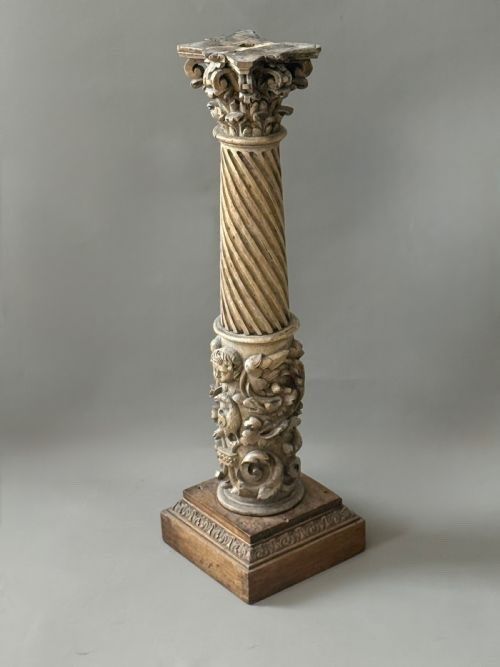
Maker execution relies on dense hardwoods such as mahogany, oak, beech, and walnut, often selected for stability during turning and carving. Workshops shaped timber on lathes for cylindrical shafts or utilised hand chisels to render intricate details on Corinthian and Ionic capitals.
Surface treatments involve applied gesso beneath gold leaf, traditional oil paint, or transparent varnishes that highlight natural grain. Assemblages sometimes combine carved wooden elements with stone bases, iron brackets, or brass mounts to achieve stability and visual contrast.
Materials recorded in current inventory include gesso, giltwood, brass, and painted pine alongside solid hardwoods.
Factors of distinction
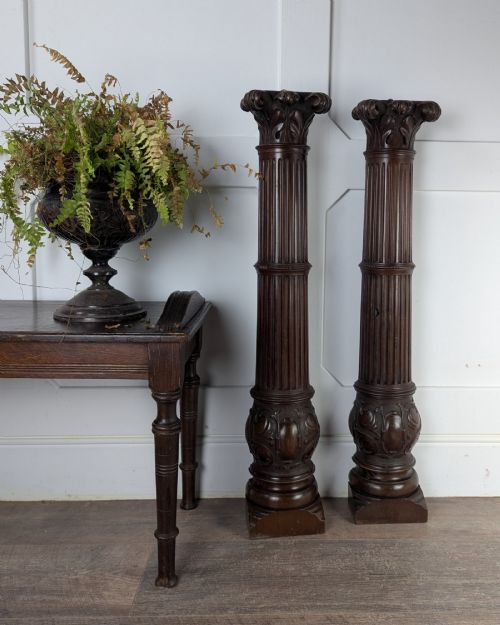
Quality rests upon the crispness of the hand carving, particularly in the acanthus leaves and volutes of classical capitals. Deeply undercut carving demonstrates superior hand skill compared to shallow or mechanically shaped mouldings.
Surface integrity also dictates distinction, as original undisturbed paint, patinated gilding, or rich timber grain far surpasses later repainting. Completeness of pairs and the survival of original bases or matching capitals elevate the architectural integrity of the piece.
Marguerite
The Architectural Wood Column Glossary
- Capital
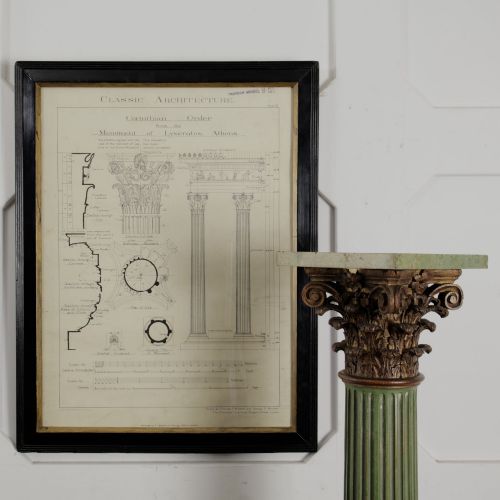
- The topmost member of a column, usually decorated with carved plant motifs or scrollwork. It visually supports the weight above and defines the architectural order.
- Fluted
- Surface decoration formed by parallel vertical grooves cut into the shaft of a column. This technique adds vertical emphasis and visual lightness to heavy timber.
- Gesso
- A plaster-like mixture applied to wood surfaces as a smooth base for gilding or paint. It allows for sharp relief details beneath gold leaf.
- Pier mirror
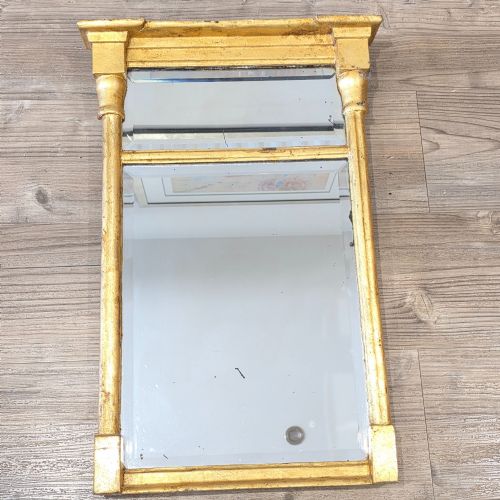
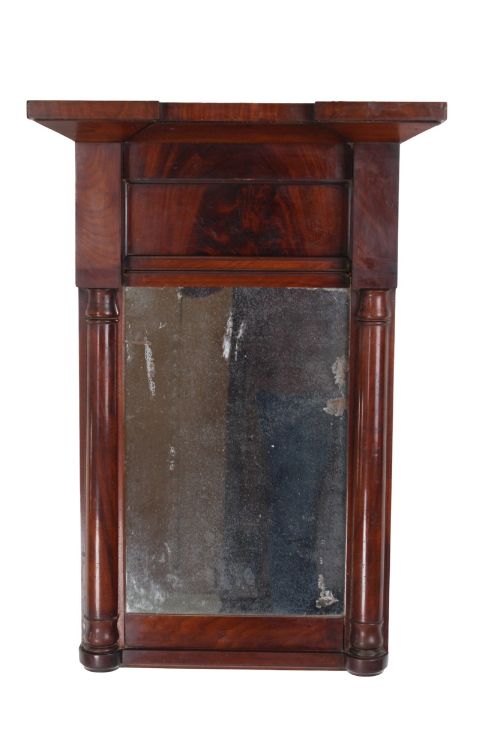
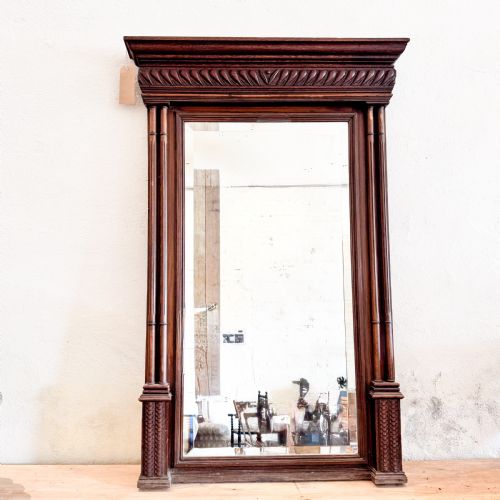
- A tall narrow glass designed to hang on the wall between windows, frequently flanked by attached wooden columns or pilasters. These pieces maximise light within nineteenth-century reception rooms.
- Portico clock
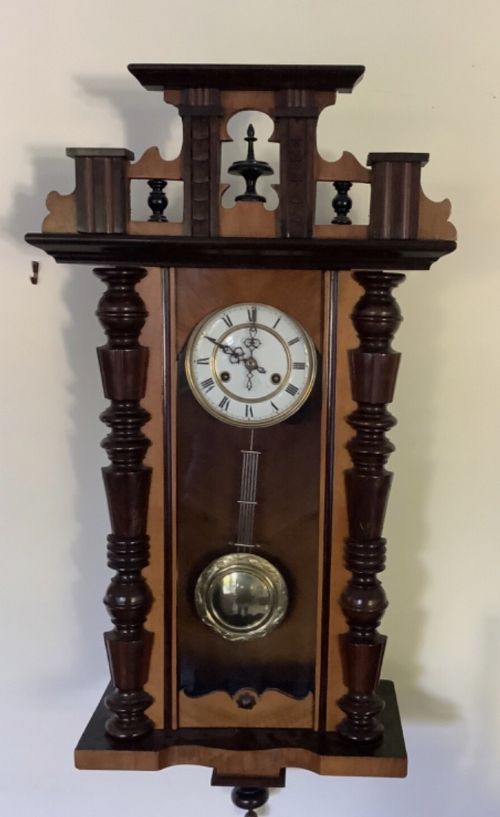
- A mantel clock constructed in the architectural style of a classical portico, featuring supporting columns framing the dial. They gained popularity during the early nineteenth century.
Architectural Wood Column: Frequently Asked Questions
What is an architectural wood column?
An architectural wood column is a structural or decorative wooden support carved in classical styles such as Corinthian or Ionic. These items derive from buildings, furniture parts, or decorative architectural salvage.
They appear in domestic interiors either as standalone sculptural objects or integrated into mirror frames and wall panelling to introduce classical proportions.
How were these columns originally used?
Historic columns served structural roles supporting porticos, mantelpieces, and doorways, or decorative functions as bed posts and clock cases. Pair configurations typically flanked significant architectural focal points.
Today, interior placement mirrors these historical applications, using half columns against walls or full columns to define spatial transitions within rooms.
How do I style an architectural column at home?
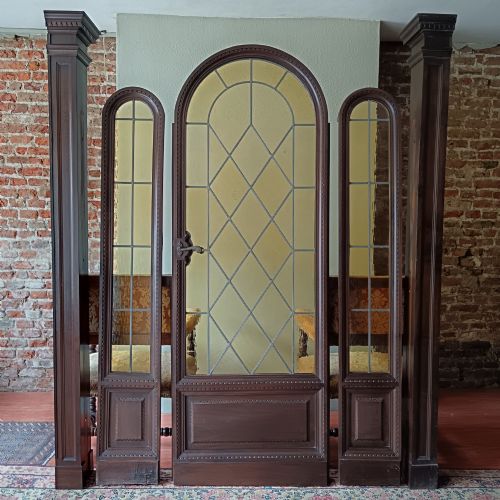
Columns mount directly to walls or stand on floors depending on their original form, such as half columns functioning alongside overmantel mirrors. Pairing matching elements creates symmetry on either side of a doorway or fireplace.
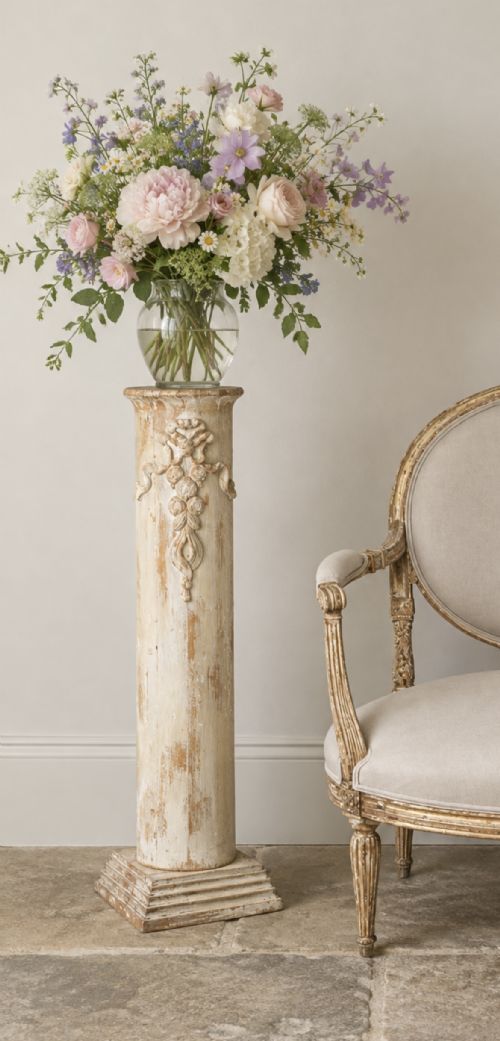
Placing monumental pillars as standalone display pedestals or lamp bases highlights their sculptural carved timber details.
How can I tell the period of a wooden column?
Dating relies on timber species, tool marks left by hand chisels or lathes, and the style of the capital carving. Nineteenth-century examples often display machine-turned shafts combined with hand-finished acanthus leaves.
Surface finishes like early gesso, crackled paint, and oxidation on the wood provide further chronological markers distinguishing nineteenth-century work from later revivals.