




Architectural Slate Clock
An architectural slate clock brings heavy Victorian presence to a mantelpiece, built to mimic classical buildings using solid stone.

Architectural Slate Clock
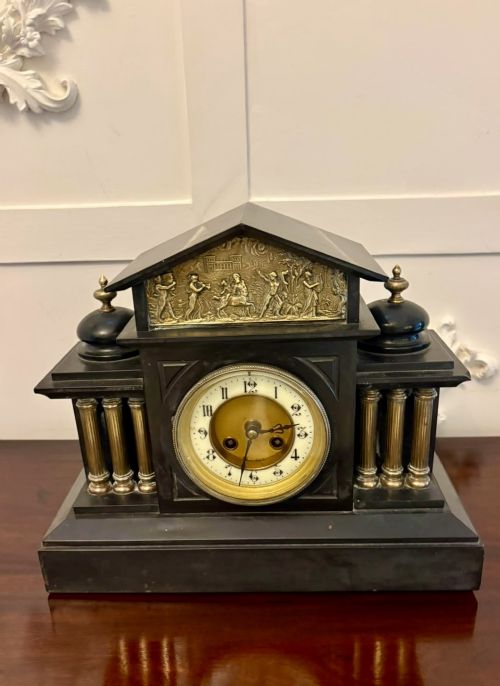
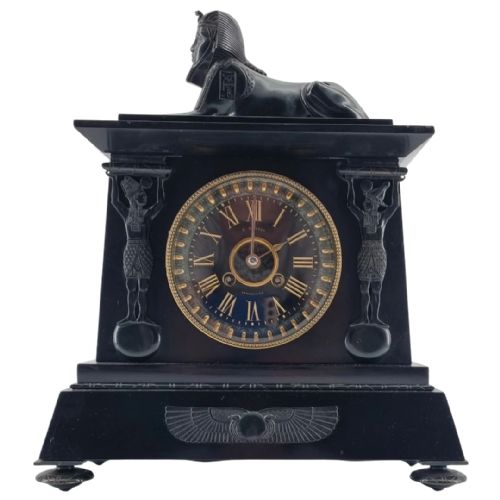
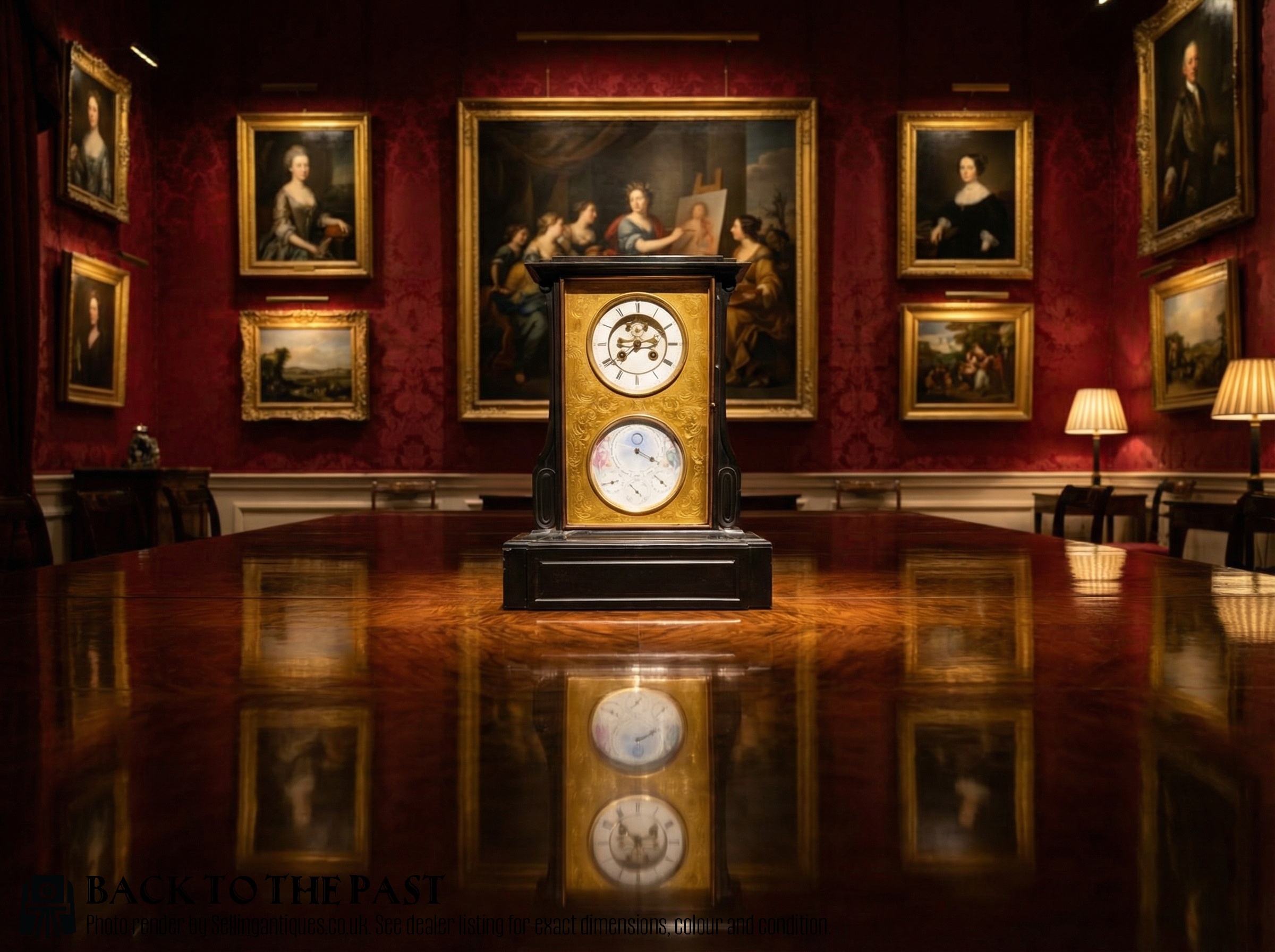
An architectural slate clock is a robust timepiece designed during the nineteenth century, often taking the form of a miniature classical building or temple. These pieces draw upon styles such as Victorian Classical Revival, Neoclassical, and Egyptian Revival to create a striking heavy ornament.
The versions most commonly found here originate from the Victorian period, spanning decades from 1860 to 1890, alongside examples originating in France and Belgium. They frequently appear as large mantel clocks, sometimes accompanied by matching garniture sets.
Makers recorded in these pieces include Philippes Paris, Baby and Jannings, and D. Munsey of Cambridge. Each piece utilises solid dark stone to project an air of substantial domestic authority.
How they were made
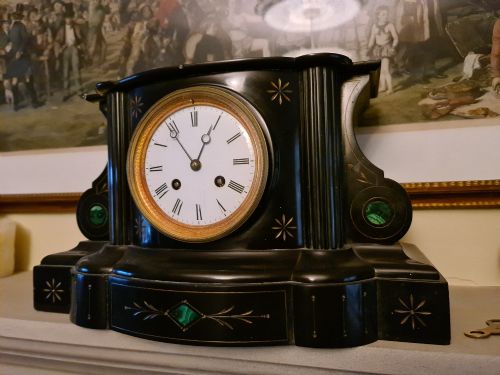
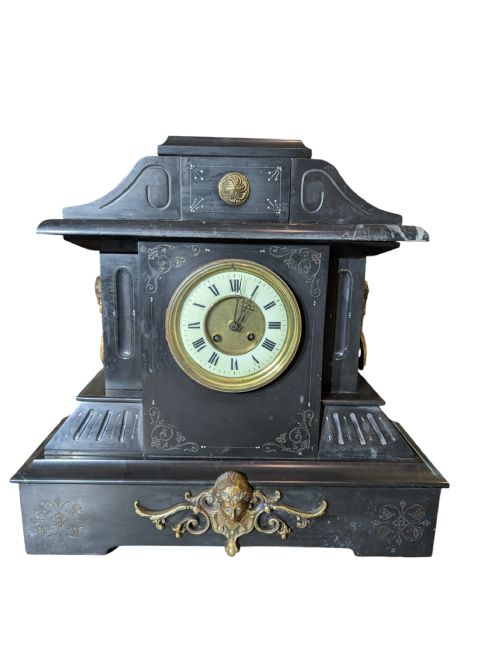
These clocks rely on heavy black slate and black marble as structural foundations, often accented with contrasting marble inlays or faux marble finishes. Workshops utilised these dense materials to carve pediments, columns, and plinths that mirror stone architecture.
Gilt brass, bronze mounts, and glass face covers provide decorative contrast against the dark stone body. Movements are typically eight-day mechanisms, paired with enamel dials to mark the hours.
Listings feature items dated across the nineteenth century, with strong representation from the 1860s and 1880s alongside Victorian Classical Revival styles.
What varies in quality
Quality separates simple stone boxes from elaborate architectural monuments through the ambition of the stonework and the presence of specialised mounts. Finer examples incorporate bronze or gilt brass details, inlaid marble patterns, and distinct classical proportions.
The inclusion of named makers, such as Philippes Paris or D. Munsey, elevates a piece beyond standard provincial production. The integration of complex movements, like perpetual calendars, further distinguishes the top tier of these clocks.
Philippes Paris·Baby and Jannings·D. Munsey of Cambridge
The Architectural Slate Clock Glossary
- Slate
- A fine-grained metamorphic rock used as the primary dense body for these heavy mantel clocks. It takes a smooth dark polish that imitates stone architecture.
- Garniture set
- A clock accompanied by matching side ornaments, such as urns or vases, designed to sit together on a mantelpiece. These matched groupings complete a decorative scheme.
- Pediment
- A triangular or curved architectural gable placed above the clock face, mimicking classical temple design. It forms the defining roofline of the piece.
- Enamel dial
- A fused glass-on-metal face carrying painted numerals for the hours. These dials provide a crisp, durable surface for reading the time.
Architectural Slate Clock: Frequently Asked Questions
How heavy is an architectural slate clock?
These clocks possess substantial weight due to their solid stone construction. They require a sturdy mantelpiece or shelf capable of supporting heavy loads.
Buyers should prepare for a two-person lift when positioning these pieces in a room.
What styles do these clocks follow?
The designs draw heavily from Victorian Classical Revival, Neoclassical, and Egyptian Revival architecture. Pediments, columns, and temple facades dictate the outward appearance.
Details often reference ancient stone buildings translated into domestic Victorian ornaments.
How do eight-day movements work?
An eight-day movement requires winding approximately once a week using a matching key. This mechanical system drives the clock hands steadily across the enamel dial.
These reliable mechanisms were standard inclusions in better quality nineteenth-century timepieces.
Where were these clocks made?
Origins span British workshops, French houses, and Belgian quarries. Provincial makers and London retailers both retailed these substantial stone pieces.
Continental imports often feature distinct French or Belgian marble and slate characteristics.