




Architectural Landscape Canvas
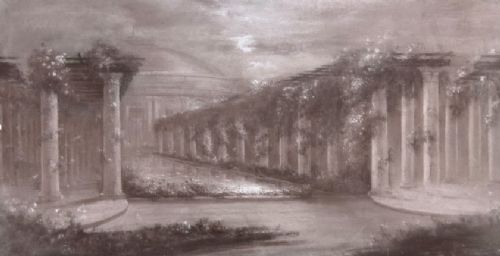
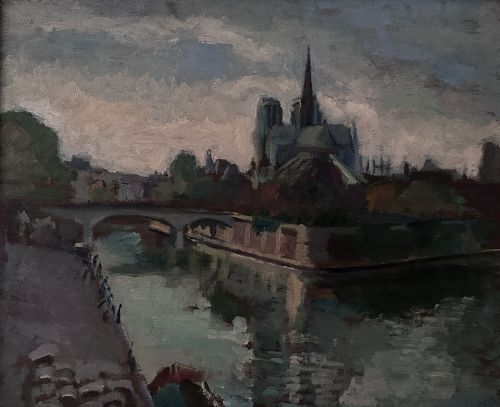
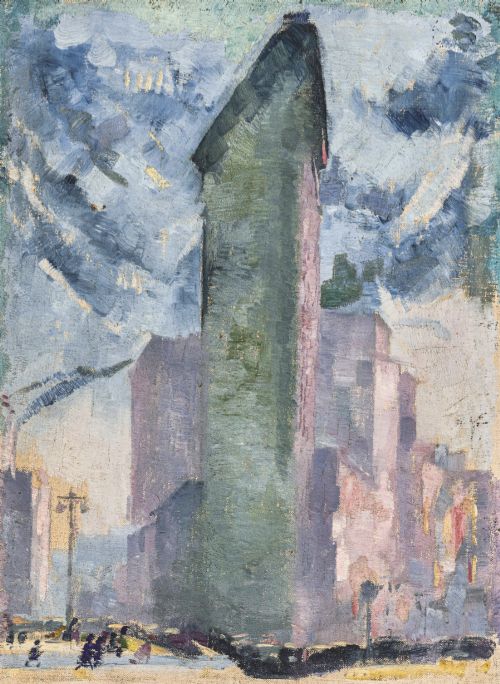
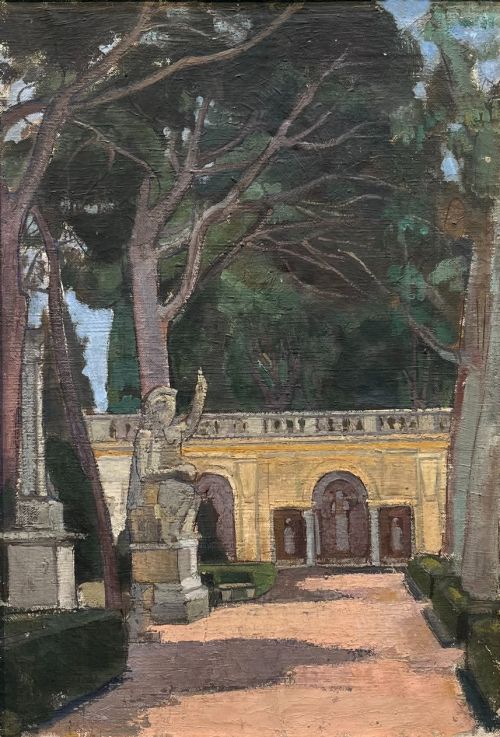
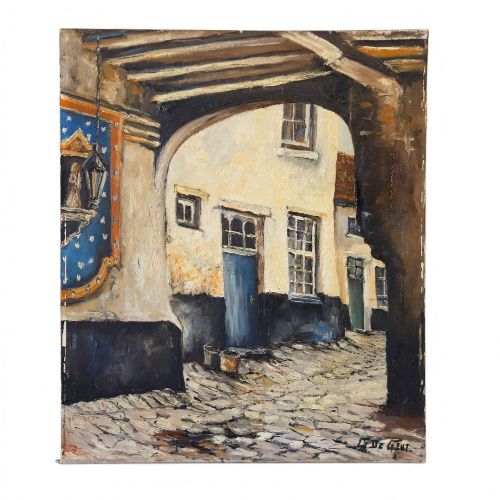
When you search for architectural landscape canvas, you are looking at oil paintings on canvas depicting buildings, streets, and city views.
Architectural Landscape Canvas
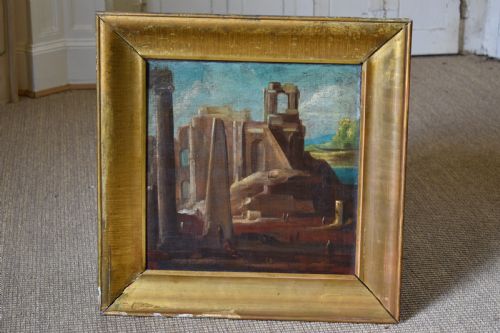
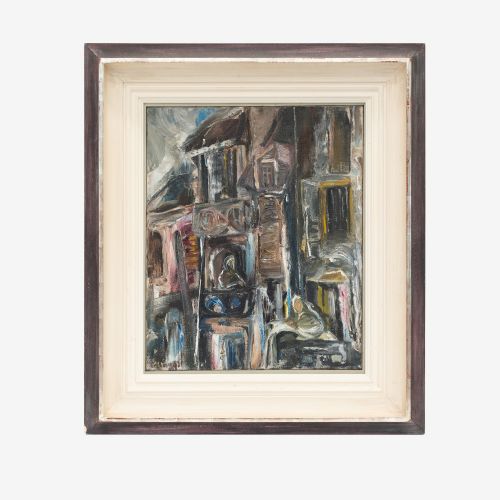
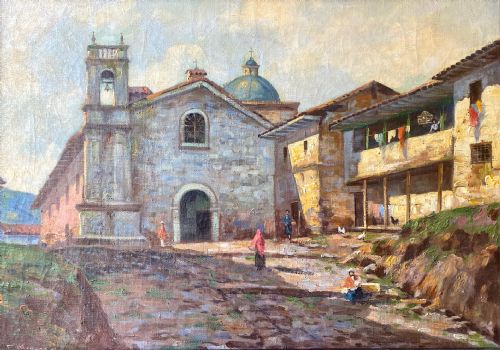
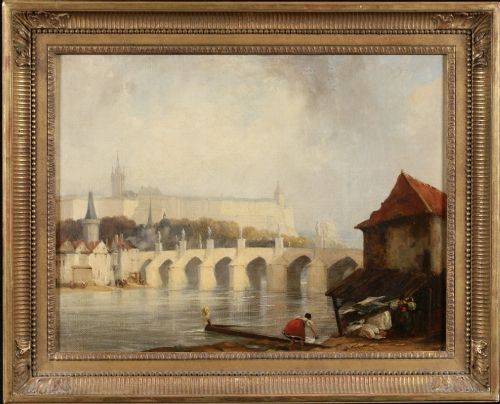
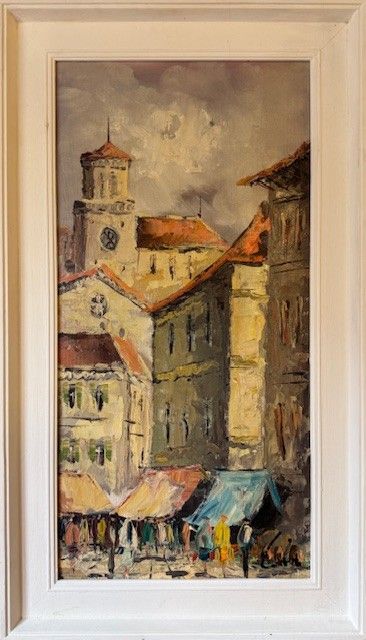
An architectural landscape canvas captures cityscapes, town scenes, bridges, and historic buildings rendered in oil paint on canvas supports. These works range from grand continental vistas and Italianate landscapes to specific street scenes and town squares.
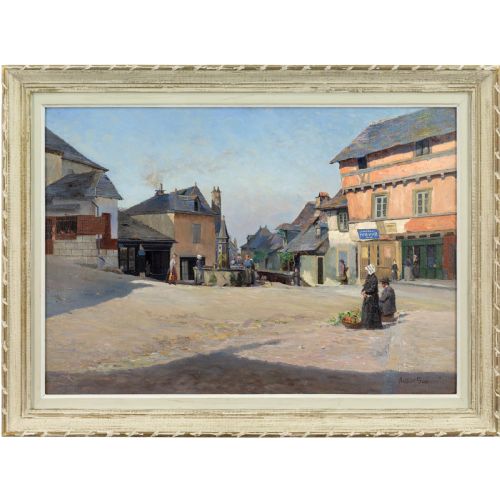
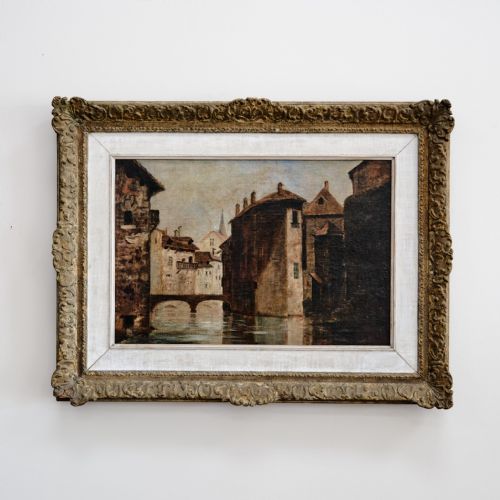
The pieces on this page span several centuries, with a strong representation of nineteenth-century views and twentieth-century interpretations. Buyers frequently encounter French street scenes, Venetian canals, and English townscapes produced across the Victorian and mid-century periods.
Makers and painters in this category include named artists as well as works attributed to various regional schools. The subjects bridge natural scenery and urban development, recording historical architecture through impressionist, post-impressionist, and expressionist lenses.
Materials and Construction
These works are primarily executed in oil paint upon stretched canvas, occasionally incorporating impasto texture for architectural depth. Wooden stretchers support the fabric ground, while period framing frequently involves gesso and gold leaf over giltwood.
Artists utilised traditional brushwork alongside charcoal underdrawings and palette knife applications to define stone facades, bridges, and figures. The physical support relies on durable woven canvas attached to wooden frames, with some surviving examples retaining original paper labels on the stretcher.
Listings feature works created across the nineteenth and twentieth centuries, utilising oil paint on canvas.
Assessing Quality and Execution
Quality in an architectural landscape canvas rests upon the precision of perspective, the handling of light on stone surfaces, and the compositional balance between structures and open space. Superior examples demonstrate confident brushwork that captures the solidity of buildings alongside atmospheric depth.
Condition of the canvas surface, stability of the oil paint layer, and the originality of the frame contribute significantly to the standing of a piece. Works retaining their original giltwood and gesso frames alongside well-preserved paint layers represent the stronger tier of survivors.
Arthur Gué·Alfred Wolmark·Lilian Colbourn·Ron Folland·Cornelis Christian Dommersen·Frederick Tully Lott·William George Meadows·Armand Guillaumin·Job de Vogel·Pieter Cornelis Steenhouwer·Samuel Sidley
The Architectural Landscape Canvas Glossary
- Oil on Canvas
- A painting medium where pigments are bound with drying oils and applied to a woven fabric support. This combination allows for rich colour blending and textured impasto surfaces.
- Impasto
- Paint applied thickly to a canvas, standing out from the surface so that brush or palette-knife marks remain visible. It is frequently utilised to render the texture of stone and masonry in architectural scenes.
- Giltwood
- Wood carved and prepared with gold leaf or gilt finish, commonly used for traditional picture frames. It provides an ornate border that complements the period of the painting.
- Gesso
- A plaster-like mixture applied to wood or canvas as a base for painting or gilding. In framing, it forms the sculpted relief beneath the gold leaf.
- Post-Impressionism
- An art movement developing roughly from the late nineteenth century that extended impressionism while rejecting its limitations. Artists focused on symbolic content and formal order rather than pure visual recording.
Architectural Landscape Canvas: Frequently Asked Questions
What periods do these paintings cover?
The works span from the late eighteenth century through the nineteenth and twentieth centuries. Mid-century examples and Victorian pieces are particularly common.
Earlier works often reflect romantic or academic traditions, while mid-century pieces showcase impressionist and expressionist approaches to urban scenery.
How should I care for an oil painting on canvas?
Keep the canvas away from direct sunlight and fluctuating humidity to prevent the paint from cracking and the wood from warping. Gentle dusting with a soft, dry brush is sufficient for maintenance.
Avoid using water or chemical cleaners on the paint surface or the gilt frame.
What subjects are typical in these scenes?
Common subjects include Venetian canals, Parisian street corners, bridges, cathedrals, and Bavarian castles. Figures of people are often integrated into the townscapes to provide scale and narrative context.
Views range from specific historical landmarks to anonymous European market squares.
How do I identify the framing style?
Frames often feature gesso mouldings finished with gold leaf or giltwood, reflecting the aesthetic of the period in which the painting was created. Victorian frames tend to be heavily ornamented, while mid-century frames can be simpler in profile.
The frame often provides clues to the age and origin of the artwork.