



Architectural Column Clock
An architectural column clock brings structural order to a room, framing time with the classical proportions of marble, bronze, and wood.
Architectural Column Clock
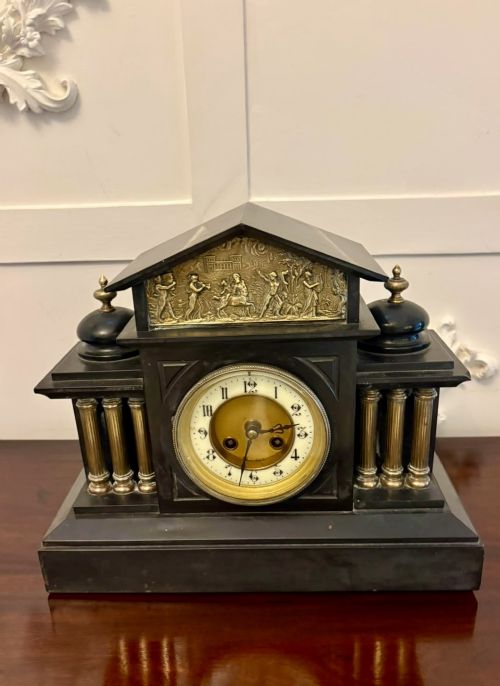
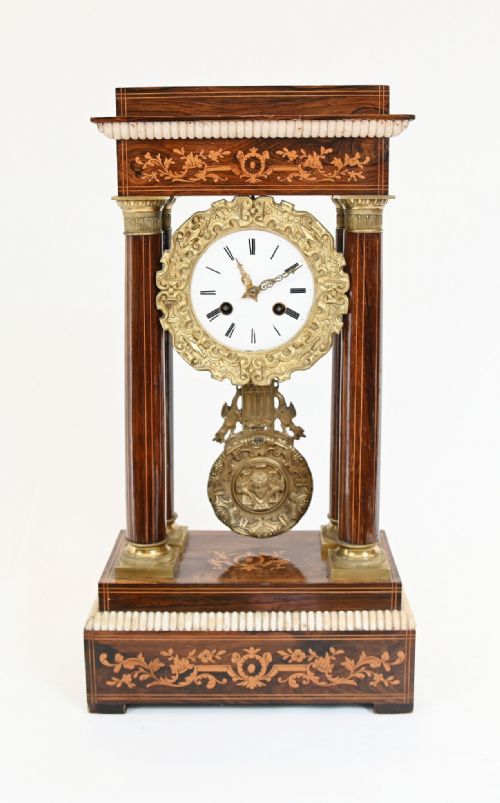
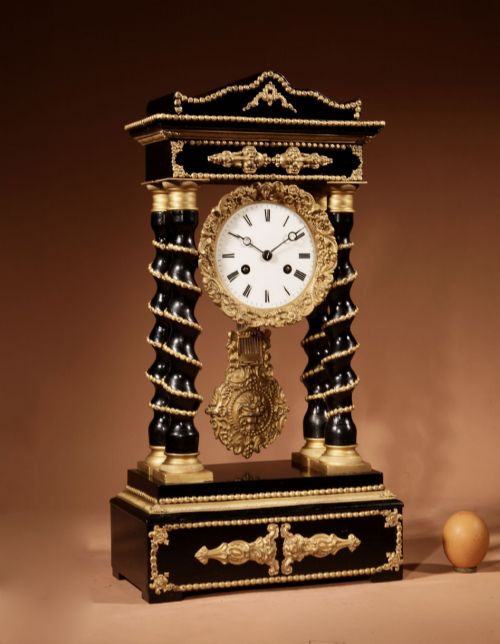
An architectural column clock translates the monumental geometry of classical buildings into a domestic timepiece. These items draw on Victorian, Neoclassical, and French Empire styles, often taking the form of portico clocks or heavy mantel pieces supported by upright pillars.
The version most commonly met on this page is the nineteenth century French or Victorian mantel clock. They emerge from periods spanning the eighteen sixties to the nineteen hundreds, utilising solid stone cases alongside glass and metal components.
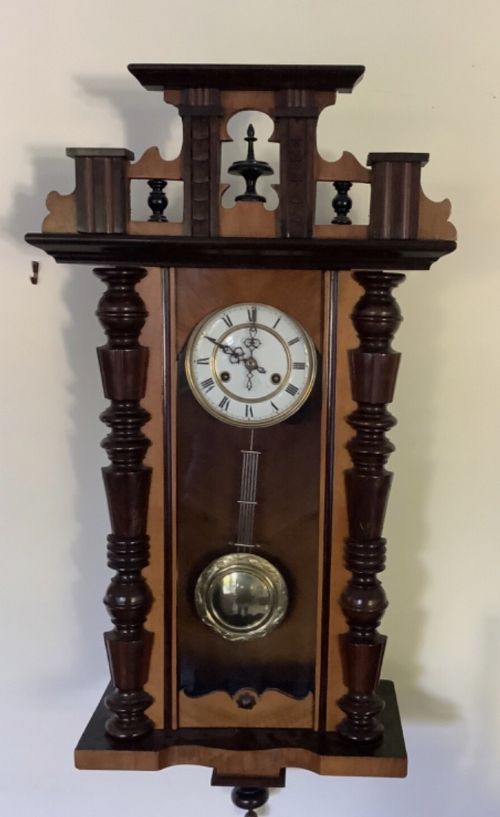
Makers housed these movements within architectural facades built from black marble, slate, or polished wood. Dial configurations range from white enamel with delicate numerals to silvered brass set deep within the column structure.
What varies in quality in architectural column clocks
The distinction between tiers rests upon the crispness of the stone cutting and the depth of the architectural mouldings. Superior examples display sharp column fluting, tight mitre joints in the woodwork, and substantial bronze or ormolu mounts rather than light pressed brass.
Movement sophistication also divides the range, moving from standard rack strikes to intricate eight day movements with bell or gong strikes. The integration of signed dials and matching side ornaments elevates an assembly from a standard room clock to a cohesive mantel garniture.
Several clocks carry the distinct weight of solid slate facades disguised beneath clever faux marble paint finishes.
Philippes Paris·Baby and Jannings·Benson
The Architectural Column Clock Glossary
- Portico clock
- A clock featuring a freestanding architectural structure supported by four or more columns. This design originates from early nineteenth century France and exposes the pendulum swinging centrally between the pillars.
- Ormolu
- Finely ground high-carat gold mercury-gilded onto a bronze base. This technique produces a warm, durable metallic finish found on high status French clock mounts.
- Fusee
- A conical pulley used in clock movements to maintain even tension on the gear train as the mainspring unwinds. This mechanism improves timekeeping accuracy across the duration of the wind.
- Enamel dial
- A metal disc covered with fused powdered glass fired at high temperatures. This creates a hard, glossy white surface that resists fading and holds painted numerals permanently.
Architectural Column Clock: Frequently Asked Questions
How do I wind an architectural column clock?
Most eight day models require a key inserted into the winding holes on the dial face to tension the internal springs. Turn the key gently until firm resistance indicates the spring is fully wound.
Take care not to overwind the movement, as this can damage the internal components. Ensure you move the hands only in the direction indicated by the maker to protect the striking gear train.
Where should I place a heavy marble clock?
Select a sturdy mantelpiece, heavy sideboard, or dedicated console table capable of supporting significant stone and metal weight. The surface must remain completely level to ensure the pendulum swings evenly.
Avoid placing these clocks in areas prone to dampness or direct sunlight, which can discolour enamel dials and dry out antique wood veneers. A stable environment preserves both the case materials and the mechanical movement.
How do I tell a French portico clock apart?
Look for the characteristic structural arrangement where a central dial housing sits beneath a projecting entablature, held aloft by four slender columns. French examples frequently incorporate gilt bronze mounts, visible pendulums, and striking ormolu details.
British and German architectural clocks tend to use heavier wooden or solid marble cases with enclosed dial faces. The choice of timber, such as rosewood or walnut, often points towards Victorian domestic production rather than continental Empire styling.
Why does my clock go out of beat?
Changes in temperature, floor settling, or accidental bumps can shift a heavy stone or wooden case slightly out of alignment. This alters the precise drop of the pallet onto the escape wheel, causing the ticking sound to become uneven.
Adjust the position of the case gently or use the regulating mechanism on the pendulum to restore an even rhythm. If the beat remains uneven, a professional adjustment may be necessary to align the anchor escapement.