


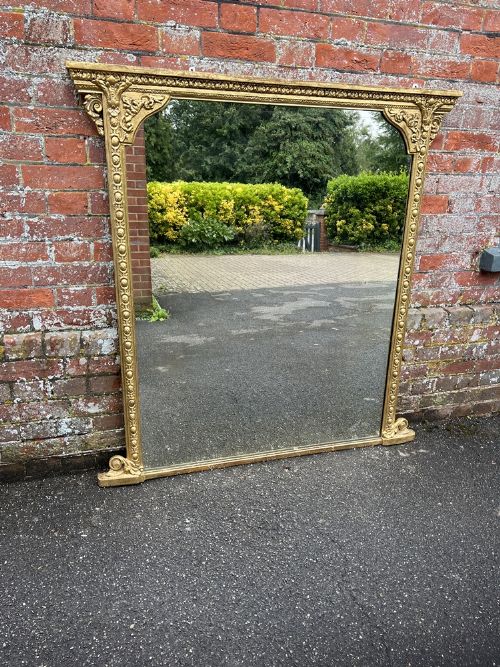


Architectural Arch Mirror
An architectural arch mirror brings genuine depth and classical structure into a room, framing light with the weight of masonry.
Architectural Arch Mirror
An architectural arch mirror replicates the proportions and structural detailing of traditional masonry openings, utilising arched headers and heavy frames to anchor a space. When searching for an architectural arch mirror, buyers encounter grand overmantels, tall pier mirrors, and window-style frames designed to expand perceived interior volume.
The lineage visible on this page spans nineteenth-century English, French, and Swedish examples, drawing on Victorian, Gothic Revival, Industrial, and Rococo Revival traditions. Pieces range from monumental giltwood overmantels to painted pine wall hangings and cast iron frames salvaged from historic buildings.
Overmantel mirrors dominate the selection, traditionally scaled to sit above a fireplace with shaped or arched tops that echo structural chimney breasts. Pier mirrors and sectional window mirrors offer alternative verticality, designed historically to hang between windows or replicate external fenestration indoors.
Materials and construction methods
The foundational structures rely on timber carcasses of pine, mahogany, or birch, often layered with carved wood and gesso to build up intricate surface ornamentation. Gilding techniques apply gold leaf or parcel gilt directly to the prepared gesso grounds, creating reflective metallic surfaces that catch ambient light.
Surface treatments vary from polished giltwood and applied paint finishes to raw cast iron and distressed wood. Mirror glass is set within these heavy frames, occasionally divided into multi-panel sections to mimic traditional window glazing bars.
The archive records architectural mirrors originating from English, French, Swedish, Italian, and Indian workshops.
Assessing quality in construction and finish
Quality rests upon the crispness of the carved wood and gesso ornamentation, where deep, hand-tooled relief separates superior cabinet work from mechanical moulding. The integrity of the underlying timber frame determines how well the piece supports heavy glass plates over decades.
The treatment of the gilding and paint finishes dictates visual weight, with layered gold leaf and subtle burnishing providing a richer surface than flat or later overpainting. Original mirror glass plates, showing soft oxidation or foxing, contribute authenticity compared to modern replacements.
The Architectural Arch Mirror Glossary
- Gesso
- A plaster-like mixture applied to wood frames as a base for carving and gilding. This material allows artisans to sculpt intricate relief details before applying gold leaf.
- Giltwood
- Timber coated with gold leaf or metal powder over a prepared ground. It provides a warm, reflective surface characteristic of formal nineteenth-century interiors.
- Overmantel mirror
- A large mirror specifically scaled to hang above a fireplace mantelpiece. These pieces often feature arched tops designed to echo the architectural lines of the chimney breast.
- Pier mirror
- A tall, narrow mirror historically hung on the solid wall space between two windows. Their vertical proportions maximise light reflection in period reception rooms.
- Parcel gilt
- A decorative technique where only specific portions of a carved frame are gilded while the rest remains painted or exposed wood. This method highlights particular architectural details.
Architectural Arch Mirror: Frequently Asked Questions
Where should an architectural arch mirror hang?
These mirrors suit principal reception rooms, hallways, and dining spaces where their scale commands attention. Hanging them above a sideboard or mantelpiece replicates their historic placement.
Positioning the frame opposite a window maximises natural light distribution, effectively operating as an additional architectural opening within the room.
How do I clean the frame?
Dust carved wood and gilt surfaces gently with a soft, dry brush to prevent accumulating dirt in the recesses. Avoid chemical polishes that can lift delicate gesso or strip historic leaf.
Water and liquid cleaners should remain entirely away from gilded and painted surfaces to protect the original nineteenth-century finishes.
Are these mirrors heavy to mount?
The combination of dense timber, gesso, and thick glass plates creates substantial weight requiring robust wall fixing. Professional installation into masonry or reinforced studs is essential.
Hardware must distribute the load safely across the primary structural frame rather than relying on decorative upper scrolls.
How do I identify a Victorian piece?
Nineteenth-century pieces often display characteristic pine or mahogany carcasses combined with heavy moulded gesso and silvered mirror glass. Stylistic cues draw from Gothic Revival, Rococo Revival, or industrial salvage aesthetics.
Construction joints, backboards, and the composition of the gesso provide physical evidence pointing to nineteenth-century workshop practices.