

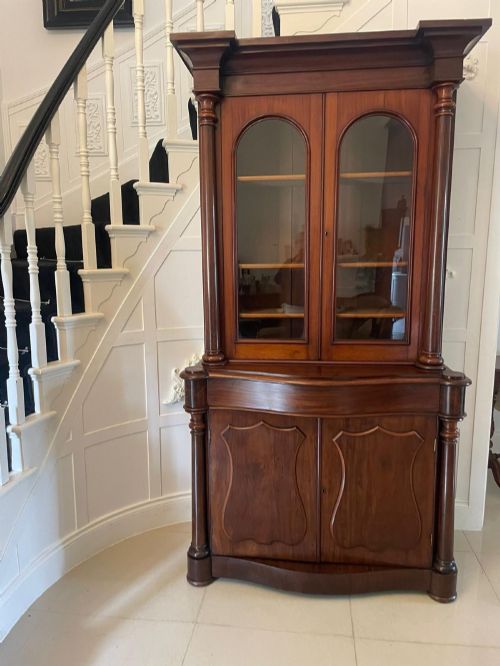
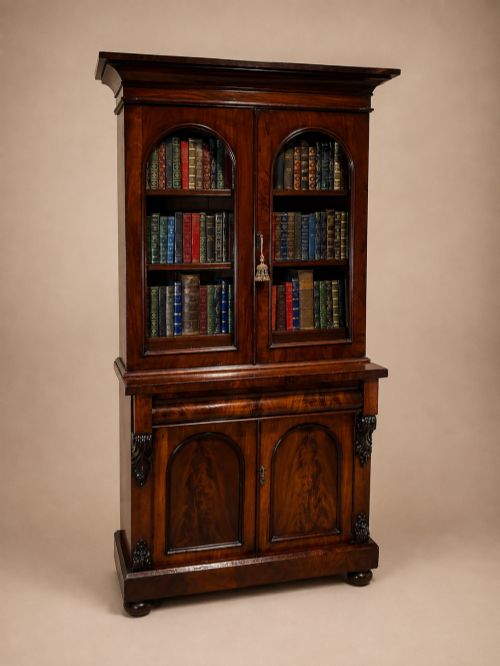
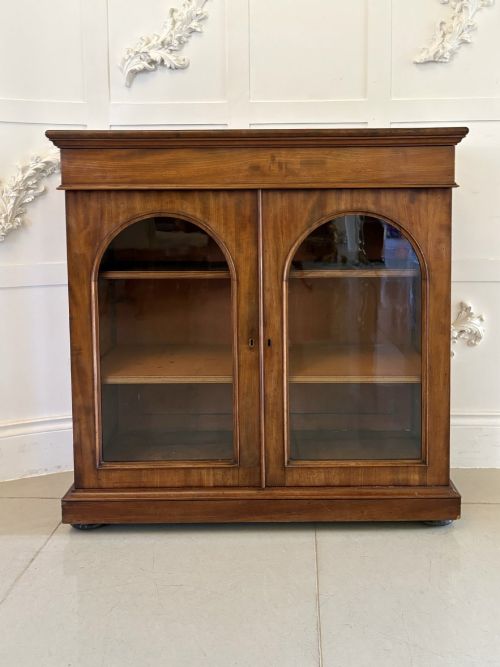
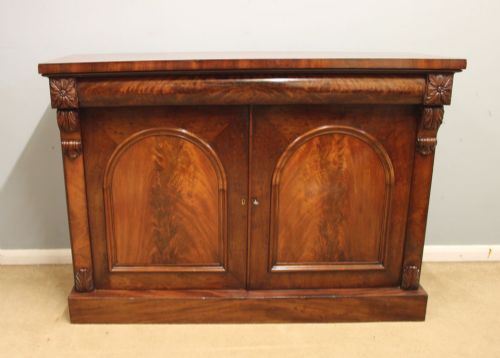

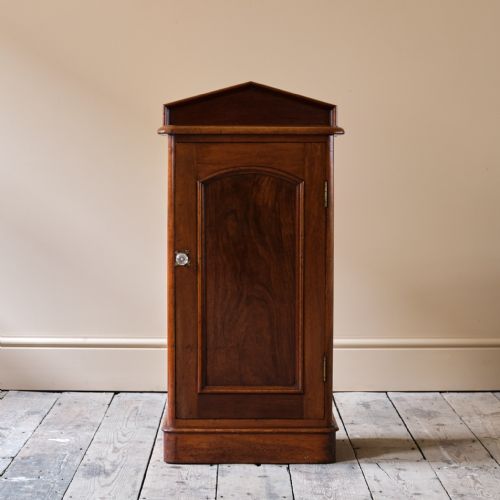
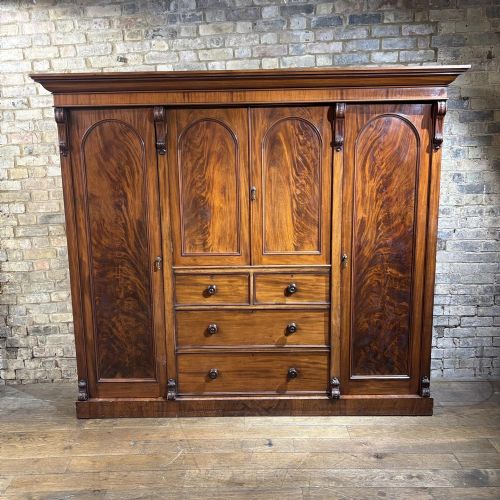

Arched Mahogany Cupboard
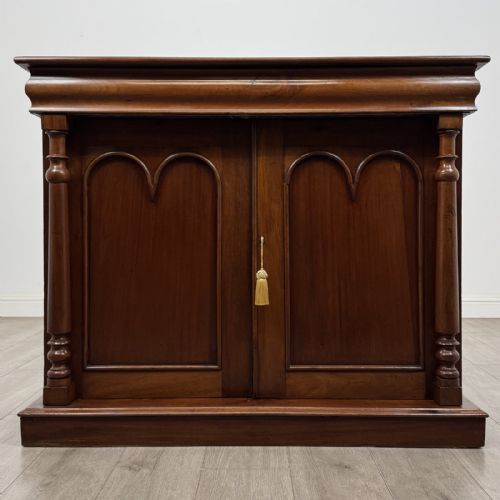
An arched mahogany cupboard brings architectural depth and rich grain to a room, offering practical storage disguised as fine furniture.
Arched Mahogany Cupboard
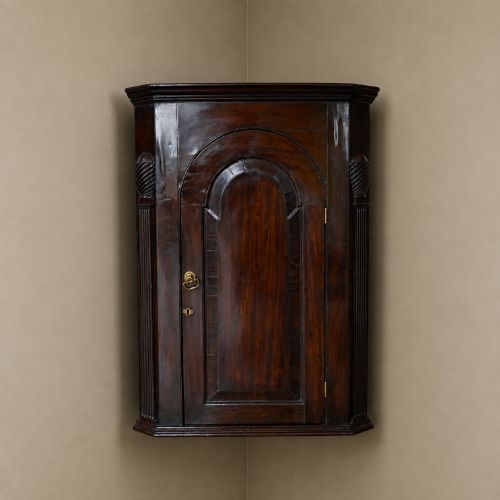
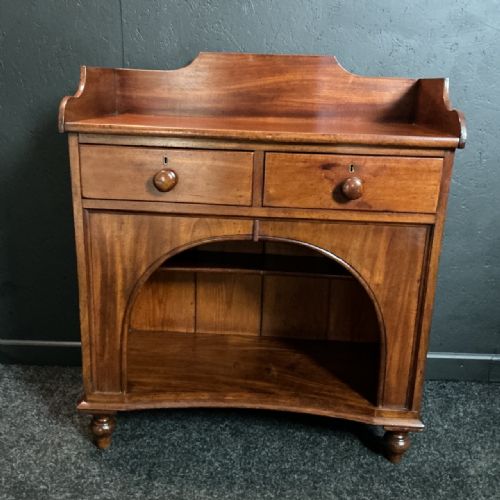
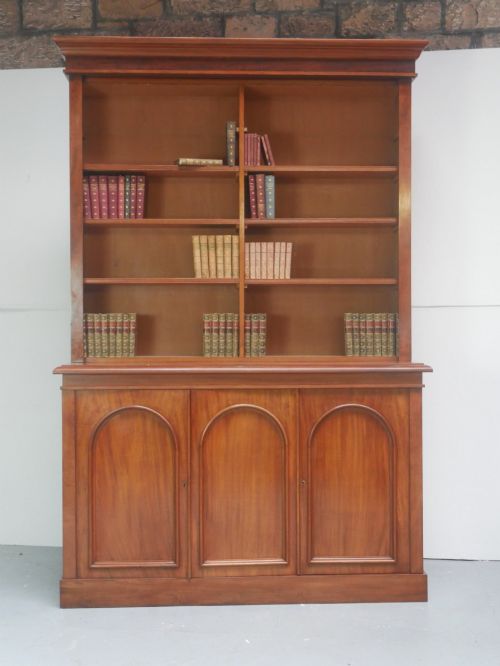
An arched mahogany cupboard combines vertical storage with distinct architectural framing, often taking the form of corner cabinets, hanging wall units, and freestanding bookcases or wardrobes. Buyers seeking an arched mahogany cupboard encounter pieces spanning the Georgian, Regency, and Victorian periods, alongside later revival styles.
The architectural arch typically defines the upper pediment of the piece, drawing the eye upward and softening the linear geometry of domestic interiors. Surviving examples range from compact 18th-century wall-hanging corner units to large breakfront libraries and linen presses.
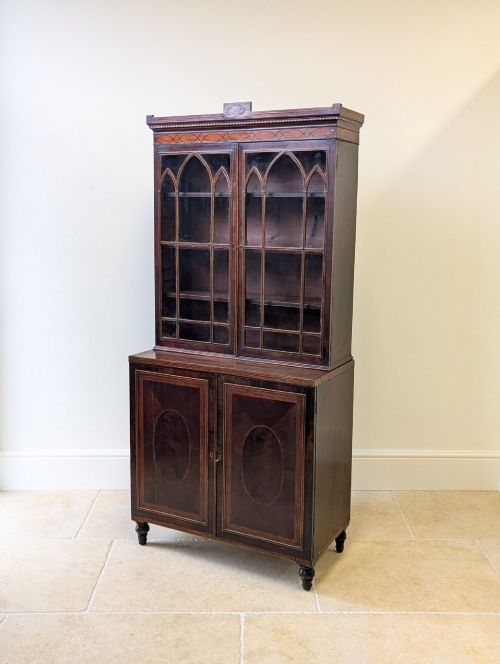
Makers utilised dense native and colonial timbers to construct these storage forms, resulting in heavy, stable furniture designed to endure. The presence of glazed doors or solid panelled doors alters the function between display cabinets and hidden storage.
How they were made
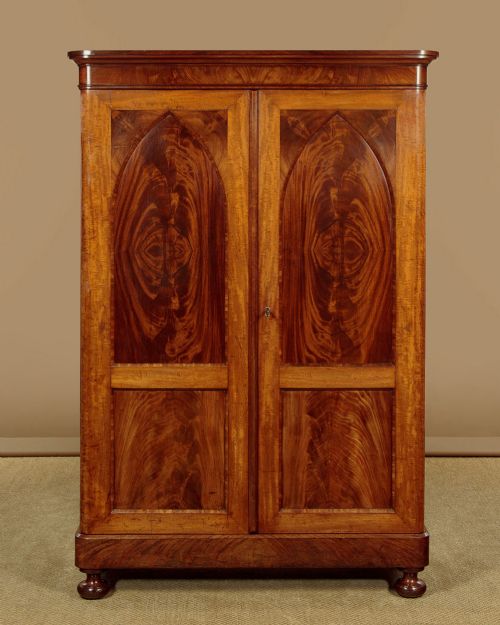
Cabinet makers built these pieces using solid mahogany and flame mahogany veneer applied over secondary framing timbers. The introduction of figured grains and flame veneers created rich, mottled surface patterns that caught the light across the arched panels and door surfaces.
Structural integrity relied on traditional joinery, dovetail construction in the drawers, and brass hardware utilised for hinges, escutcheons, and locks. Interior shelving often featured adjustable wooden supports or fixed plate grooves depending on whether the piece served as a bookcase or a corner cabinet.
Arched Mahogany Cupboard Retail Price Guide 2026
Typical asking prices for arched mahogany cupboard among the pieces listed under this phrase on Sellingantiques today, from the lower quarter to the upper quarter. They describe what is for sale here now, not the wider market.
Listings feature mahogany, flame mahogany veneer, brass, glass, satinwood inlay, and paint across Georgian, Victorian, and Regency periods.
What varies in quality
The selection of timber grain heavily influences the visual weight and desirability of a piece, with symmetrical flame mahogany veneers and subtle satinwood inlay marking higher tiers of execution. Plain timber surfaces rely entirely on the depth of the polish and the precision of the mitres around the arched pediments.
Proportion and scale dictate the success of the design, particularly in corner units and breakfront bookcases where the curve of the arch must balance the base cabinet. Finer examples display meticulous attention to interior fittings, drawer linings, and original brass work rather than later replacement elements.
Shapland & Petter
The Arched Mahogany Cupboard Glossary
- Flame mahogany
- A highly figured wood veneer sliced from the point where a branch joins the main trunk, creating a distinctive flame-like pattern across the cupboard doors.
- Breakfront
- A cabinet design where the central section projects forward from the flanking wings, adding architectural depth to large bookcases and wardrobes.
- Pediment
- The triangular or arched decorative crowning structure surmounting the top of a bookcase, corner cupboard, or wardrobe.
- Glazed cabinet
- A storage piece featuring glass-panelled doors designed to protect books and display objects while keeping them visible.
- Escutcheon
- A protective brass or wooden plate surrounding the keyhole of a cupboard door, preventing wear to the surrounding timber.
Arched Mahogany Cupboard: Frequently Asked Questions
Where should I place an arched mahogany cupboard?
Hanging and floor-standing corner cabinets utilise dead space effectively in dining rooms and living areas, while larger breakfront bookcases suit high-ceilinged libraries or studies.
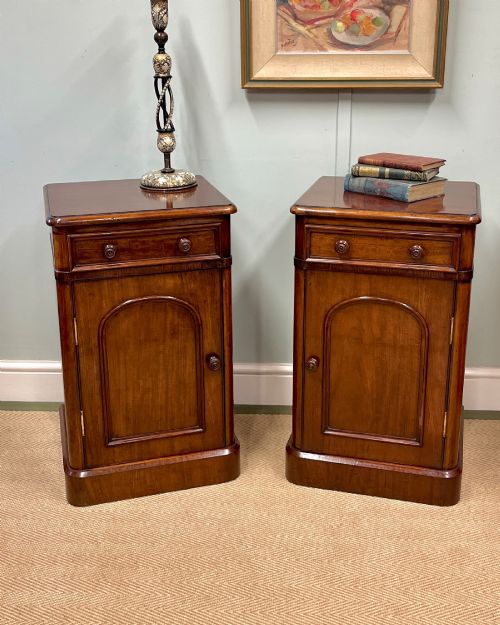
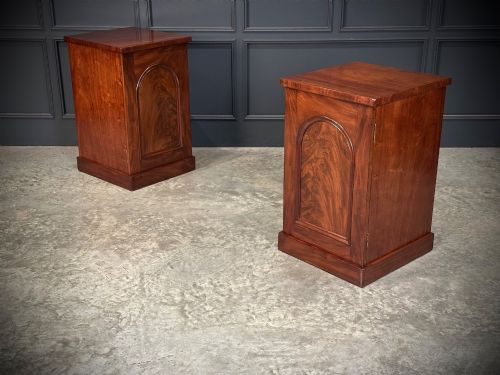
Smaller pot cupboards and bedside units fit easily beside beds or seating arrangements as functional accent pieces.
How do I distinguish Georgian from Victorian pieces?
Georgian examples generally exhibit restrained proportions, fine astragal glazing bars, and sometimes broken arch pediments reflecting 18th-century classical design.
Victorian cabinets tend toward heavier breakfront formats, deeper flame mahogany veneers, and more robust Gothic Revival or architectural styling.
Are the shelves inside adjustable?
Earlier 18th-century and Georgian cupboards often feature fixed wooden shelving grooved into the sides of the carcass.
Later Victorian and revival bookcases frequently incorporate rack-and-pinion or sawtooth mechanisms allowing the height of the shelves to be altered.
How should I care for the mahogany finish?
Keep mahogany furniture away from direct sunlight and strong heat sources to prevent the timber and veneers from drying out or splitting.
Apply a traditional beeswax polish sparingly and buff with a soft cloth to maintain the natural lustre of the wood.