
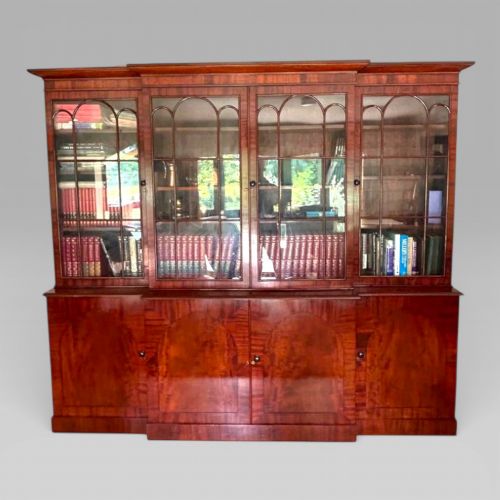


Arched Glazing Display Cabinet
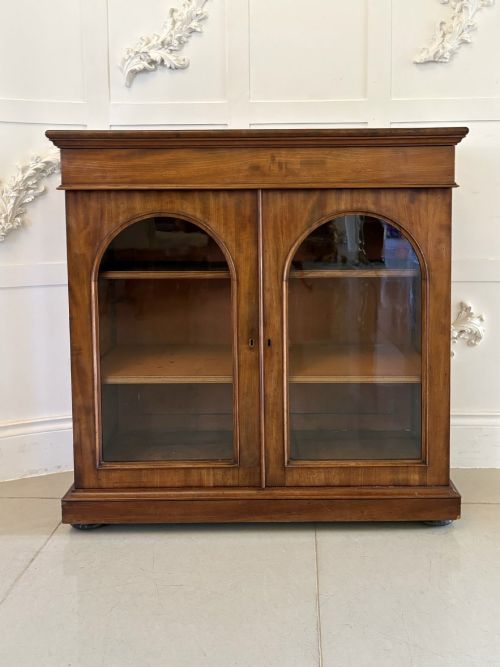
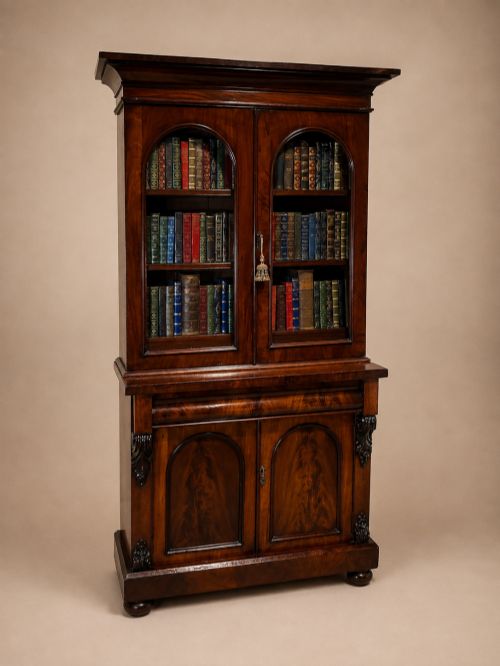
An arched glazing display cabinet organises treasured collections behind glass doors shaped with curved top rails, originating across eighteenth, nineteenth, and twentieth-century workshops.
Arched Glazing Display Cabinet
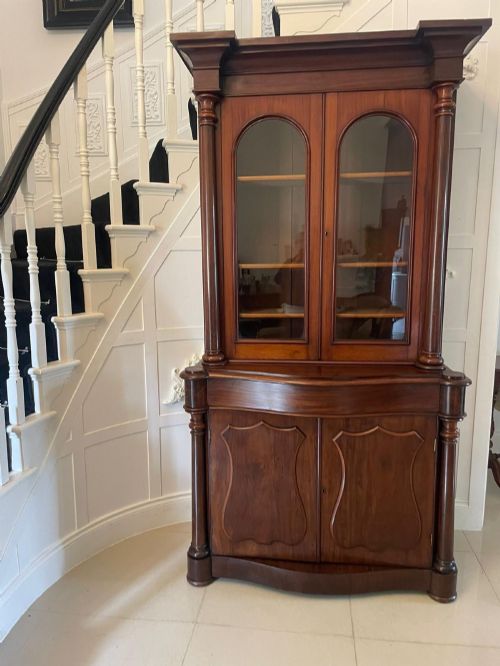
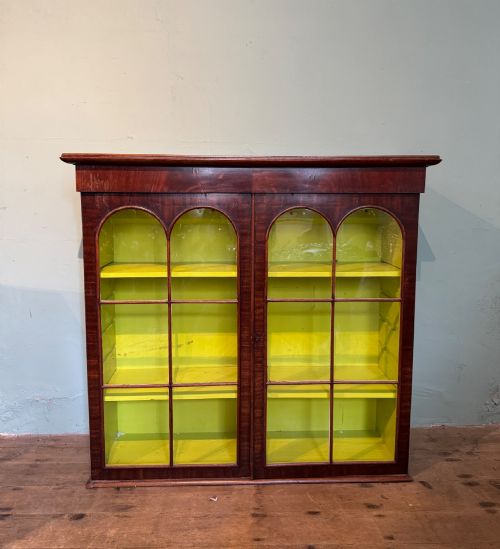
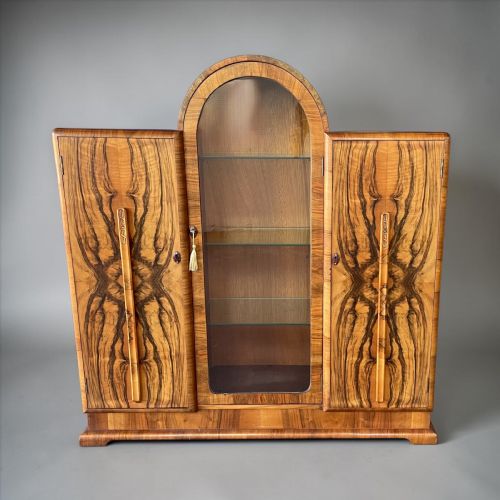
An arched glazing display cabinet brings together display furniture designed to showcase books and objects through glass panels. These pieces span Georgian, Victorian, Regency, and Art Deco periods, encompassing bookcases, corner cabinets, and vitrines.
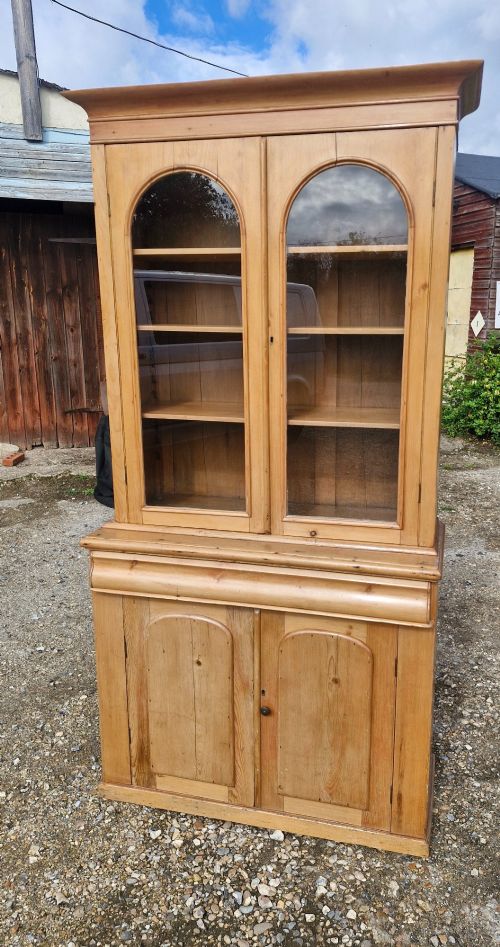
The most frequent form met on this page is the nineteenth-century mahogany bookcase or display cabinet fitted with glazed doors. Variations include breakfront library pieces, corner cupboards, and painted kitchen dressers.
Origins stretch from English workshops to French and Dutch makers, utilising timbers like mahogany, walnut, oak, and pine. Buyers encounter both full-height library bookcases and compact cabinets on stands.
Materials and construction
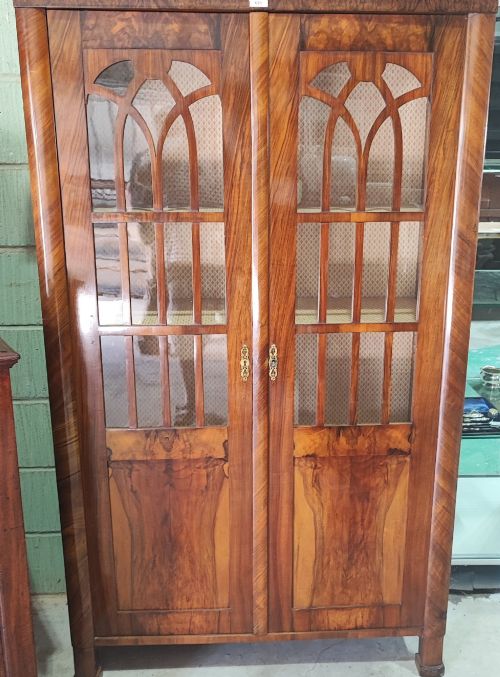
Cabinet makers built these pieces using solid timbers and veneers of mahogany, walnut, oak, and rosewood, supported by secondary woods like pine in simpler carcases. Burr walnut and marquetry inlaid details appeared on finer decorative examples.
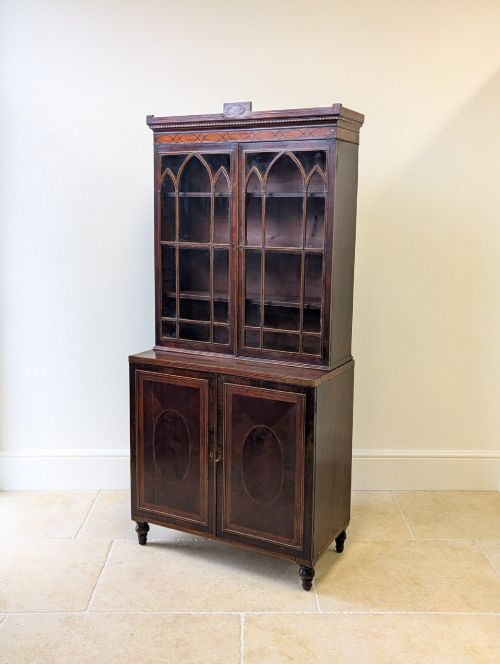
Glazing bars divided the glass panels into geometric or curved panes, requiring precise joinery to form the signature arches. Brass hardware, locks, and occasional Tunbridgeware inlay finished the exterior construction.
A tiny Dutch painted vitrine manages to look both stern and delightful at the exact same moment.
What separates the finer examples
Quality resides in the selection of timber figures, such as figured mahogany or burr walnut veneers matched across the front. The delicacy and precision of the arched glazing bars define the architectural merit of the door frames.
Proportion and structural integrity separate standard utility pieces from grander breakfront library bookcases. Original glass panes, functioning brass locks, and intact cornices elevate the standing of a cabinet.
English workshops·French provincial makers·Dutch cabinet makers
The Arched Glazing Display Cabinet Glossary
- Glazing
- The glass panes fitted into the doors of a cabinet. These are held in place by wooden glazing bars that form the framework of the window.
- Breakfront
- A piece of furniture where the centre section projects forward from the side sections. This layout creates architectural depth in large bookcases and cabinets.
- Vitrine
- A glass-sided display cabinet intended for the exhibition of porcelain, curiosities, or small objects. The term derives from the French word for glass.
- Marquetry
- Decorative veneer patterns applied to the surface of furniture using different coloured woods, ivories, or metals. This technique appears on Edwardian and continental cabinets.
- Secretaire
- A cabinet or bookcase incorporating a pull-down writing drawer fitted with small pigeonholes and internal compartments. It combines desk functionality with display storage.
Arched Glazing Display Cabinet: Frequently Asked Questions
How do I date an arched glazing display cabinet?
Dating relies on timber choices, construction methods, and stylistic markers such as Georgian glazing proportions or Victorian mahogany patination. Secondary woods and hardware styles further indicate the decade of manufacture.
Makers changed their structural techniques over time, shifting from pegged joints in the eighteenth century to machine-sawn components later on. Comparing the door construction helps clarify the period.
Where should I place a corner cabinet?
Corner cabinets fit directly into ninety-degree wall junctions, making efficient use of overlooked domestic space. They work well in dining rooms or living areas to display ceramics or glassware.
Because these pieces vary in height and base depth, measuring the wall span ensures the cornice fits cleanly without obstructing architectural moulding.
Can these cabinets hold heavy books?
Library bookcases and larger breakfront cabinets were engineered to support heavy volumes on adjustable wooden shelving. Shelves in smaller display vitrines suit lighter decorative objects rather than dense libraries.
Checking the thickness of the internal shelves and the strength of their supports reveals whether a cabinet serves for storage or primarily for display.