



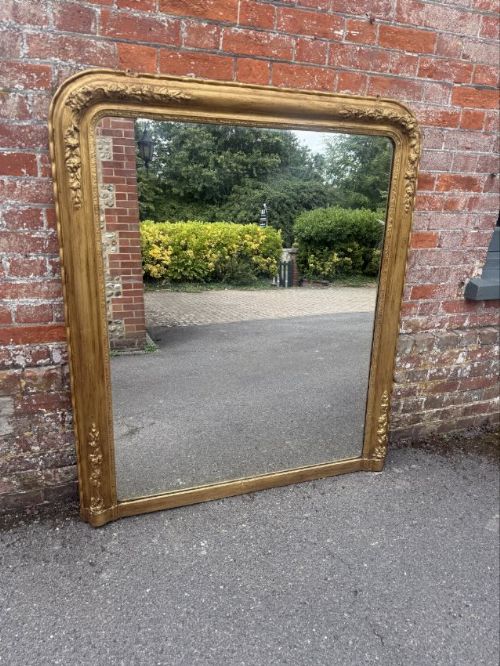
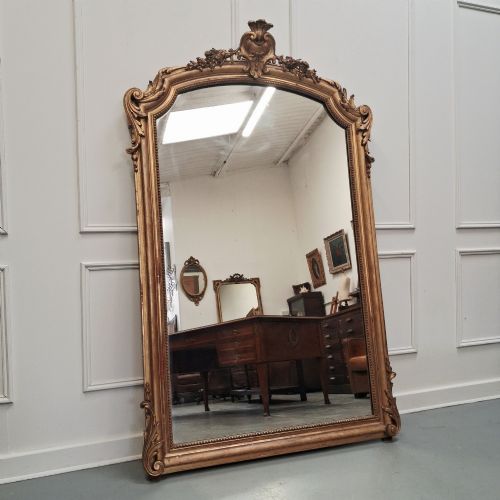
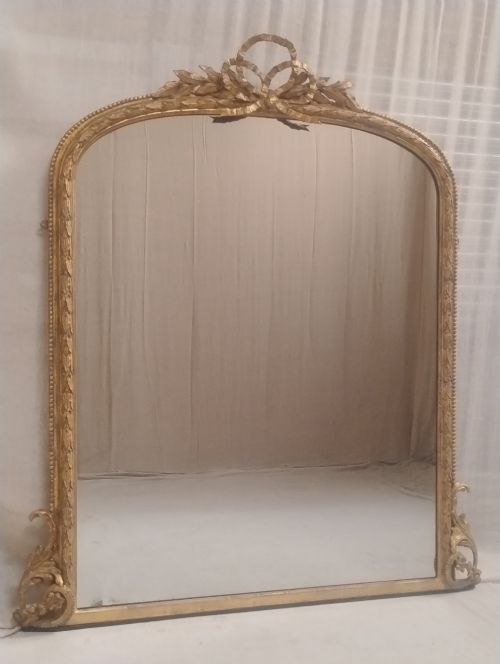
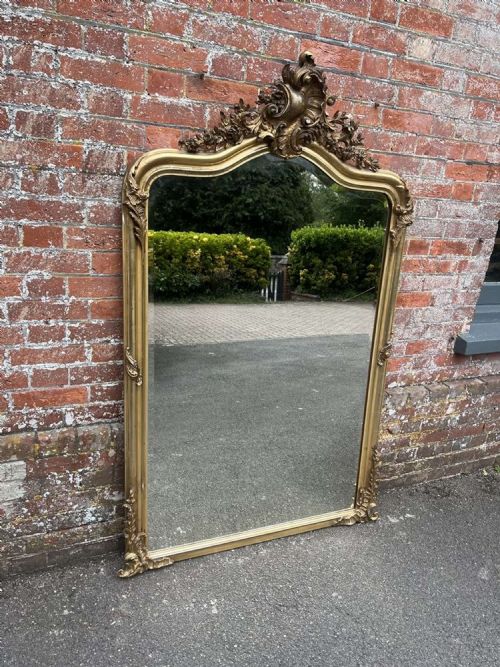
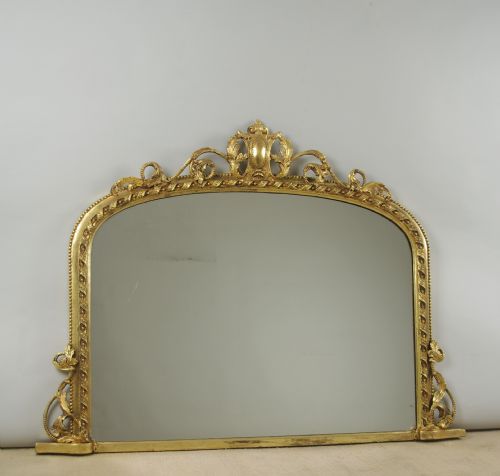
Arched Giltwood Overmantel
An arched giltwood overmantel commands the chimney breast with proportion, gold leaf, and reflected light.
Arched Giltwood Overmantel
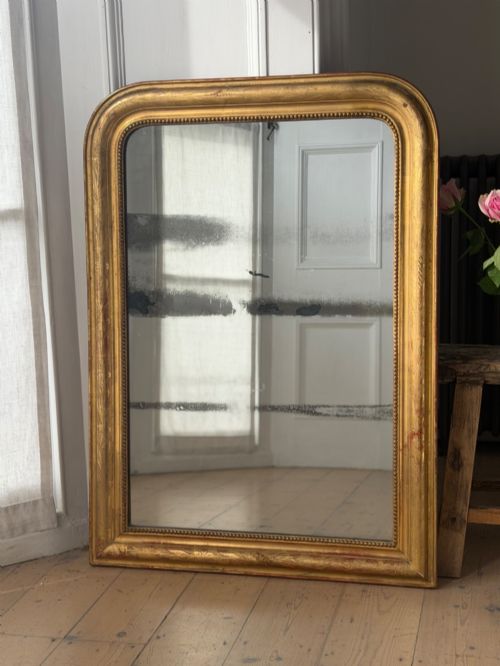
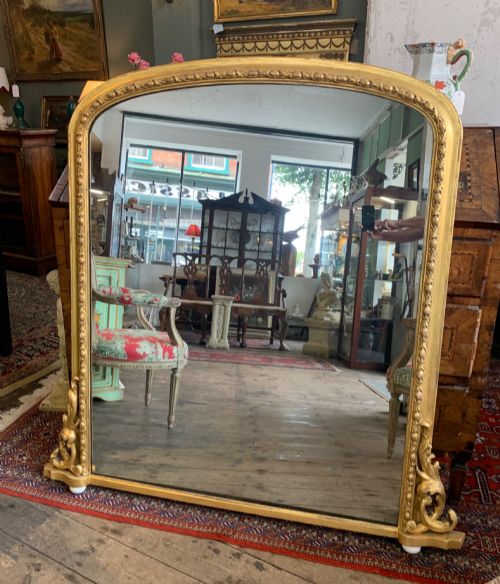
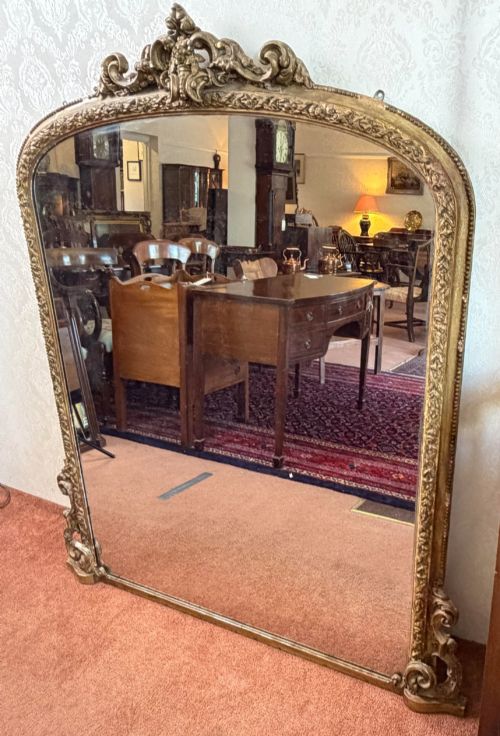
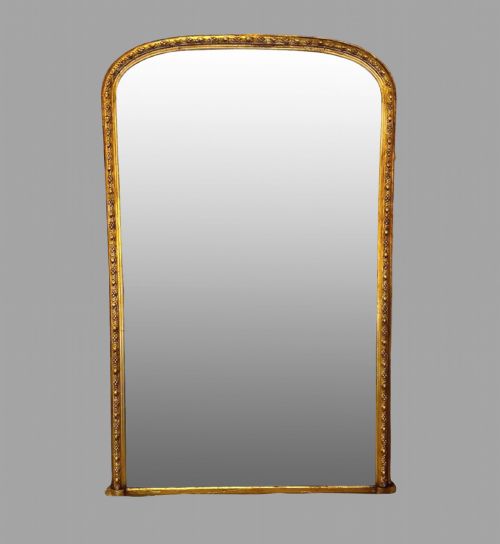
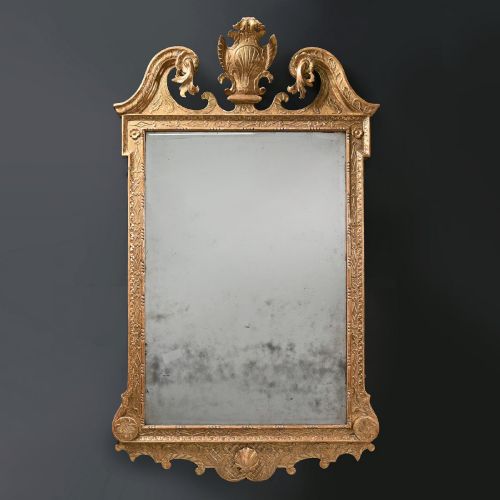
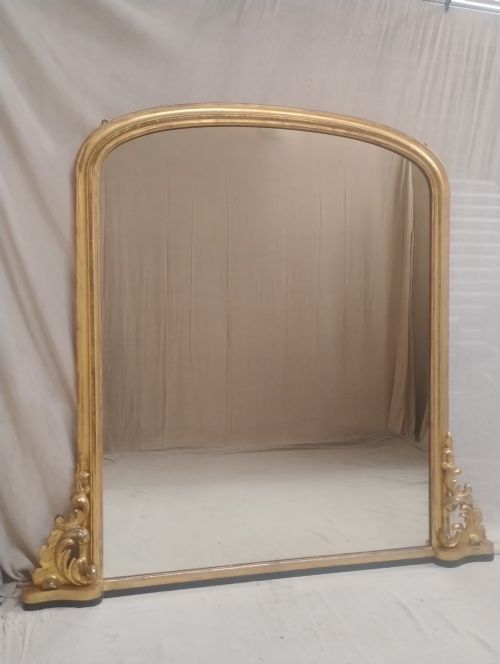
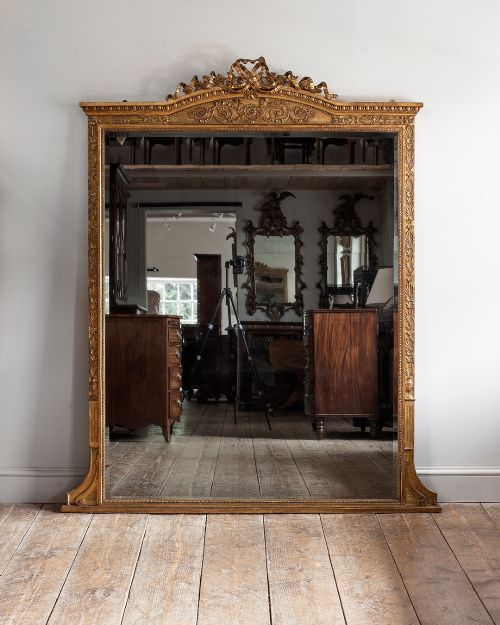
An arched giltwood overmantel is a large wall mirror designed to sit directly above a fireplace mantel, reflecting light and framing the domestic hearth. When searching for an arched giltwood overmantel, buyers encounter substantial rectangular frames topped with curved arches, predominantly originating from the nineteenth century and the Victorian period.
The selection ranges from English architectural overmantels to French Louis Philippe and Rococo Revival designs. These tall plates were built to occupy the broad wall space of period reception rooms, often resting on the mantelpiece itself as a leaner mirror.
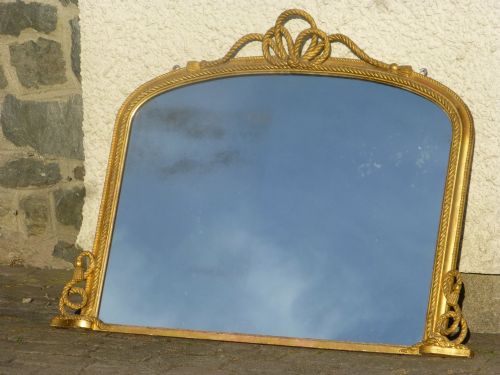
Most examples rely on wooden frames coated in gesso and finished with gold leaf, while specific regional styles introduce rope twists or tulip carvings along the timber moulding.
How they were made
Makers constructed these frames from timber substrates, applying layers of fine plaster known as gesso to build up decorative reliefs and mouldings. Gold leaf or liquid gilding was then applied over the prepared surface to achieve the metallic lustre characteristic of giltwood.
Ornamental details such as rope twists, hour-glass ribbing, and floral motifs were either carved directly into the wood or moulded in composition paste and affixed to the frame. Glass plates were traditionally hand-silvered, frequently resulting in foxed mercury mirrors with distinctive patination.
The listings show nineteenth-century and Victorian pieces dominating the selection, alongside Georgian and eighteenth-century examples.
What varies in quality
The integrity of the original gesso and the crispness of the carved or moulded ornamentation determine the visual strength of the piece. Frames that retain their original gold leaf display a warmer, softer depth of colour compared to later re-gilding.
The condition of the mirror plate itself influences the character of the object, where original mercury glass with natural foxing carries more historical weight than replaced modern glass. Structural joinery and the retention of the original wooden backboards also separate standard examples from finer works.
The Arched Giltwood Overmantel Glossary
- Overmantel
- A large mirror specifically proportioned to hang on the wall or rest upon the mantelpiece above a fireplace.
- Giltwood
- Timber that has been coated with gold leaf or metallic powder, providing a bright decorative surface.
- Gesso
- A plaster mixture applied to wooden frames as a smooth base for subsequent gilding and moulding.
- Foxed glass
- Mirror plates showing spots, darkening, or aged discolouration due to the breakdown of the backing over time.
- Pier mirror
- A tall mirror traditionally hung on the narrow pier of wall between two windows, sharing similar proportions to large overmantels.
Arched Giltwood Overmantel: Frequently Asked Questions
How do I hang an overmantel mirror safely?
These mirrors are heavy structures built from timber, gesso, and thick glass plates. They require secure wall fixings anchored directly into masonry or heavy studs to support the substantial weight.
Many period examples were originally designed simply to lean against the wall upon the mantelpiece, secured by secondary strap fixings at the top for safety.
What is the difference between Victorian and Louis Philippe overmantels?
Victorian overmantels tend to feature heavier carved decoration, rope twists, or architectural moulded frames with a strong sense of presence. English variants often emphasise substantial proportions and robust timber construction.
Louis Philippe mirrors, by contrast, typically present simpler arched tops with understated beaded or ribbon mouldings, reflecting a more restrained French aesthetic.
Should I replace a foxed mirror plate?
Original mirror plates with foxing and age spots are valued by collectors for authenticating the period and providing a softer, distorted reflection. Replacing the glass removes the historical integrity of the piece.
Original mercury glass develops unique dark patches over decades, which is considered a desirable sign of age rather than a fault.
How do I clean a giltwood frame?
Giltwood surfaces require very gentle maintenance using a soft, dry brush to remove dust without disturbing the delicate gold leaf or composition ornaments. Moisture and commercial cleaning chemicals can strip or damage the historic finish.
Care must be taken around areas where the gesso is thin or cracking to prevent further loss of the historic surface.