
Apprentice Miniature Cabinet
An apprentice miniature cabinet represents scaled-down woodworking skill, offering collectors compact storage and period detail in miniature form.
Apprentice Miniature Cabinet
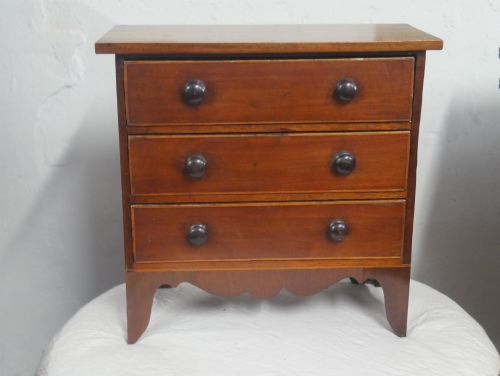
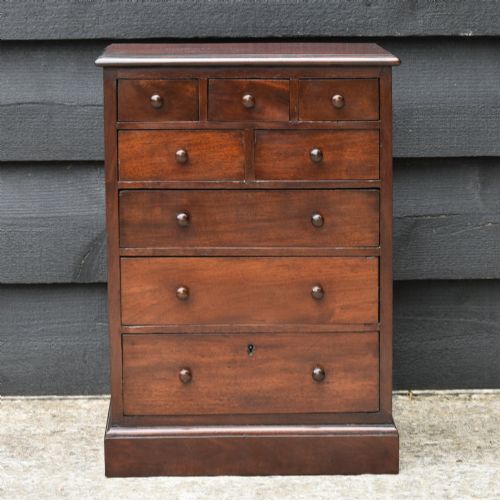
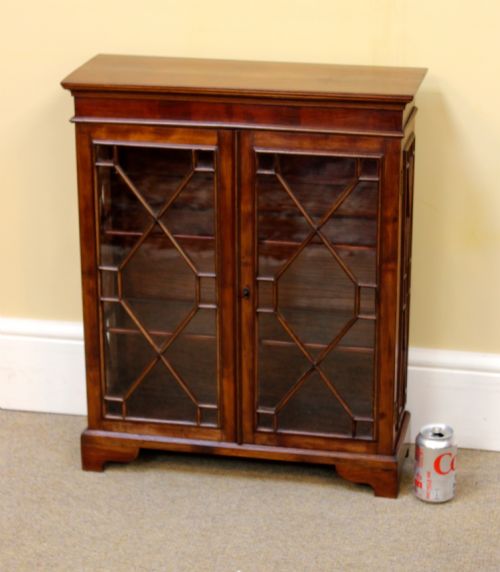
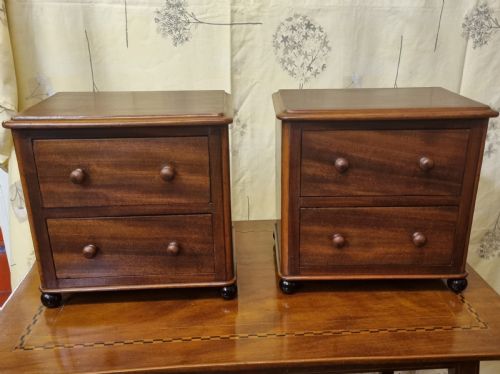
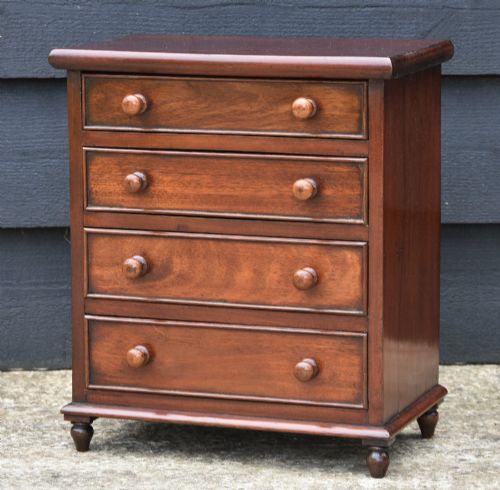
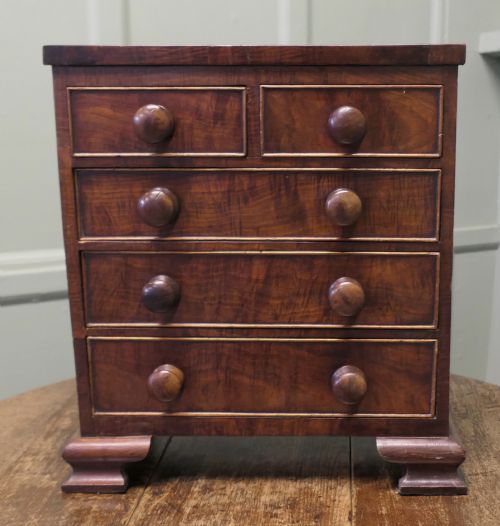
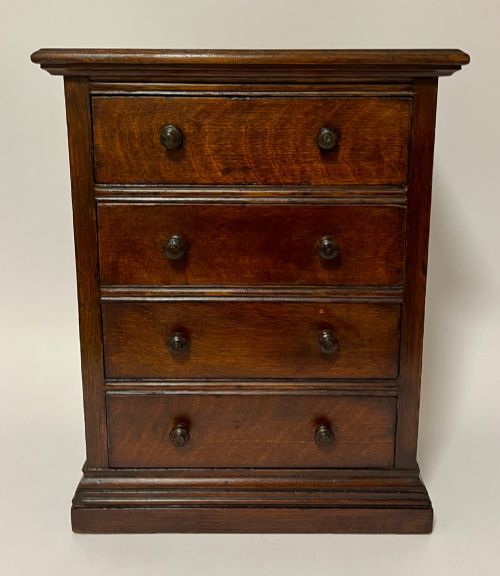
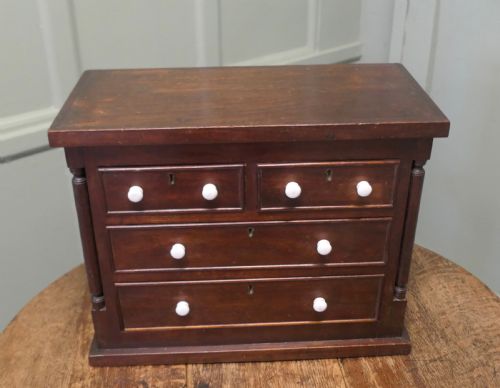
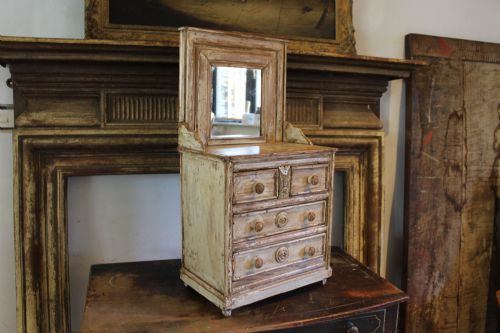
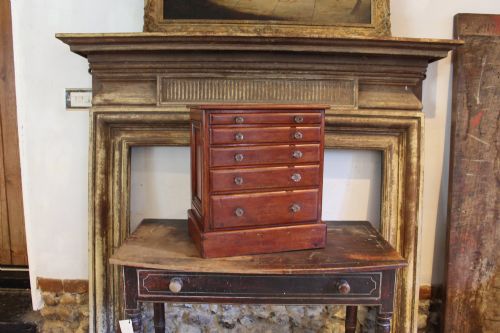
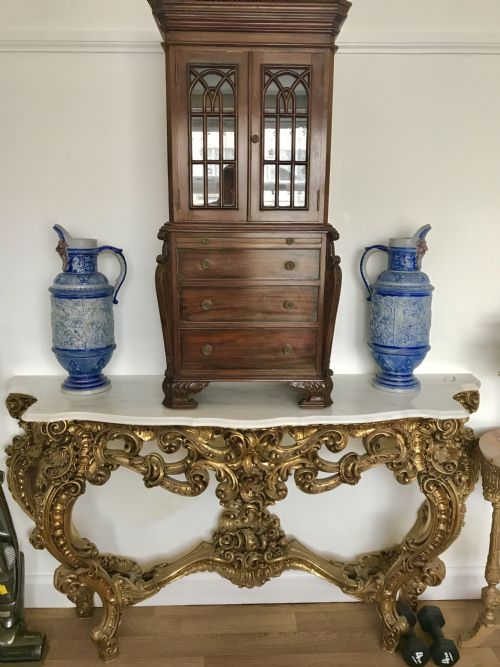
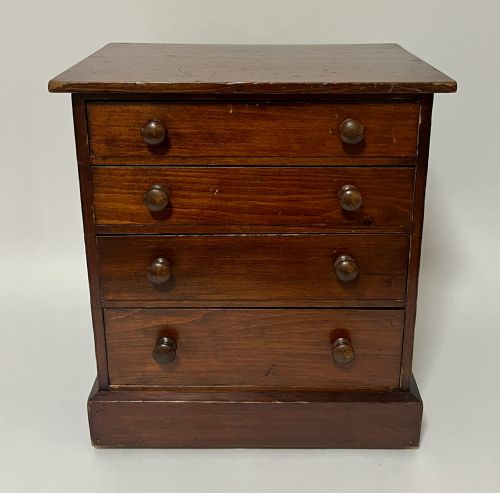
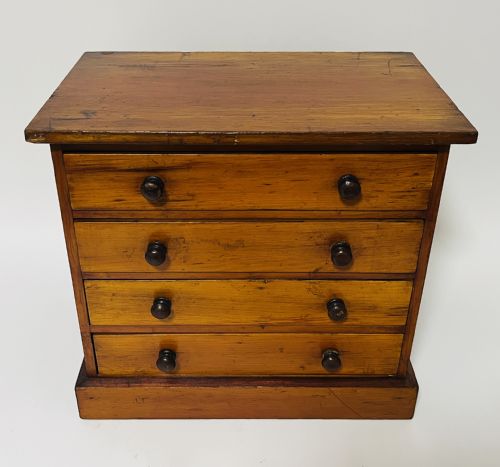
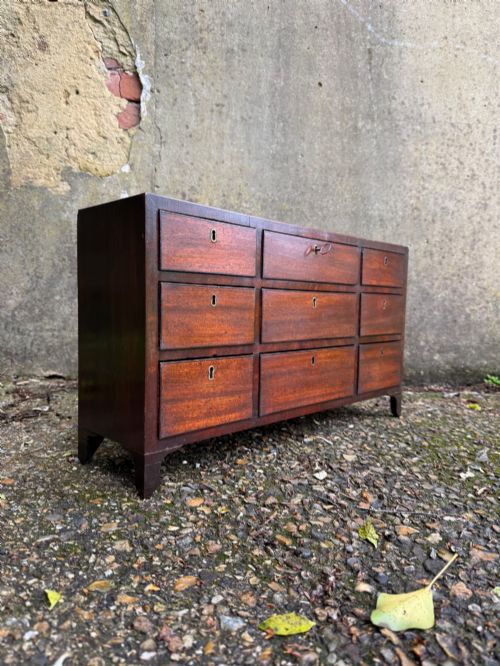
An apprentice miniature cabinet encompasses small-scale chests of drawers, display cabinets, and tabletop pieces originating from the eighteenth, nineteenth, and early twentieth centuries. These items trace back to Georgian, Victorian, and Edwardian periods, reflecting full-sized cabinet-making traditions in miniature dimensions.
The pieces on this page appear most frequently as mahogany chests of drawers, alongside oak, walnut, and pine variants. Scottish and French regional styles also emerge among the selection, spanning bureau bookcases, Wellington chests, and spice boxes.
Materials and Technique
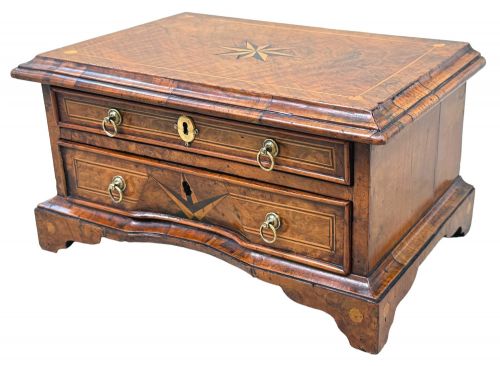
Makers utilised primary timbers such as mahogany, oak, walnut, and satinwood, frequently paired with secondary woods like pine for internal drawer construction. Brass fittings, bone accents, and glass panes appear across the various forms.
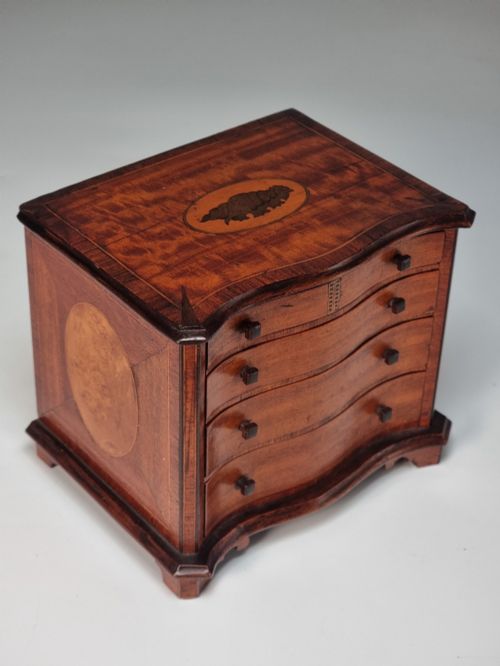
Joinery methods mirror full-scale furniture production, involving dovetailed drawer boxes and French polishing finishes. Inlaid details and serpentine fronts demonstrate advanced proficiency on a reduced scale.
Listings feature woods including mahogany, oak, walnut, amboyna, and satinwood across Victorian, Georgian, and Edwardian periods.
Distinctions in Standard
Proportion and the execution of dovetails set finer examples apart from simpler work. The precision of inlaid decoration and the choice of figured timber indicate the maker's level of skill.
Original hardware, sound structural integrity, and uncompromised surface patination distinguish superior specimens. Altered proportions or mismatched replacement handles diminish the integrity of the piece.
A. F. Lloyd, Bideford
The Apprentice Miniature Cabinet Glossary
- Apprentice piece
- A scaled-down item created by a craftsman to demonstrate skill for trade guild admission, or produced as a travelling salesman sample.
- Serpentine
- A front contour characterised by a convex centre flanked by concave curves, demanding high woodworking precision.
- Wellington chest
- A tall, narrow chest of drawers secured by a vertical locking side flap held in place by a key.
- Dovetail
- An interlocking joint formed by wedge-shaped fingers, used primarily in drawer construction to ensure durable corners.
- French polishing
- A wood finishing technique that applies shellac in thin, successive layers to yield a high-gloss surface.
Apprentice Miniature Cabinet: Frequently Asked Questions
What is an apprentice miniature cabinet?
These small-scale wooden pieces served as maker demonstrations or salesman samples, replicating full-sized furniture designs.
Craftsmen built them using traditional timber and joinery methods to prove their mastery of the trade.
How were miniature cabinets used historically?
Period owners utilised them to store small valuables, jewellery, or natural history specimens on tabletops and desks.
Their scaled dimensions provided functional storage within limited domestic spaces.
How do I date a miniature cabinet?
Dating relies on identifying timber species, construction methods, and stylistic cues associated with Georgian, Victorian, or Edwardian periods.
Secondary woods and drawer joint types offer clear indicators of chronological age.
Where should I place one at home?
These compact items sit well on side tables, desks, or dedicated display shelves where their detail remains visible.
Stable indoor humidity and distance from direct heat sources protect the timber and polish.