

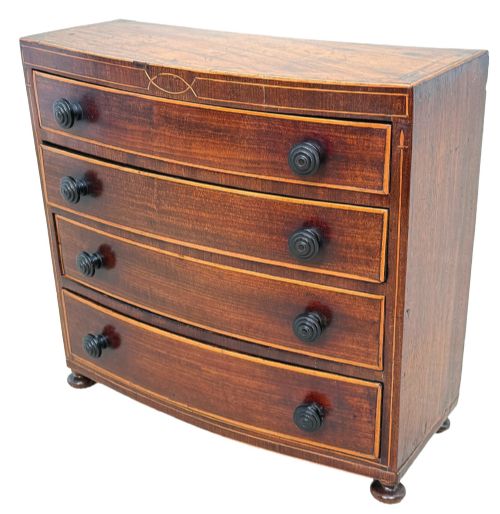

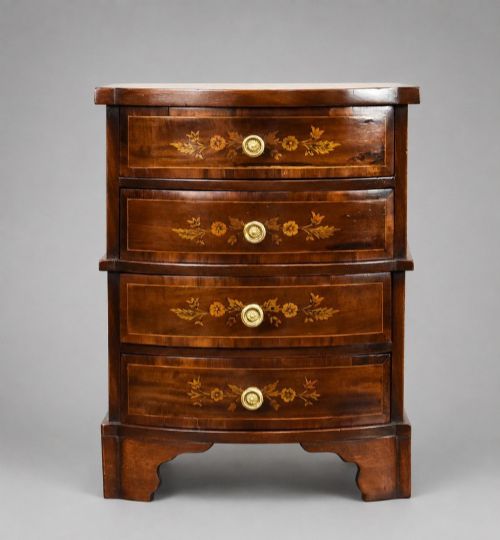


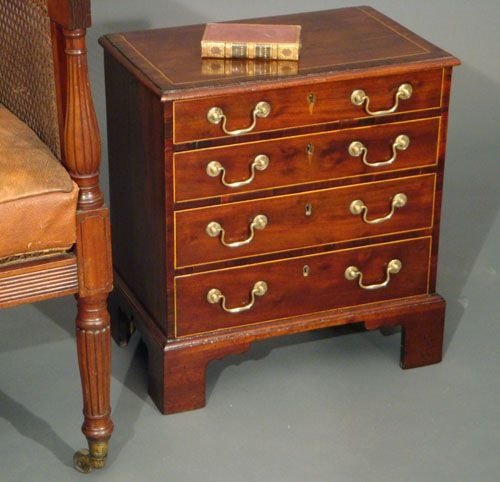


Georgian Inlaid Miniature Chest
A georgian inlaid miniature chest is a small scale masterwork of cabinet making, offering exquisite storage and timeless charm for any discerning collector.
Georgian Inlaid Miniature Chest
A georgian inlaid miniature chest represents scaled down cabinetry produced primarily during the eighteenth and nineteenth centuries, often serving as apprentice pieces or travel storage. These small scale items replicate the full size chests of drawers of their era with remarkable fidelity.
The versions most commonly met on this page range from walnut and mahogany examples to regional oak pieces such as the Welsh coffor bach. Their forms include bow front chests and table cabinets featuring intricate marquetry and banding.
Collectors prize these objects for their delicate proportions and the high level of specialist skill required to construct functional drawers on such a tiny scale. Each piece provides a window into the domestic storage habits and craftsmanship of the period.
Construction and Materials
Cabinet makers utilised dense hardwoods such as mahogany, walnut, and oak as the foundational structure for these small scale chests. Finer timbers like burr walnut, amboyna, and fruitwood were frequently selected for surface veneers and visible facades.
Inlay and marquetry define the surface ornamentation, combining contrasting woods and occasionally mother of pearl or brass details to create geometric or pictorial patterns. Regional pieces like the Welsh coffor bach display traditional local joinery methods handed down through generations.
Georgian Inlaid Miniature Chest Retail Price Guide 2026
Typical asking prices for georgian inlaid miniature chest among the pieces listed under this phrase on Sellingantiques today, from the lower quarter to the upper quarter. They describe what is for sale here now, not the wider market.
Some miniature drawers are so tiny they could realistically only store a single pair of very posh buttons.
Assessing Quality and Merit
Quality in a georgian inlaid miniature chest rests upon the precision of the cabinet work and the crispness of the inlaid decoration. Superior examples maintain exact proportions relative to their full size counterparts, whilst inferior pieces can appear heavy handed or clumsy in their execution.
The choice of secondary timbers and the retention of original brass hardware or locks elevate a piece significantly. Degree of wear and the preservation of the polished wood surface further distinguish top tier items from later or heavily restored alternatives.
The Georgian Inlaid Miniature Chest Glossary
- Coffor Bach
- A traditional Welsh miniature chest or box, usually constructed from oak and often featuring a lidded compartment above drawers. These regional pieces served as dowry chests or special presentation items.
- Marquetry
- The art of applying decorative pieces of veneer to a structure to form intricate patterns or pictures. Craftsmen use contrasting woods to achieve tonal depth.
- Bow Front
- A convex curved front profile popular in furniture design during the Georgian and Regency periods. This shape softens the corners of a small chest.
- Apprentice Piece
- A demonstration item created by a craftsman to prove their skill before gaining master status. These often exhibit exceptional attention to detail.
Georgian Inlaid Miniature Chest: Frequently Asked Questions
What were miniature chests used for?
These small chests served multiple purposes in period homes, from storing valuable trinkets, jewellery, or documents to acting as salesman samples.
Master craftsmen also produced them as apprentice pieces to demonstrate advanced joinery techniques to their guild.
How do I date a miniature chest?
Dating relies on examining the secondary timbers, construction methods, and the style of the inlay work used across different periods.
Georgian pieces often feature mahogany or walnut with subtle stringing, whilst later nineteenth century examples may incorporate exotic veneers like amboyna.
Are Welsh coffor bach chests rare?
Welsh oak coffor bach examples represent a distinct regional tradition dating back to the eighteenth century and earlier.
Their survival rate is lower than standard English mahogany pieces due to their domestic usage and small production numbers.
How should I care for inlaid wood?
Maintain stable humidity and temperature levels in the room to prevent the delicate wood veneers from shrinking or cracking over time.
Apply a traditional microcrystalline wax occasionally to nourish the timber without building up heavy residues.