


Apothecary Spice Cabinet
These apothecary spice cabinet examples bring historic utility and warm timber tones into modern interiors, offering compact storage with centuries of character.
Apothecary Spice Cabinet
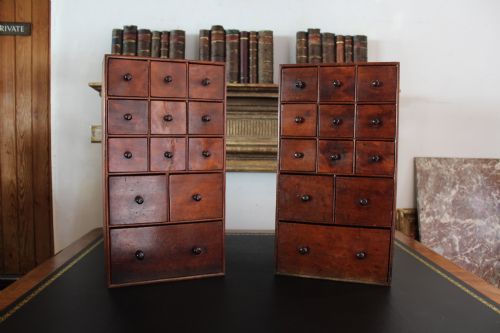
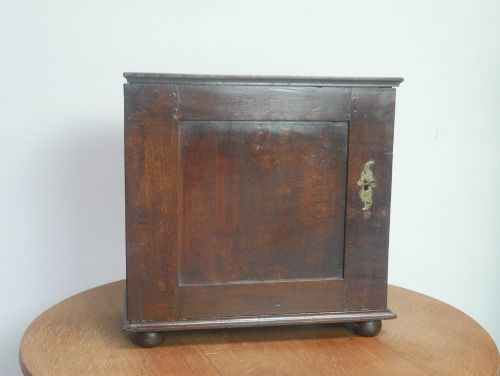
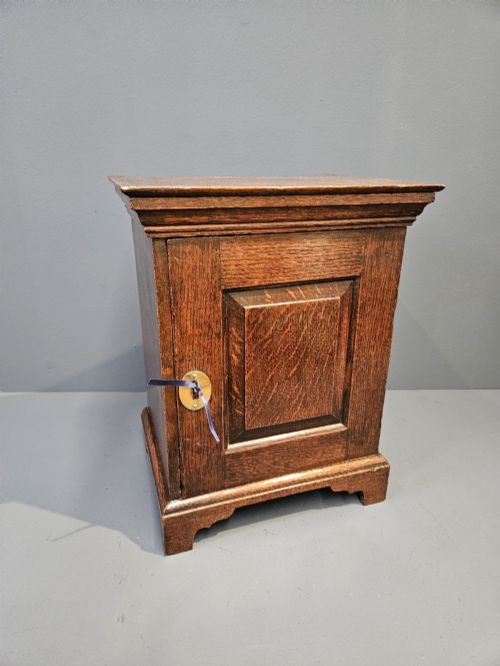
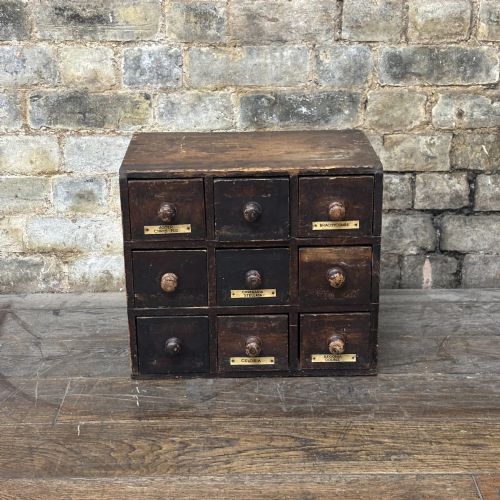
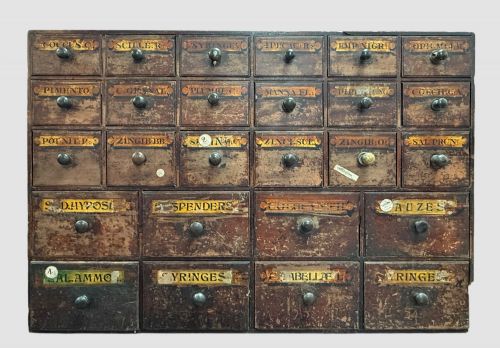
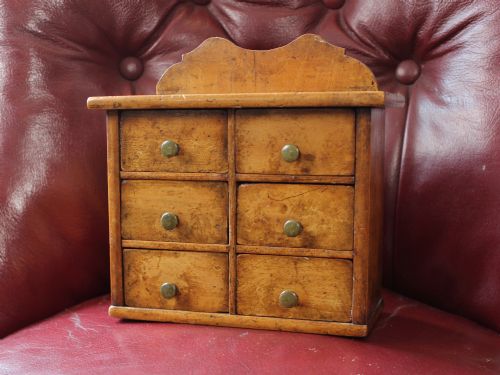
An apothecary spice cabinet combines the compact compartmentalised storage of historic medical chests with domestic culinary organisation. Buyers seeking an apothecary spice cabinet will encounter wall-mounted cupboards, banks of small drawers, and hanging storage pieces originating from the eighteenth and nineteenth centuries.
The selection ranges from early Georgian oak cupboards and George II wall cabinets to Victorian chemist shop fittings and nineteenth-century fruitwood spice drawers. Pieces span English, French provincial, Scandinavian country, and Chinese provincial origins, reflecting diverse local traditions of storage.
Most examples function as small storage cabinets, spice cupboards, or banks of drawers designed to keep provisions or remedies secure. Wall hanging spice boxes and corner cupboards provide alternative formats tailored for compact spaces.
Judging quality in historic storage
Quality rests in the integrity of the timber selection, the crispness of the drawer joints, and the retention of original brass hardware. Pieces with untouched aged surfaces and well-fitted internal configurations stand apart from heavily altered examples.
The refinement of the proportions and the subtlety of period details, such as inlaid mahogany work or panelled oak doors, distinguish standard utility furniture from finer cabinetmaking.
Homeopathic chests occasionally retain the faint aroma of nineteenth-century remedies locked in their tiny drawers.
The Apothecary Spice Cabinet Glossary
- Bank of drawers
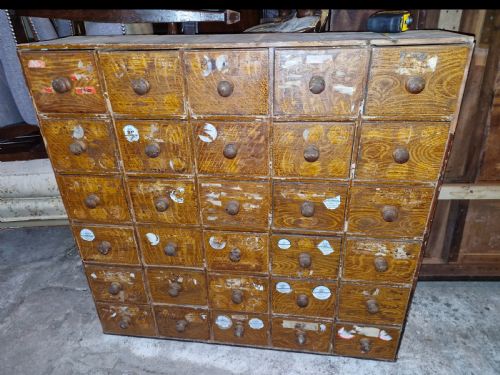
- An assembly of numerous small drawers arranged in rows, traditionally used in shops and surgeries for sorting contents efficiently. These units provide extensive segmented storage within a compact footprint.
- Spice cupboard
- A small wall-mounted or freestanding cabinet featuring a single door that conceals an interior fitted with miniature drawers or shelves. They were originally designed to protect precious culinary provisions from dampness and pests.
- Fruitwood
- Dense timber harvested from fruit-bearing trees such as pear, apple, or cherry, prized by cabinetmakers for its fine grain and warm tone. It frequently appears in smaller drawer components and specialist items.
- Chemist shop fitting
- Heavy-duty commercial cabinetry designed for nineteenth-century pharmacies and dispensaries to house medical ingredients. These pieces typically feature numerous uniform drawers built to withstand intensive daily use.
Apothecary Spice Cabinet: Frequently Asked Questions
How were spice cabinets used originally?
These cabinets housed expensive dried herbs, medicinal powders, and culinary spices that required dry, secure storage away from household pests. In professional settings, chemists utilised similar banks of drawers to organise raw medical ingredients.
Over time, the domestic versions transitioned from purely utilitarian food stores into decorative items that brought rustic charm to kitchen and living spaces.
Are wall hanging cabinets secure?
Historic wall hanging cabinets rely on traditional timber framing and integrated hanging brackets designed to support the weight of the empty structure and light contents. Modern placement requires checking these original mounting points and fixing them securely to suitable wall studs.
Overloading historic wall boxes with heavy modern items should be avoided to protect the aged joints and fixings.
How do I date an antique spice cupboard?
Dating relies on observing construction methods, timber types, and hardware styles such as brass drop handles or hinges. Eighteenth-century examples often feature pegged oak construction and fielded panel doors, while Victorian pieces show machine-sawn elements and different drawer tolerances.
Comparing the secondary woods inside the drawers to known regional timelines helps narrow down the origin.
Where should I place a spice cabinet?
These compact cabinets suit kitchens, dining rooms, and hallways where their small footprint adds vertical storage without dominating the floor space. Wall-hanging models perform best at eye level where the fine details of the timber and door hardware remain visible.
Placing them away from direct heat sources and damp areas protects the historic wood and prevents shrinkage.