

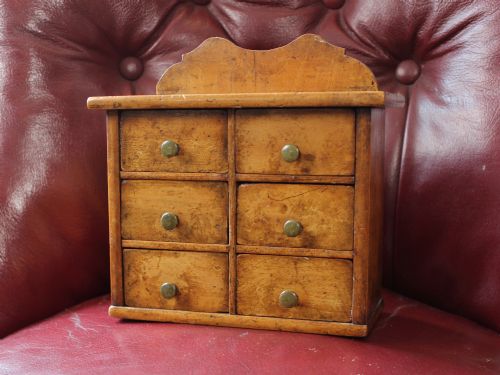


Tabletop Spice Box
These tabletop spice box pieces are compact wooden repositories for culinary provisions that bring period character to modern surfaces.
Tabletop Spice Box
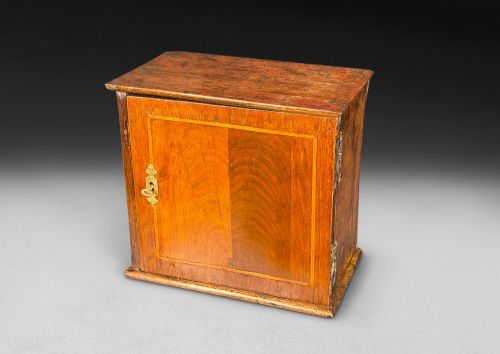
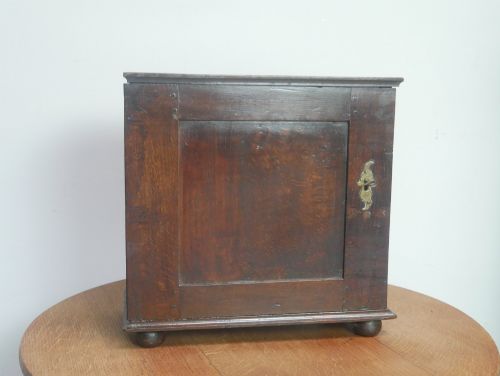
A tabletop spice box encompasses miniature table cabinets, spice cupboards, and fruitwood drawers designed to house provisions on furniture surfaces. The examples encountered on this page stretch from early eighteenth-century oak and walnut iterations to nineteenth-century mahogany and bamboo variants.
Makers constructed these small compartments as table cabinets, wall cabinets, and decorative objects. Buyers frequently meet Georgian oak cupboards and Victorian mahogany versions equipped with multiple internal drawers or lockable doors.
Materials and construction methods
Cabinetmakers utilised native and imported timbers including oak, walnut, mahogany, and fruitwood to build these small receptacles. Selected pieces incorporate brass hardware, floral carving, inlay work, and soft wood construction.
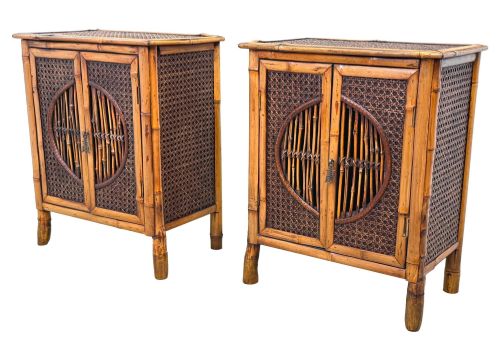
Artisans applied varied decorative techniques across different periods, ranging from early eighteenth-century surface decoration and carving to later Aesthetic movement bamboo and cane work.
Tabletop Spice Box Retail Price Guide 2026
Typical asking prices for tabletop spice box among the pieces listed under this phrase on Sellingantiques today, from the lower quarter to the upper quarter. They describe what is for sale here now, not the wider market.
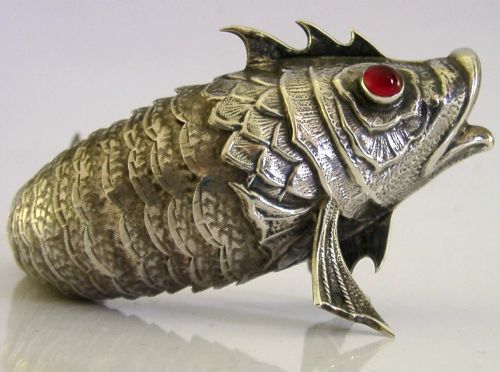
The listings show materials spanning oak, mahogany, walnut, bamboo, cane, and silver across periods from the eighteenth century to the mid-twentieth century.
Assessing quality and execution
The standard of execution rests on the selection of timber, such as figured burr walnut or dense early oak, paired with refined joinery. Finer examples display careful proportion and harmonious inlay rather than plain utilitarian assembly.
Hardware choice and surface finish distinguish superior pieces, where original brass locks and escutcheons remain intact. The crispness of carved details on oak and soft wood further separates standard production from exceptional work.
The Tabletop Spice Box Glossary
- Spice cupboard
- A small wall or tabletop cabinet fitted with internal drawers designed for storing culinary provisions. These pieces typically feature a single hinged door with brass hinges.
- Fruitwood
- Timber derived from fruit-bearing trees such as pear or apple, utilised by cabinetmakers for small decorative drawers and turned elements. It offers a dense, fine grain that takes a smooth finish.
- Burr walnut
- A specialised timber veneer sourced from walnut tree growths, displaying complex swirling grain patterns. Cabinetmakers applied this decorative wood to the exterior facades of fine miniature cabinets.
- Aesthetic Movement
- A nineteenth-century design style prioritizing visual beauty over narrative content, visible in bamboo and cane furniture construction. Pieces from this era often embrace lighter, exotic materials.
Tabletop Spice Box: Frequently Asked Questions
What were tabletop spice boxes used for?
These small receptacles stored valuable culinary spices, resins, and medicinal ingredients in domestic kitchens or dining spaces during previous centuries. Their enclosed compartments protected costly provisions from dampness and theft.
Over time, owners repurposed them to hold small documents, sewing equipment, or personal valuables on tabletops and sideboards.
How do I date a spice cabinet?
Dating relies on observing the timber species, construction joints, and decorative styles characteristic of specific eras. Eighteenth-century examples frequently employ solid oak or walnut with pegged joinery.
Later nineteenth-century versions introduce mahogany veneers, fruitwood elements, or alternative materials like bamboo reflecting Aesthetic design influences.
Where should I place a table cabinet at home?
These compact pieces fit well on sideboards, desks, or entrance console tables where their detailed woodwork remains visible. Their modest footprints allow them to sit comfortably on shelving units or chest tops.
Positioning them away from direct sunlight and heat sources protects historic timbers and veneered surfaces from drying out.
Are these cabinets lockable?
Many period examples incorporate working locks and escutcheons designed to secure valuable contents. Original keys occasionally accompany surviving pieces.
Lock configurations vary from simple brass latches on early oak cupboards to inset brass locks on Victorian mahogany models.