


Antique Writing Desk Table
An antique writing desk table offers a dedicated surface for correspondence, bringing traditional craftsmanship and timber character into a modern room.
Antique Writing Desk Table
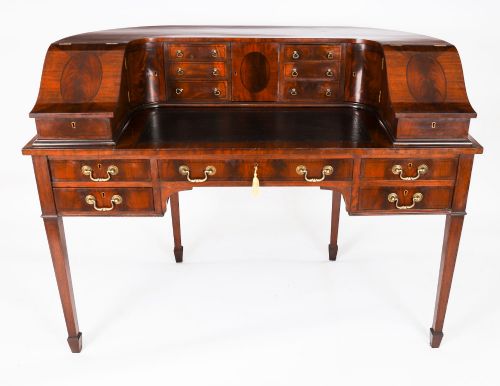
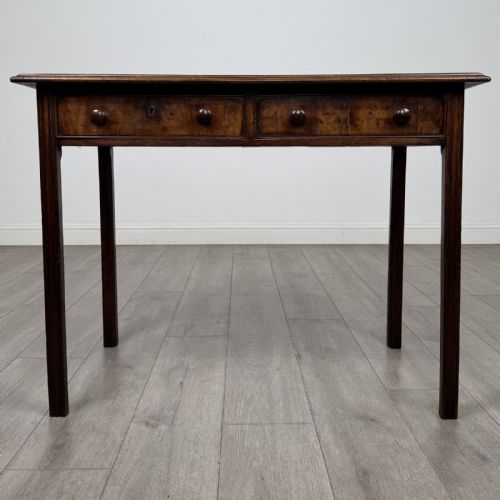
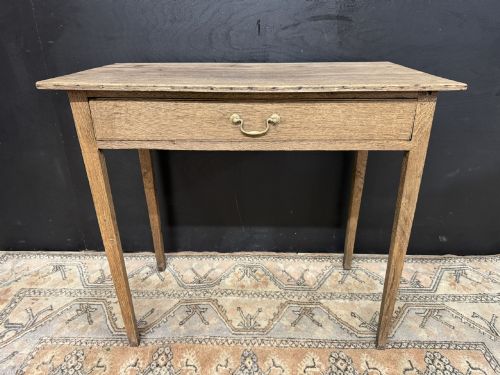
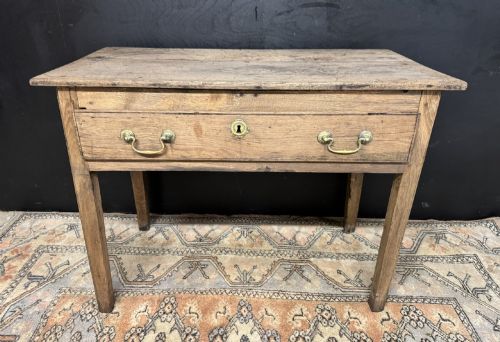
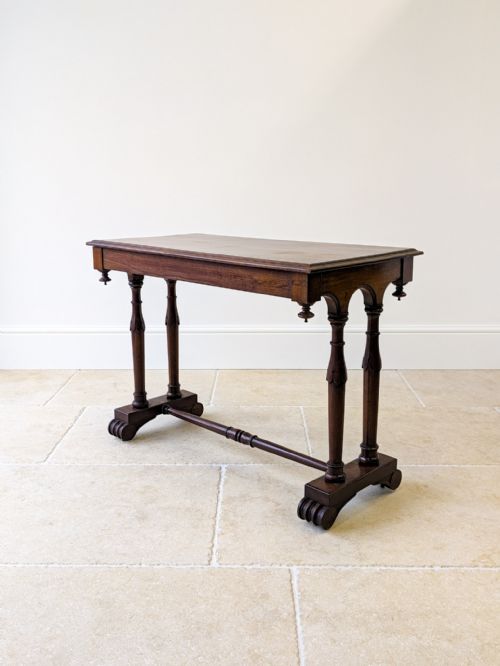
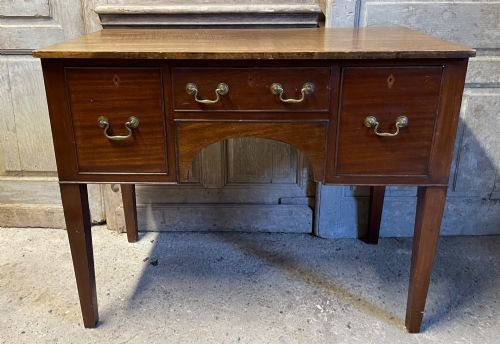
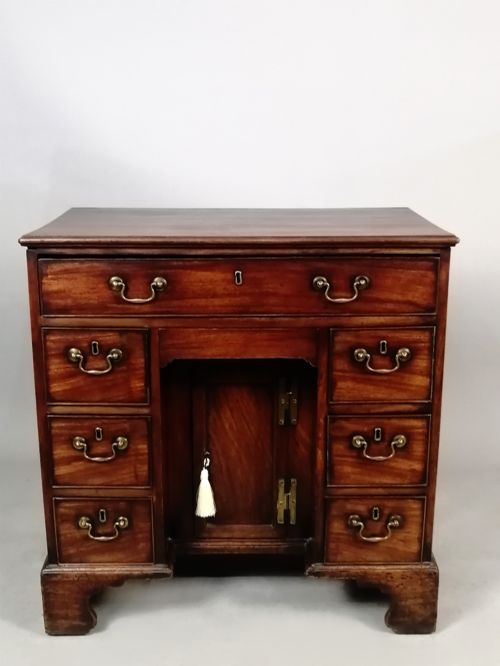
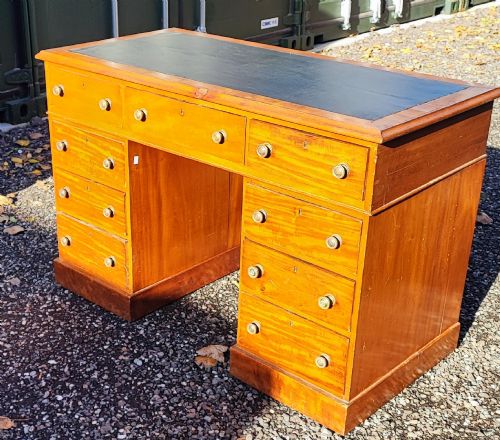
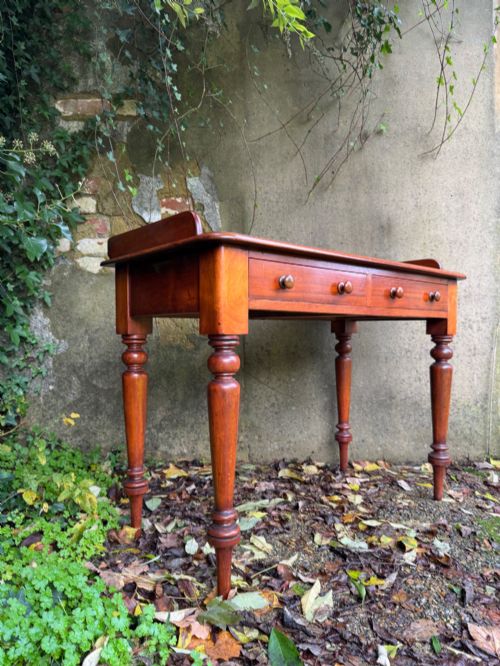
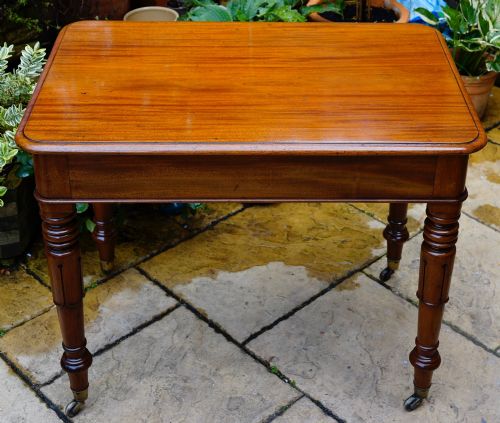
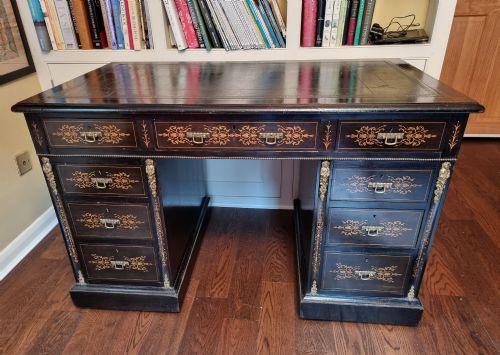
An antique writing desk table encompasses a diverse group of domestic furniture designed primarily for correspondence, study, and administrative tasks. The category ranges from compact side tables and lowboys to twin pedestal desks, kneehole forms, and elaborate bureau plat designs.
Buyers will most frequently encounter Victorian and Edwardian examples in mahogany, walnut, and oak, alongside Georgian period pieces and continental European interpretations. These objects served domestic and professional functions in studies, libraries, and withdrawing rooms across past centuries.
Variations in format include freestanding centre tables, partners desks intended for simultaneous use from multiple sides, and smaller ladies writing desks or bonheur du jour pieces furnished with superstructures.
Materials and Technique
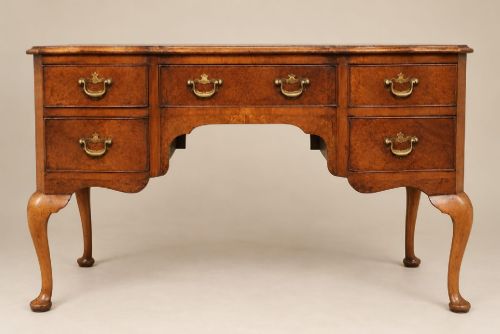
Cabinetmakers constructed these tables using a foundation of solid timbers such as mahogany, oak, and walnut, often applying decorative veneers including burr walnut, satinwood, and kingwood to principal surfaces. Grain selection was paramount, with figured sections utilised on drawer fronts and top panels to create visual depth.
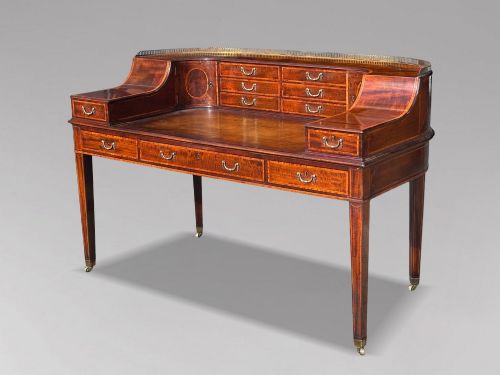
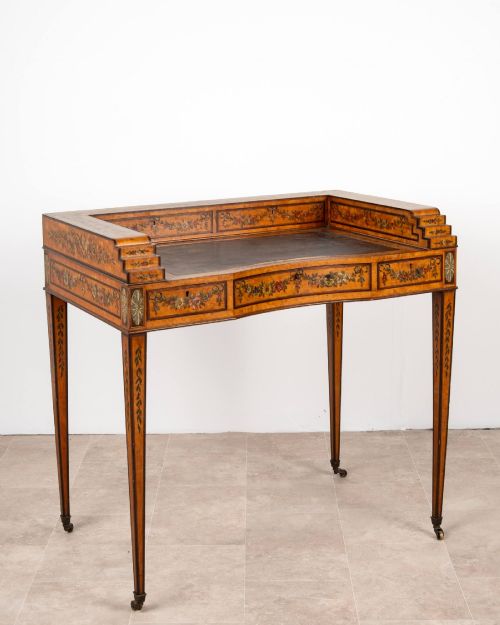
Inlaid ornamentation frequently incorporated contrasting woods, brass stringing, and floral marquetry, particularly in pieces influenced by French Louis XV revival tastes or English Regency styles. Writing surfaces were routinely inset with tooled leather or hide panels, bordered by gilt tooling.
Structural integrity relied on traditional joinery methods, including dovetail construction for drawers and sturdy framing for pedestal bases and turned or tapering legs.
Antique Writing Desk Table Retail Price Guide 2026
Typical asking prices for writing desk table among the pieces listed under this phrase on Sellingantiques today, from the lower quarter to the upper quarter. They describe what is for sale here now, not the wider market.
Listings feature periods spanning from early Georgian walnut pieces to 1930s Art Deco designs, utilising mahogany, oak, burr walnut, and rosewood.
Markers of Distinction
The distinction between standard examples and the finest workshop productions rests on the ambition of the design and the precision of execution. Master cabinetmakers, including recorded firms, applied meticulous attention to secondary timbers, internal drawer linings, and the continuity of grain across moving parts.
Hardware choice and metalwork fidelity signal superior status, observed in chased brass handles, ormolu mounts, and locks bearing maker stamps. The depth of hand-carved details, the complexity of parquetry or marquetry patterns, and the integration of finished panels on all four sides to allow freestanding placement further elevate a piece.
Maple & Co·Gillows Oxford Street Workshop·JAS Shoolbred·Spillman & Co
The Antique Writing Desk Table Glossary
- Kneehole desk
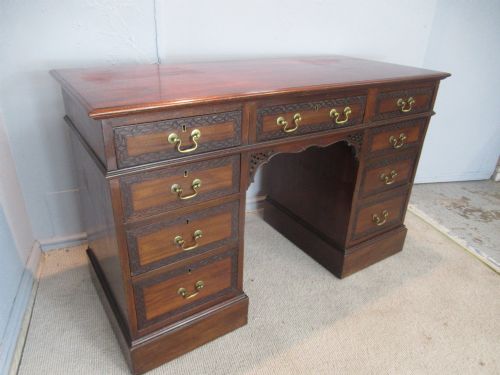
- A compact desk featuring a central recess for the user's legs, flanked by pedestals containing banks of small drawers.
- Partners desk
- A large double-sided desk designed to accommodate two people working face to face, typically equipped with drawers on both long elevations.
- Bonheur du jour
- A small, light ladies writing desk featuring a raised superstructure with compartments, shelves, or small drawers above the main work surface.
- Bureau plat
- A freestanding French writing table, generally rectangular and fitted with one or more drawers in the frieze, unencumbered by a superstructure.
- Marquetry
- Decorative veneer work formed by fitting pieces of various coloured woods, ivory, or shell into a ground veneer to create pictorial or geometric designs.
Antique Writing Desk Table: Frequently Asked Questions
What is a partners desk?
A partners desk is a large configuration built with drawer sets on both sides, allowing two people to sit opposite one another. These pieces originated to serve professional offices and grand libraries where associates shared workspace.
They stand out for being finished on all four sides, meaning they sit comfortably in the middle of a room rather than pushed against a wall.
How do I identify a Victorian desk?
Victorian examples typically employ dense timbers such as mahogany and walnut, often featuring turned legs, pedestal bases, or inset tooled leather writing surfaces. The style encompasses robust pedestal formats as well as refined French revival pieces with marquetry.
Cabinetmakers of this era frequently incorporated functional improvements like deeper drawers and integrated locking mechanisms for security.
Were these desks used in bedrooms?
Many lighter tables, such as ladies writing desks and bonheur du jour pieces, served dual purposes for correspondence and dressing. Surviving examples often feature integrated compartments for writing materials alongside mirrors or superstructures.
Their smaller proportions made them suitable for private chambers rather than formal public offices.
What is a kneehole desk?
A kneehole desk is a form defined by a central open space for the user, flanked by stacked banks of small drawers. Georgian and Victorian makers produced these in mahogany, oak, and figured walnut.
They provide substantial storage while maintaining a compact footprint compared to standard twin pedestal writing tables.