





Antique Woven Bagface
An antique woven bagface is the surviving front panel of a nomadic storage sack or saddlebag, prized for its dense tribal iconography and tactile wool work.
Antique Woven Bagface
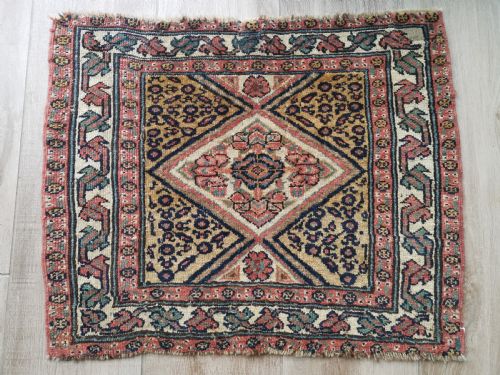
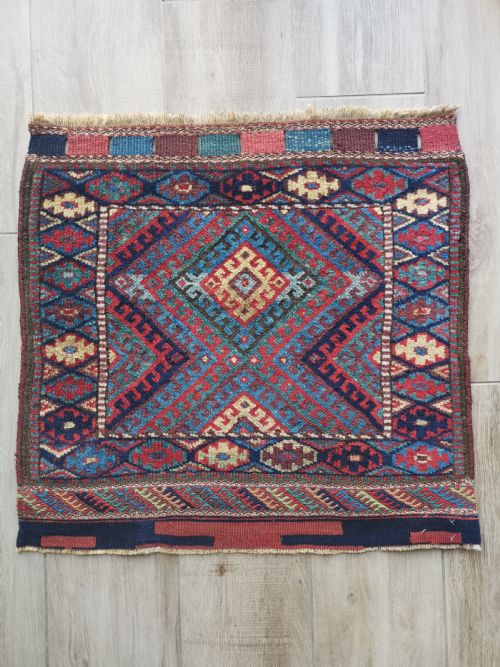
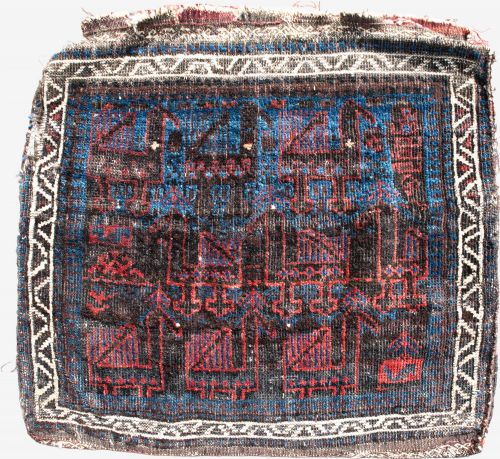
When you examine an antique woven bagface, you are looking at the resilient front panel of a nomad's storage sack, saddlebag, or dowry piece, removed from its backing through years of use or collector preference. These panels preserve the most intricate portions of tribal weaving, functioning originally to hold possessions on the move or inside a tent.
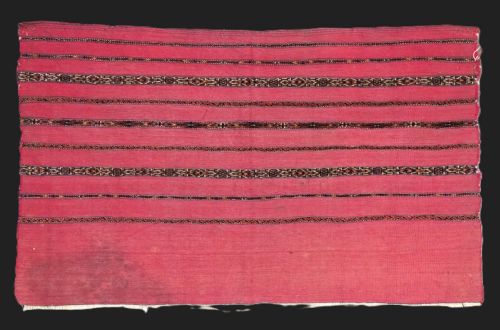
The specimens on this page emerge primarily from nineteenth-century tribal groups, spanning Persian, Turkmen, and Baluch workshops. You will encounter formats ranging from square torba and chuval faces to elongated storage sacks and specialised bird bags, each reflecting the specific region and nomadic heritage of its maker.
Materials and construction methods
The foundation and surface rely heavily on hand-spun wool and natural dyes, occasionally supplemented by goat hair for structural durability and cotton for crisp white contrasts. Weavers worked on portable ground looms, packing the weft tightly down to create a robust textile capable of enduring the rigours of nomadic life.
Natural colourants extracted from plants and minerals yield the rich reds, indigos, and earth tones characteristic of these tribal textiles. The density of the weave varies according to the specific tribal tradition, with certain Turkmen and Persian groups producing exceptionally fine knotting.
Antique Woven Bagface Retail Price Guide 2026
Typical asking prices for woven bagface among the pieces listed under this phrase on Sellingantiques today, from the lower quarter to the upper quarter. They describe what is for sale here now, not the wider market.
The listings here span the nineteenth and early twentieth centuries, uniting Persian, Turkmen, and Baluch tribal traditions through wool, goat hair, and natural dyes.
Assessing quality in tribal bagfaces
Quality rests primarily in the precision of the weave and the depth of the natural palette, distinguishing everyday utilitarian sacks from exceptional dowry pieces. A higher knot density allows complex tribal motifs, such as guls and curled leaves, to render with striking clarity.
The integrity of the wool and the vibrancy of the un-faded natural dyes also dictate the standing of a piece. Examples that retain their original formatting and crisp structural edges command greater appreciation among collectors of nomadic textiles.
The Antique Woven Bagface Glossary
- Bagface
- The decorated front panel of a nomadic storage sack or saddlebag. It is typically preserved after the plain back has worn away.
- Torba
- A wide Turkmen storage bag traditionally used inside the nomadic tent. These pieces frequently display rows of primary guls.
- Chuval
- A large Turkmen tent bag designed for bedding and household storage. They showcase some of the finest tribal weaving from the nineteenth century.
- Gul
- A repeating medallion or octagonal motif central to Turkmen and other Central Asian tribal designs. Each pattern often identifies a specific tribe or clan.
- Ikat
- A dyeing technique where bundles of threads are tightly wrapped and dyed prior to weaving. This creates characteristic feathered edges along the pattern outlines.
Antique Woven Bagface: Frequently Asked Questions
What were antique woven bagfaces used for?
Nomadic tribes utilised these sturdy sacks for storing household goods, blankets, and provisions during seasonal migrations. Mounted across pack animals or hung inside tents, they kept belongings organised and protected.
Over time, collectors and dealers separated the decorative front panels from their plain wool or goat hair backs to display the intricate iconography as flat textiles.
How do I identify a Turkmen bagface?
Turkmen bagfaces are typically distinguished by their rich madder-red grounds and repeating geometric medallions known as guls. Subdivisions like the Tekke, Yomut, and Ersari tribes each employed distinct colour palettes and border structures.
Look closely at the weave density and secondary ornaments like curled leaves or hooked motifs to narrow down the specific regional origin.
How should I display an antique bagface?
These textile panels can be mounted on a stretched linen backing and framed behind conservation glass, or gently hung using a custom sleeve and velcro system. Avoid placing them in direct sunlight to protect the natural dyes from fading.
Routine maintenance requires only gentle surface suction through a mesh screen to remove accumulated dust without straining the aged wool fibres.