

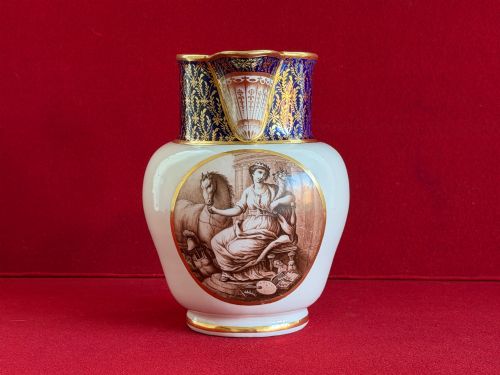
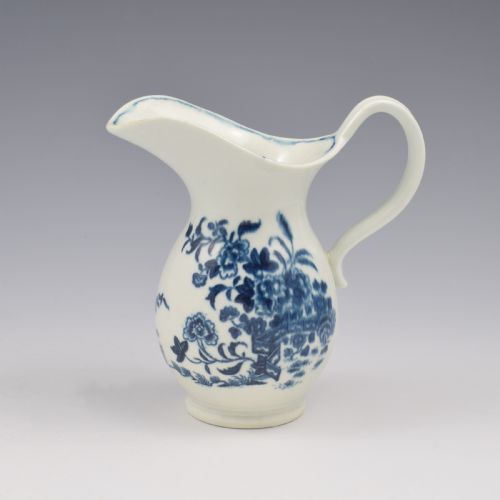


Antique Worcester Milk Jug
An antique Worcester milk jug brings the height of English porcelain manufacture to the table, offering centuries of artistry in a small, useful form.
Antique Worcester Milk Jug
An antique worcester milk jug encompasses everything from delicate eighteenth-century soft-paste porcelain pieces used at tea tables to later painted vessels from the Victorian, Edwardian, and mid-century periods. Buyers searching this phrase meet domestic dairy containers ranging from sparrow beak forms to larger water ewers and mask jugs.
The earlier examples stem from the Dr Wall and First Period eras of the eighteenth century, featuring hand-painted motifs such as the Fisherman pattern and parrot designs. Later centuries bring the substantial output of Royal Worcester and Chamberlain Worcester, spanning armorial crests, rope edges, and the fine fruit painting associated with artists like Freeman.
How they were made
The manufacture of these milk jugs relies fundamentally on porcelain and soft-paste porcelain, shaped into practical spouts, handles, and bulbous bodies. Makers applied cobalt underglaze for early blue and white designs before adopting rich enamel palettes and delicate gold gilt or gold leaf accents.
Surface finish depends on careful glazing, providing a smooth barrier that protects hand-painted fruit panels, armorial crests, and transfer-printed scenes. Later pieces integrate artist signatures and moulded details like rope edges directly into the ceramic body.
Antique Worcester Milk Jug Retail Price Guide 2026
Typical asking prices for worcester milk jug among the pieces listed under this phrase on Sellingantiques today, from the lower quarter to the upper quarter. They describe what is for sale here now, not the wider market.
A tiny sparrow beak jug once poured cream for tea drinkers who preferred their dairy delivered from the beak of a bird.
What varies in quality
The skill involved in polychrome enamel work and fine fruit painting dictates the standing of later Royal Worcester examples. Signed pieces by established decorators demonstrate a higher level of individual artistry than standard production items.
Dr Wall·Chamberlain Worcester·Royal Worcester
The Antique Worcester Milk Jug Glossary
- Sparrow beak jug
- A small eighteenth-century milk or cream jug characterised by a pinched, bird-like spout. This form is particularly typical of early Worcester porcelain.
- Soft-paste porcelain
- A ceramic composition fired at lower temperatures than true hard-paste porcelain, common in eighteenth-century English works. It yields a warm, slightly translucent body.
- Cobalt underglaze
- A blue pigment applied to the unfired ceramic body beneath the clear glaze. This technique ensures the colour remains permanent through high-temperature firing.
- Armorial crest
- A heraldic design painted onto porcelain to denote a specific family lineage. These custom commissions represent high status in Georgian dining wares.
- Mask jug
- A vessel featuring a moulded face or mask beneath the spout, often modelled as a beast or human feature. Eighteenth-century Worcester examples combine this relief work with painted details.
Antique Worcester Milk Jug: Frequently Asked Questions
How do I spot an eighteenth-century Worcester milk jug?
Look for the characteristic soft-paste porcelain body, which often shows slight surface imperfections or translucency when held to the light. Early pieces frequently feature cobalt underglaze blue painting or hand-applied enamel decoration typical of the Dr Wall period.
Examine the form of the spout and handle closely, as eighteenth-century makers favoured specific shapes like the sparrow beak. Unmarked early wares rely heavily on stylistic attribution rather than factory stamps.
What is a sparrow beak milk jug?
A sparrow beak milk jug is a small, domestic container designed for cream or milk during the Georgian tea service. Its defining feature is a short, pinched lip resembling a bird's beak.
These pieces were produced extensively during the eighteenth century in porcelain bodies. Their compact size made them essential table companions for pouring small quantities of dairy.
Are painted fruit jugs by Royal Worcester modern?
Royal Worcester fruit-painted jugs span several decades, appearing across the late Victorian era, the 1920s, and mid-century periods like the 1940s and 1960s. The tradition of artists signing their fruit panels continued well into the twentieth century.
While inspired by earlier aesthetic standards, these twentieth-century pieces utilise refined porcelain bodies and modern kiln techniques. Maker marks on the base help determine the precise manufacturing era.