



Antique Wool Storage Bag
When you handle an antique wool storage bag, you hold the woven archive of nomadic life from Central Asia and Persia.
Antique Wool Storage Bag
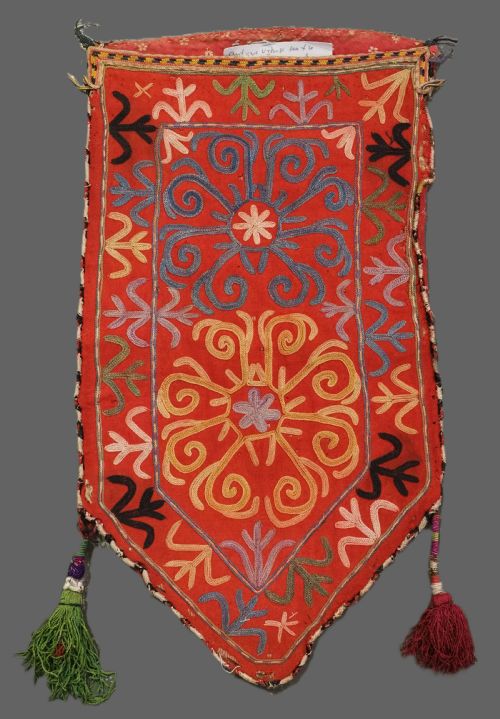
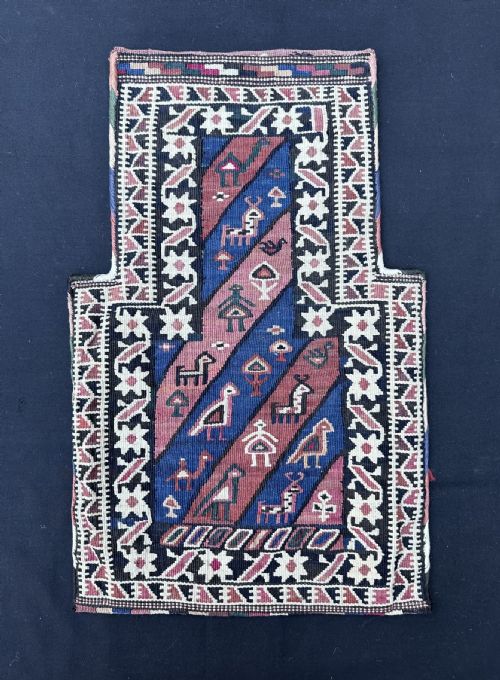
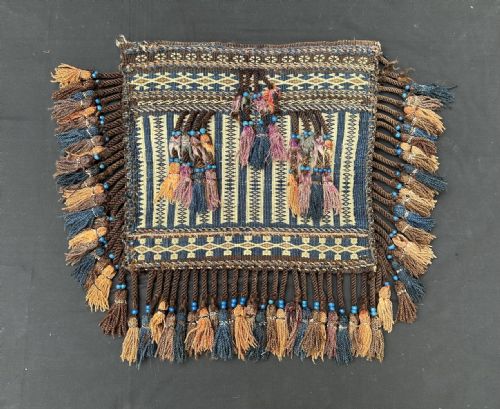
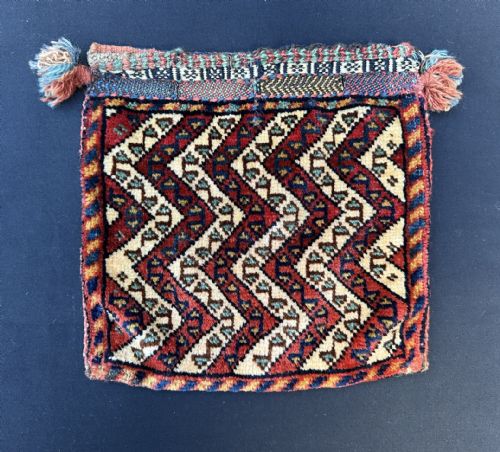
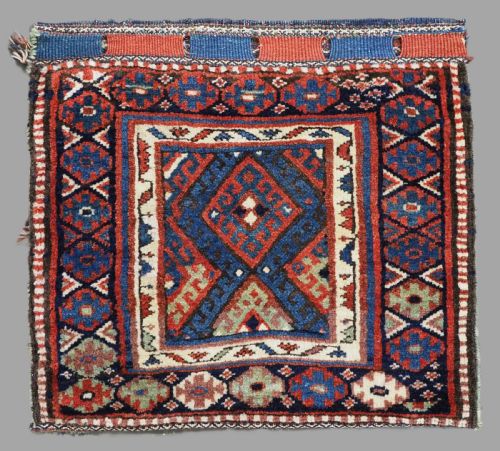
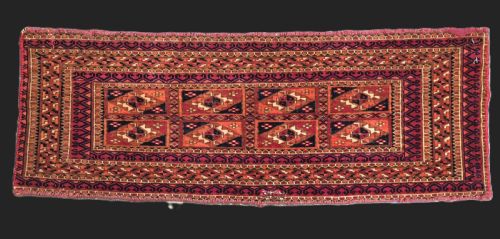
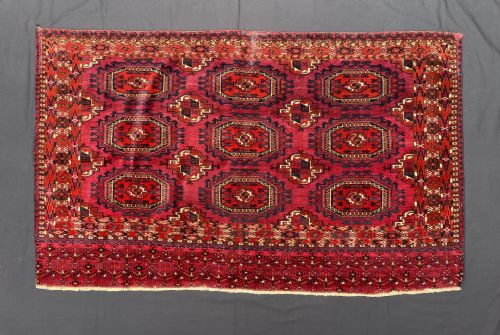
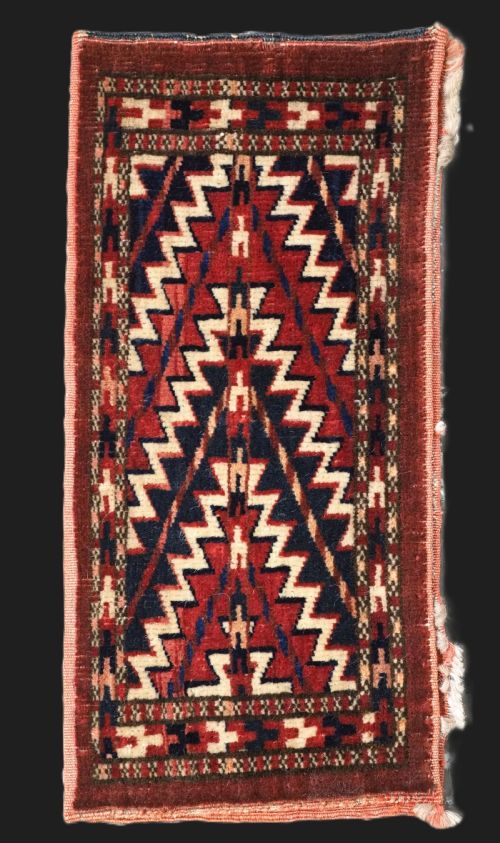
An antique wool storage bag represents the utilitarian weaving of tribal groups including the Turkmen, Baluch, Kurdish and Qashqa'i peoples. These textiles served practical functions inside tents and homes, holding grain, salt, spindles or personal belongings.
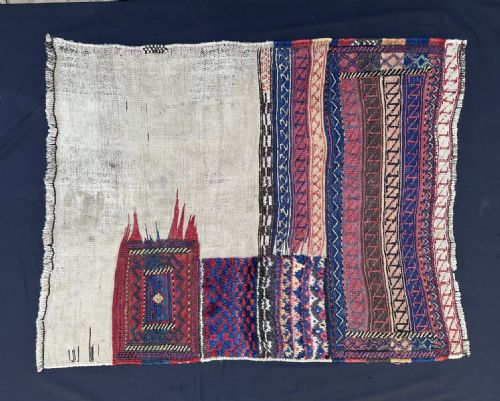
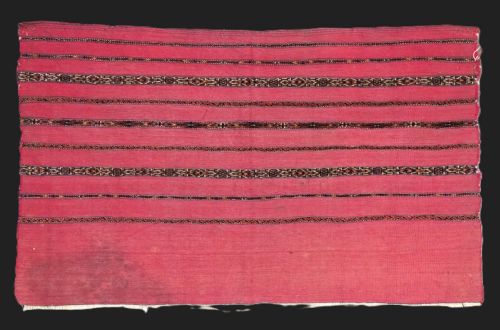
The selection here includes complete pieces with original plain weave backs alongside bag faces that were separated from their lower portions over time. Forms range from large chuvals and torbas to specialised spindle bags and salt bags originating from regions spanning Turkmenistan, Persia and Afghanistan.
These items date primarily from the middle of the nineteenth century through to the early decades of the twentieth century. They reflect the distinct regional styles and tribal traditions of nomadic makers working with traditional materials.
What varies in quality
Quality rests in the density of the weave, the clarity of the tribal guls or motifs, and the depth of the natural dyes. Finer knotting and balanced proportions distinguish superior examples from standard utility pieces.
The survival of original components such as plain weave backs, hanging loops and side finishes significantly elevates a piece. Preservation of the wool pile and integrity of the foundational structure determine the overall standard.
Some Yomut spindle bags still carry the faint scent of lanolin from the sheep whose fleece was spun beside the Caspian Sea.
The Antique Wool Storage Bag Glossary
- Chuval
- A large Turkmen storage bag traditionally used for household bedding and clothing inside the yurt.
- Torba
- A smaller storage bag, often rectangular, hung on the lattice walls of a nomad tent.
- Gul
- A repeating primary medallion motif characteristic of Turkmen and Central Asian tribal weaving.
- Mafrash
- A rectangular storage sack or panel associated with Caucasian and Persian nomadic groups, often forming part of a pair used for transport on pack animals.
- Igsalyk
- A specialised spindle bag woven by Yomut tribes to hold wool-spinning tools and equipment.
Antique Wool Storage Bag: Frequently Asked Questions
What did nomads store in these bags?
Nomadic families used these containers for practical daily storage inside tents and during seasonal migrations. Items ranged from household grain and salt to personal vanity belongings and wool-spinning tools.
Larger sacks held bedding and heavy wool garments to keep them off damp ground. Smaller hanging bags kept smaller implements accessible along the lattice walls of the dwelling.
Are these bags complete or just faces?
The inventory includes both complete bags with their original plain weave backs intact and standalone bag faces. Many surviving pieces retain their original structure, while others lost their rear panels through decades of use or separation.
Complete examples offer a view of the original construction and back panel techniques. Bag faces display the primary decorative weaving intended to be seen when hanging inside a tent.
How do I hang a textile on the wall?
Mounting these textiles requires weight distribution across the upper edge rather than piercing the fabric with nails or direct stitches. A padded wooden batten or archival Velcro strip sewn to a cotton sleeve works well.
This method supports the structure evenly across the wool and cotton foundation without stressing the historical fibres. Ensure the display location avoids direct sunlight to protect the natural dyes.
How do I identify which tribe made a bag?
Tribal attribution relies on specific design vocabulary, structural formats and colour palettes unique to each weaving group. Turkmen tribes utilise distinct guls and deep madder red grounds, while Baluch and Kurdish pieces show darker palettes and banded weft work.
Examining the selvedges, end finishes and wool quality provides further clues to regional origins in Persia, Afghanistan or Central Asia.