
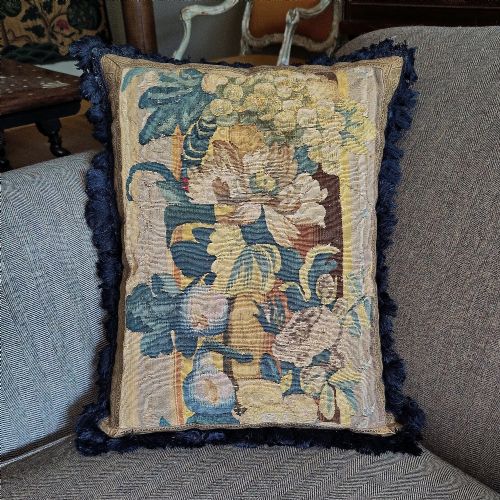


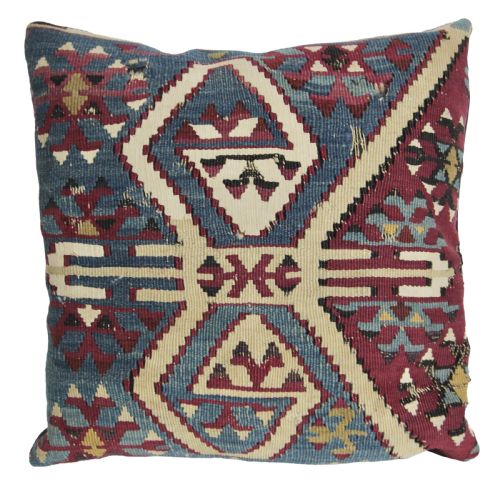

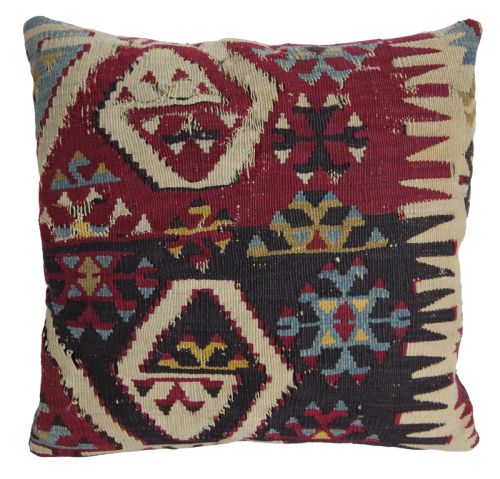


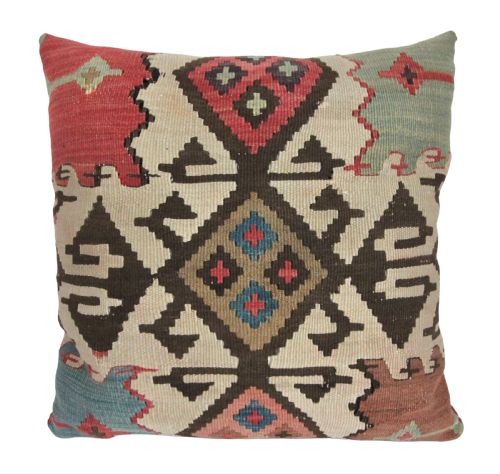
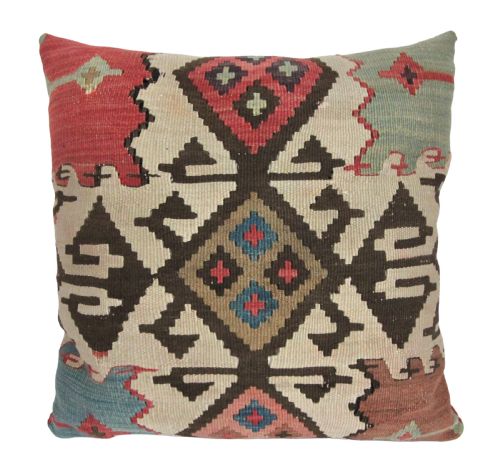


Antique Wool Scatter Pillow
These antique wool scatter pillow options bring texture and history into a room through repurposed fragments of carpets, kilims and tapestries.
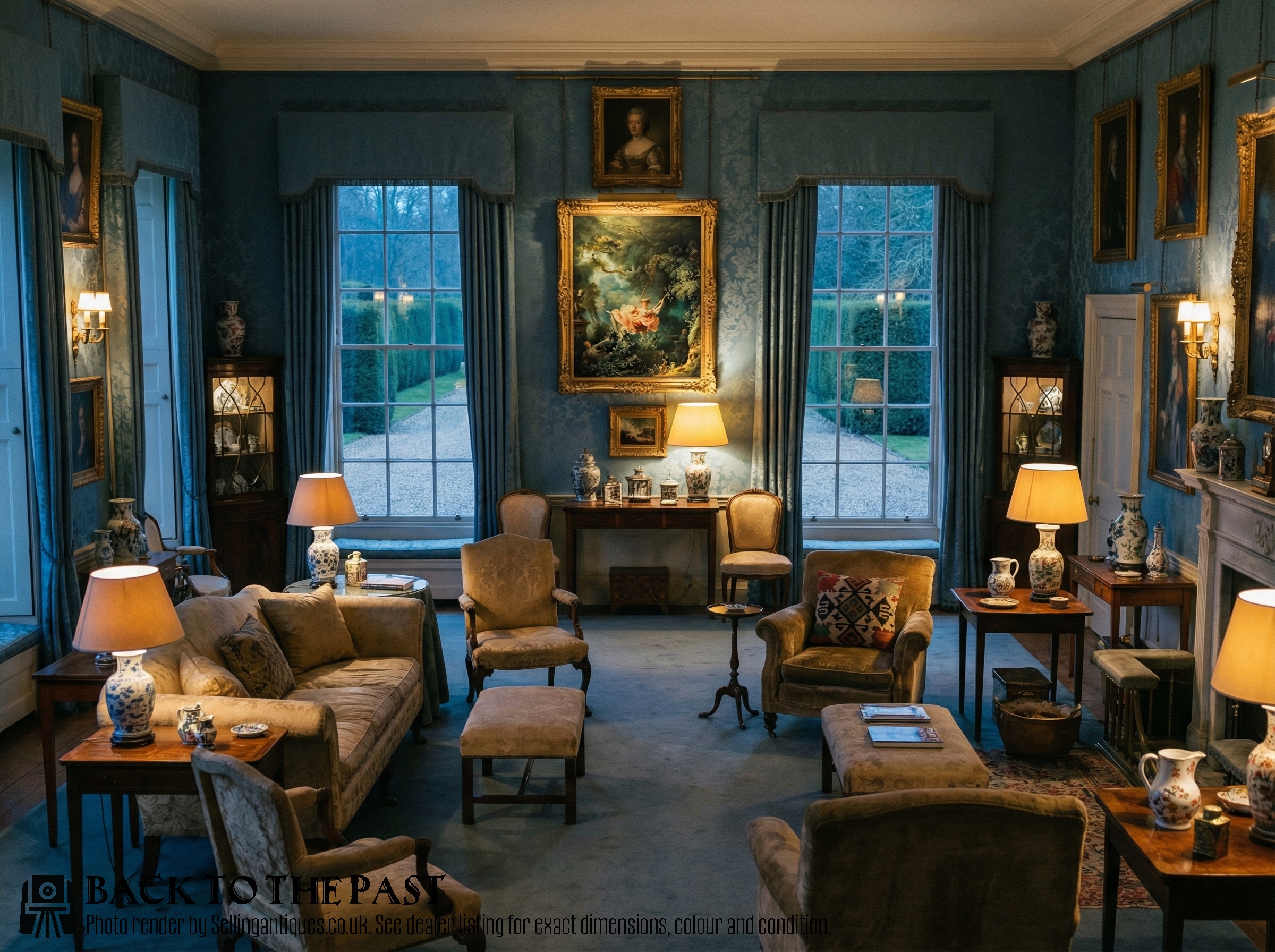
Antique Wool Scatter Pillow
When you search for an antique wool scatter pillow, you encounter decorative cushions fashioned from older textiles rather than newly woven covers. The forms range from simple square cushions to larger hand-woven bag face cushions utilised as soft furnishings.
The most common examples on this page are kilim cushions, alongside Aubusson cushions and Flemish tapestry border fragments. These pieces repurpose tribal rugs and French tapestries into domestic items.
The periods span from the seventeenth century through to the early twentieth century, incorporating Anatolian, Persian and French styles. Each piece shows the aesthetic of its original weaving tradition, adapted for modern seating.
Construction and materials
The primary material is wool, frequently combined with cotton, silk and linen elements to construct the cushion covers. Passementerie trim often finishes the edges of these textile creations.
Makers utilised fragments cut from larger carpets, rugs and tapestries, turning flat-woven kilims and pile carpets into functional cushions. Hand-woven bag faces from tribal pieces provide another distinct construction method seen across the listings.
Listings feature wool, cotton, silk, linen and passementerie across periods ranging from the seventeenth century to the twentieth century.
Judging quality in textile cushions
Quality depends upon the integrity of the textile fragment and the skill involved in adapting it into a cushion. Tighter weaves and well-preserved natural dyes elevate the standing of a piece.
The provenance and visual impact of the source material dictate the overall character of the cushion. Pieces retaining clear tribal patterns or detailed floral tapestry work hold stronger visual interest.
The Antique Wool Scatter Pillow Glossary
- Kilim
- A flat-woven carpet or rug made in countries such as Turkey and Iran. These textiles form many of the scatter pillows found in this category.
- Aubusson
- A style of tapestry originating from the French town of Aubusson. These woven panels often depict floral or pastoral scenes.
- Bag face
- The front panel of a tribal storage bag, typically woven with distinctive geometric motifs. These faces are frequently salvaged to make decorative cushions.
- Passementerie
- Edging ornaments such as tassels, braids or fringes applied to the borders of furnishings. This trim frames the textile panels.
- Flemish tapestry
- Woven wall hangings produced in Flanders during earlier centuries. Fragments of these borders appear in cushion covers.
Antique Wool Scatter Pillow: Frequently Asked Questions
What is an antique wool scatter pillow made from?
These cushions are constructed from repurposed textile fragments, primarily wool, cotton, silk and linen. Makers use salvaged pieces of kilims, tribal rugs and tapestries to form the covers.
Passementerie trim often edges these pieces, completing the conversion from larger woven items into scatter cushions.
How do I date an antique scatter pillow?
Dating relies on identifying the age of the source textile rather than the cushion assembly itself. Pieces incorporate materials from the seventeenth century up to the early twentieth century.
Stylistic markers, such as Anatolian tribal patterns or French Aubusson designs, help establish the period of origin.
Where did these decorative cushions originate?
The textiles originate from various traditions, including Anatolian, Persian and French weaving centres. Tribal groups and European workshops produced the original carpets and tapestries.
Later conversion turned these historical flat-weaves and pile carpets into domestic furnishings for seating areas.
How should I care for a wool cushion?
Gentle handling preserves the aged fibres and woven structures of these fragile textile pieces. Avoiding direct sunlight prevents the natural dyes from fading over time.
Light surface cleaning is preferable to heavy washing, maintaining the integrity of the wool and silk elements.