

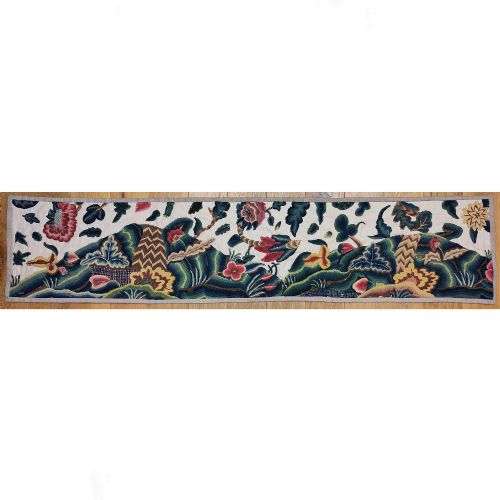


Antique Wool Needlepoint
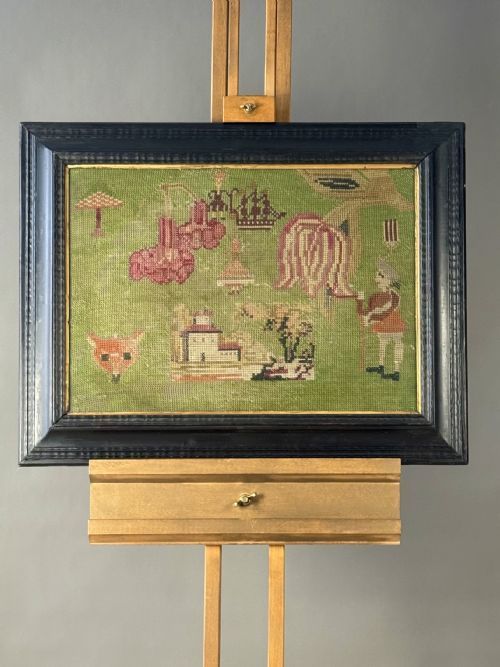
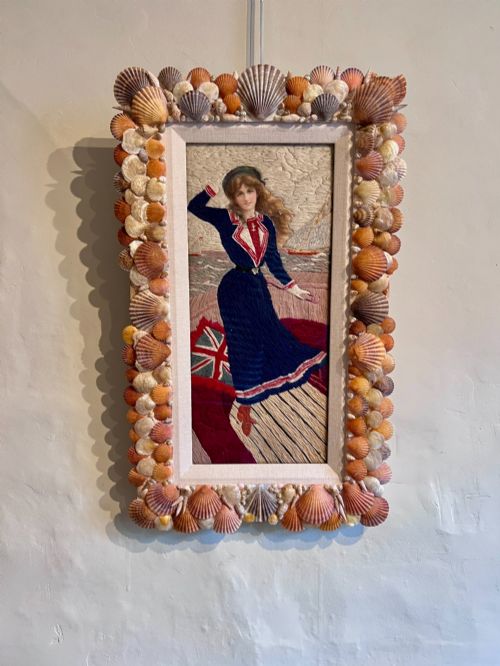
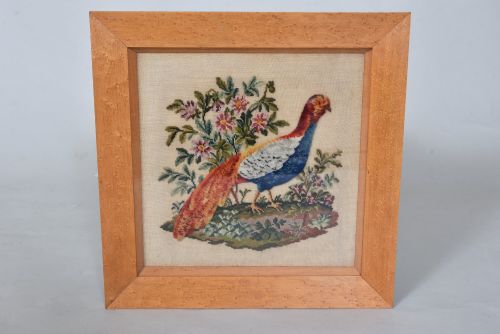
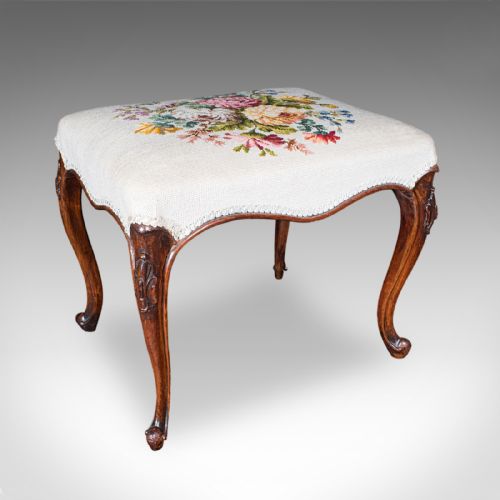
These antique wool needlepoint pieces range from framed pictorial panels to fireside stools worked in wool, linen, canvas and silk.
Antique Wool Needlepoint
When you search for antique wool needlepoint, you encounter historic stitched textiles spanning the seventeenth through to the early twentieth century. These works take many forms, including framed wall art, samplers, cushions, fire screens and footstools.
The pieces most commonly met on this page date from the Victorian era and the eighteenth century. They display subjects ranging from pastoral scenes and portraits to floral arrangements and animals.
Originating across England, France, Italy, Portugal and Sweden, these textiles demonstrate domestic handwork alongside professional tapestry weaving. They integrate structural elements of wood, glass, giltwood and brass into frames and furniture mounts.
Materials and construction
Makers stitched wool yarns, often combined with silk, cotton and glass beads, onto foundational grounds of linen, canvas and cotton. Needlework techniques such as Berlin work, gros-point and plushwork created textured surfaces on these woven supports.
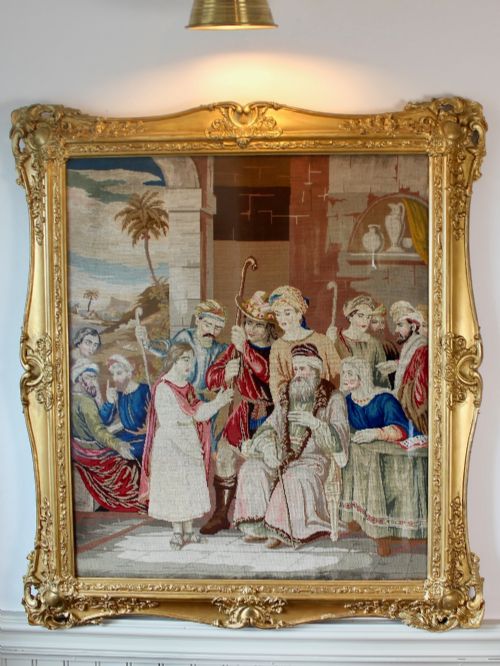
Many pictorial panels and samplers retain their original surrounds, including burr maple, carved oak and giltwood frames with verre églomisé glass panels. Functional pieces incorporate walnut and oak frames for footstools, fire screens and bell pulls.
Antique Wool Needlepoint Retail Price Guide 2026
Typical asking prices for wool needlepoint among the pieces listed under this phrase on Sellingantiques today, from the lower quarter to the upper quarter. They describe what is for sale here now, not the wider market.
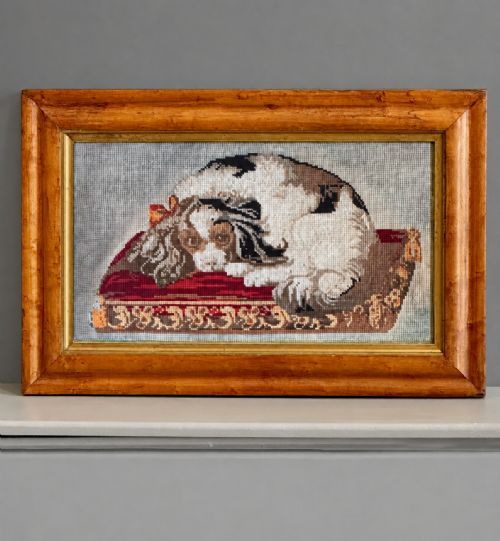
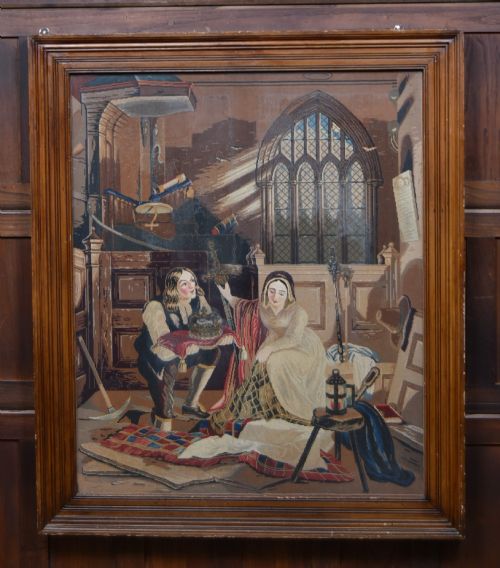
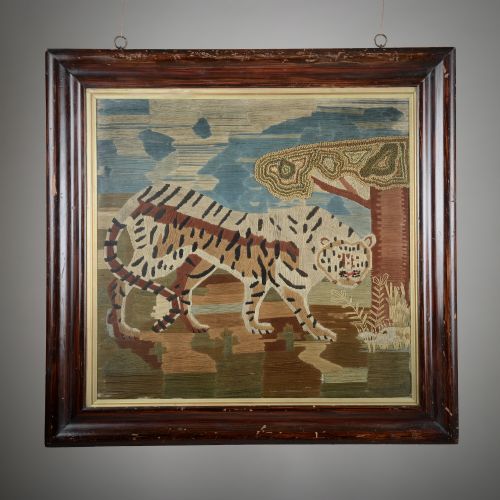
Several panels capture unusual subjects, including a plushwork pheasant, a tiger, a King Charles spaniel and a portrait of Little Red Riding Hood.
Defining quality in needlepoint
Quality rests in the precision of the stitching and the complexity of the colour palette. Finer canvas work achieves greater detail in facial expressions, foliage and shading, whereas coarser execution results in simpler, folky compositions.
The survival of the piece within its original period frame, such as a burr maple or giltwood moulding, elevates its standing. The integrity of the wool fibres and the stability of the foundation canvas dictate the physical condition of each textile.
The Antique Wool Needlepoint Glossary
- Berlin work
- A type of needlepoint worked in wool on canvas from a printed and hand-coloured grid pattern. It became extremely popular during the Victorian period for cushions, pictures and stools.
- Sampler
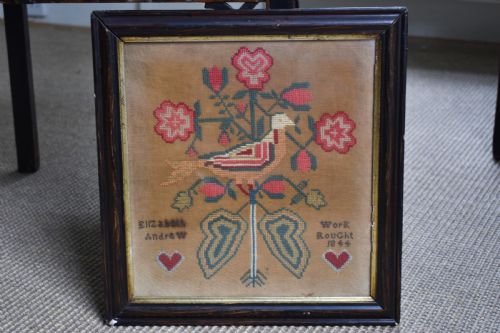
- A piece of embroidery produced as a demonstration or test of skill in various stitches. Historic examples frequently record alphabets, motifs and dates.
- Gros-point
- A coarse needlepoint stitch worked on canvas, typically using wool yarn. It provides a durable surface suited for upholstery, rugs and heavy wall hangings.
- Plushwork
- An embroidery technique that leaves loops of yarn uncut or sheared to create a raised, velvety pile. This method adds three-dimensional texture to pictorial subjects like animals.
- Verre églomisé
- A process of applying cold gilding and painting to the rear face of glass. It appears on antique picture frames to create a reflective, decorative border around the textile.
Antique Wool Needlepoint: Frequently Asked Questions
How do I clean antique needlepoint?
Historic textiles require gentle surface cleaning with a soft brush or low-suction vacuum through a protective mesh screen. Moisture damages vulnerable wool fibres and historic wood frames.
Professional textile conservators should handle deep cleaning or structural repairs to prevent dye bleeding and canvas distortion.
Can I use antique needlepoint cushions?
Cushions made from antique needlepoint suit light decorative placement rather than heavy daily use. The aged wool and canvas grounds weaken over centuries of existence.
Backing the textile with a supportive cotton lining helps preserve the original stitching when placed on chairs or beds.
How do I date an embroidered panel?
Stylistic clues, materials and framing hardware provide the primary evidence for dating. Eighteenth-century pieces often feature pastoral scenes and fine silk work, while Victorian examples frequently show Berlin work and plushwork.
Inscribed dates, wool types and mounting techniques help narrow the period of origin.
What is the difference between tapestry and needlepoint?
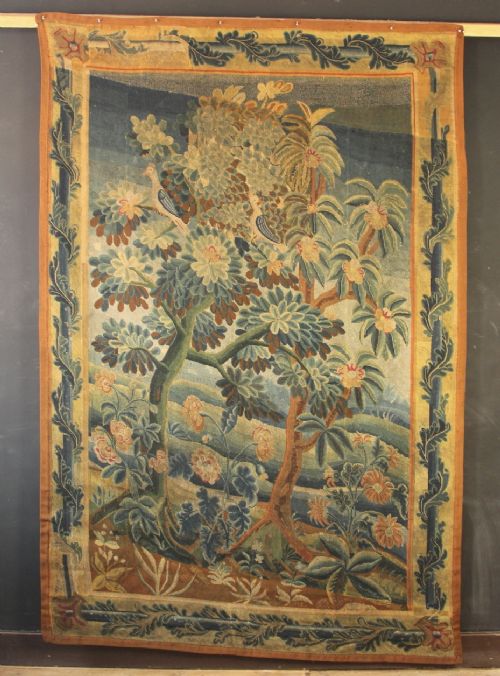
True tapestry is woven on a loom using warp and weft threads to build the image simultaneously with the fabric structure. Needlepoint is stitched by hand onto an already woven canvas or linen ground.
Many antique pieces described as tapestries are actually needlework panels executed on canvas.