
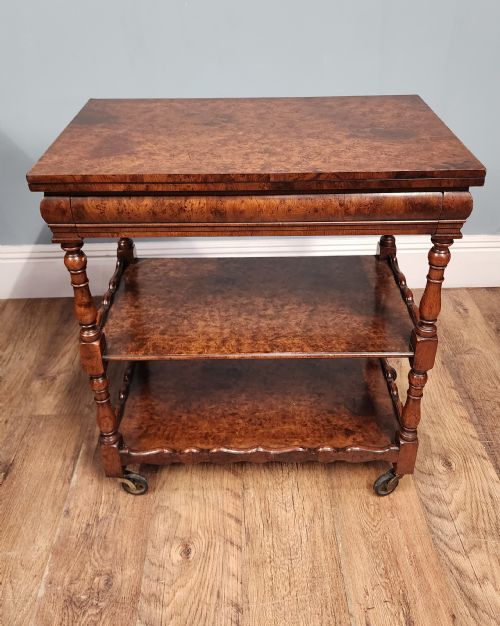


Antique Wooden Trolley Table
These antique wooden trolley table examples bring mobile service and period timber to a room, offering practical tiers for modern hosting.
Antique Wooden Trolley Table
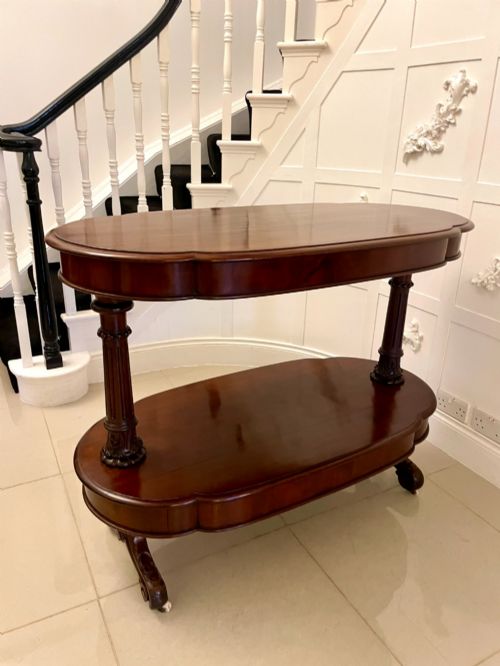
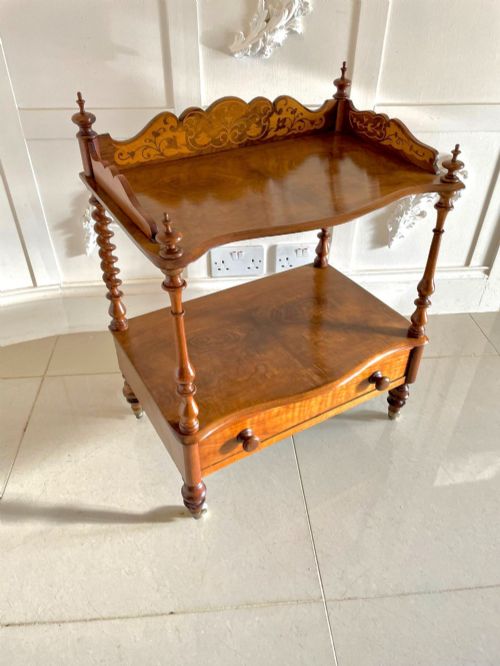
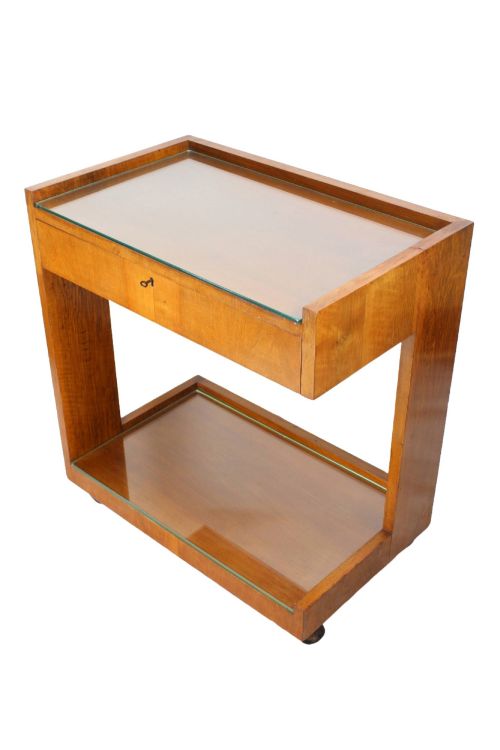
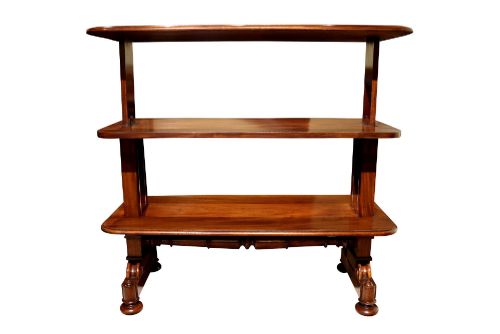
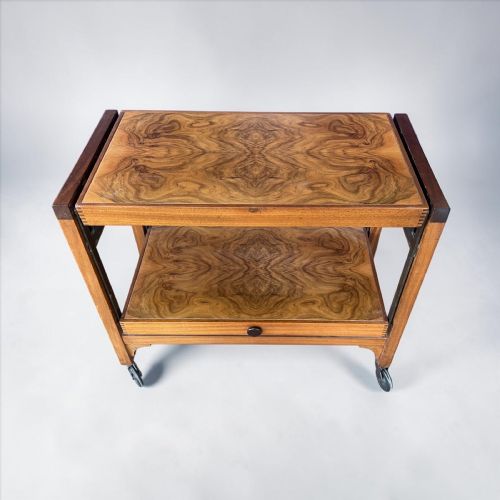
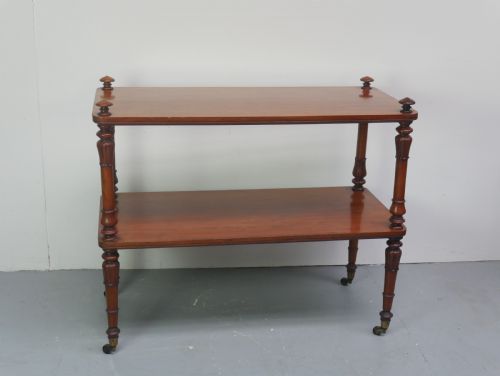
When you search for an antique wooden trolley table, you encounter pieces designed for serving refreshments, carrying courses, or displaying items across rooms. The selection ranges from Georgian serving pieces and Victorian three-tier buffets to Edwardian tea trolleys and Art Deco metamorphic drinks chests.
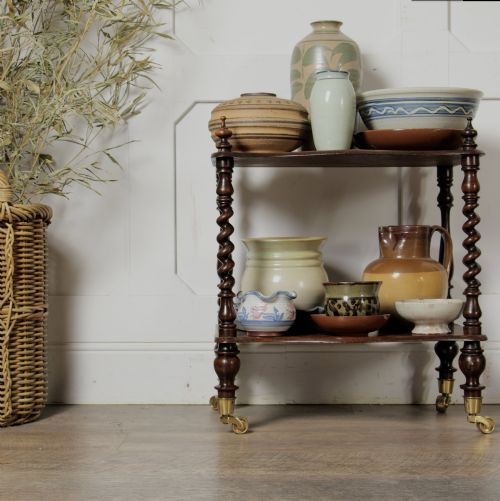
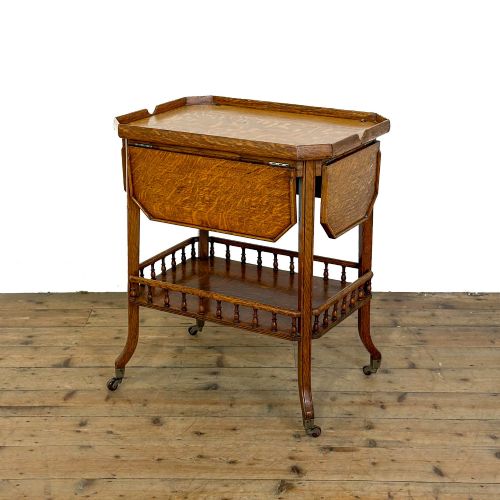
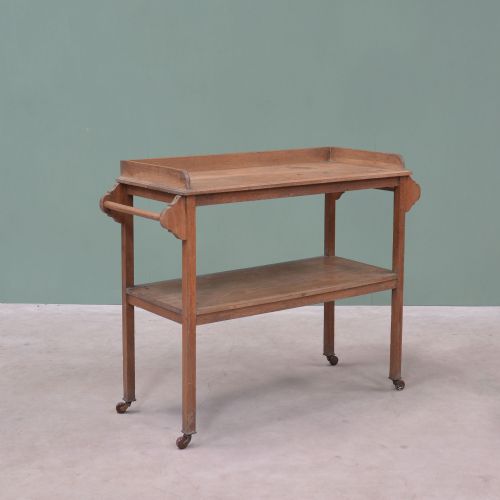
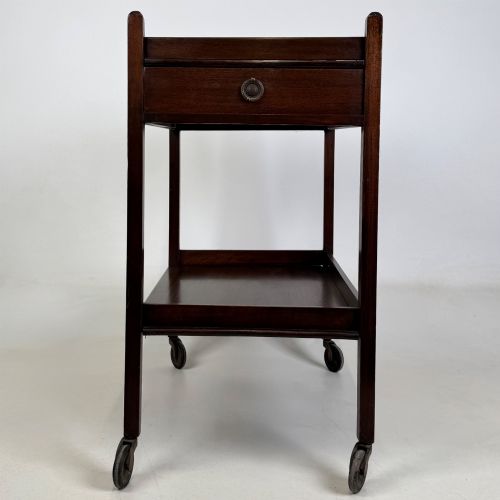
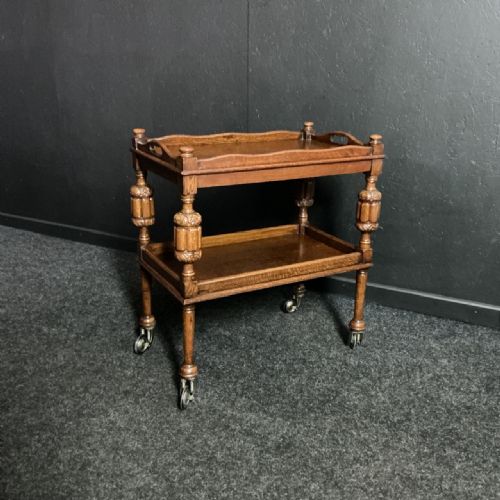
The most common forms on this page include two-tier tea trolleys in oak or mahogany, drop-side designs, and wheeled serving stands fitted with original castors. These functional items reflect the changing domestic habits of the nineteenth and early twentieth centuries, shifting from formal dining rooms to afternoon tea in the parlour.
Materials and construction
Makers utilised solid timbers and veneers, with mahogany, oak, and walnut dominating the inventory alongside decorative choices like burr walnut and pollard oak. Construction methods include pegged joints, turned supports, and drop-leaf mechanisms designed for everyday utility.
Hardware forms an integral part of the manufacture, with many pieces incorporating brass castors to ensure smooth movement across floorboards. Details such as barley twist columns, inlaid boxwood, and removable lift-off trays demonstrate the joinery standards of each period.
Several trolleys feature drop sides and lift-off trays, proving that Victorian engineers took tea delivery very seriously indeed.
What defines the grade
The standard of timber selection and complexity of mechanism separate ordinary utility items from finer examples. Burr walnut veneers, intricate turning, and metamorphic folding actions require advanced cabinet-making skills that elevate a piece above standard production items.
Preservation of original surfaces, such as patinated oak or polished mahogany paired with intact brass castors, determines the desirability. Pieces retaining their original lift-off trays and functional drop sides demonstrate superior original craftsmanship.
The Antique Wooden Trolley Table Glossary
- Castor
- A small wheel mounted on a swivel assembly attached to the legs of a trolley or table for mobility. They are frequently made of brass and wood.
- Dumb waiter
- A tiered stand or sideboard used for holding food and tableware without the need for servants. These pieces often feature multiple rotating or fixed shelves.
- Metamorphic
- Describing furniture designed to transform into another form, such as a side table that expands into a drinks chest.
- Cheese coaster
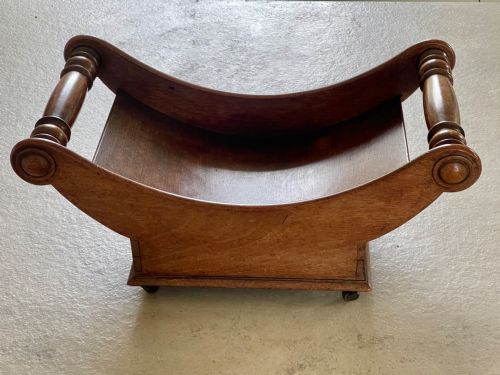
- A small trolley or tray fitted with rollers, originally designed to glide along dining tables to pass cheese. They appear frequently in Georgian mahogany.
- Whatnot
- An open set of shelves used for displaying ornaments or holding books, often constructed with multiple tiers and slender upright supports.
Antique Wooden Trolley Table: Frequently Asked Questions
How do I use a tea trolley today?
These pieces serve well as mobile drinks bars, bedside tables, or plant stands in modern interiors.
The sturdy shelves and wheels allow you to move items easily between rooms while adding historic character.
What is the difference between a buffet and a trolley?
Buffets generally remain stationary as heavy serving tables or sideboards with multiple tiers for displaying dishes.
Trolleys incorporate wheels and handles specifically for transporting food and tea service across a floor.
Are Edwardian trolleys sturdy?
Edwardian tea trolleys utilise solid oak and mahogany framing designed to support heavy china and silver service.
Their wheeled undercarriages remain robust when timber joints receive proper maintenance.
How do I identify a Georgian cheese coaster?
Georgian cheese coasters appear as small, boat-shaped wooden trays mounted directly onto low rollers or castors.
They were built from dense mahogany to glide smoothly across dining tables during dessert.