


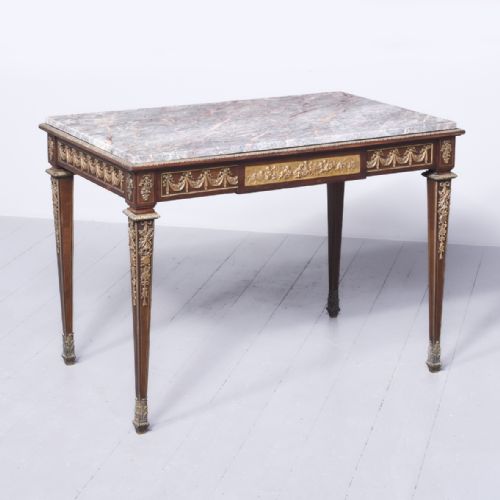
Freestanding Console Tables
These freestanding console tables bring refined placement and versatile utility to any room, offering finished backs designed to stand away from the wall.
Freestanding Console Tables
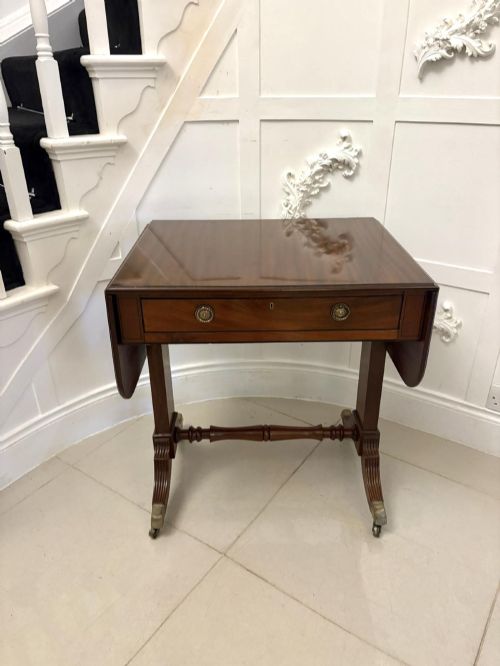
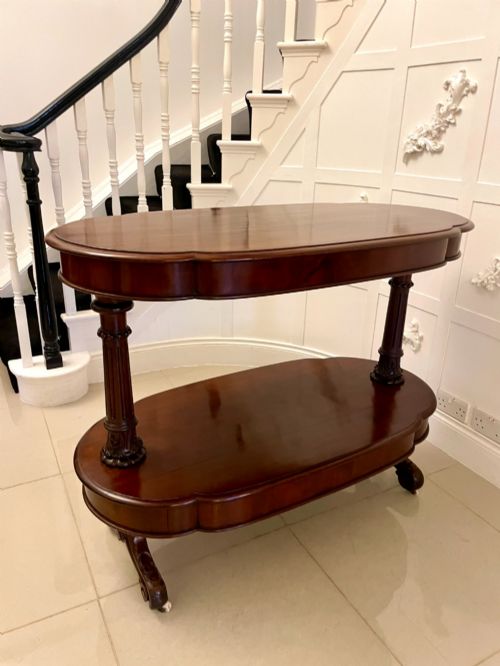
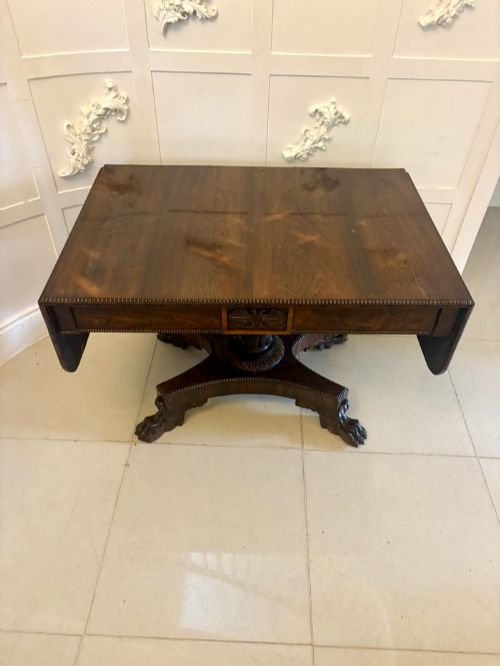
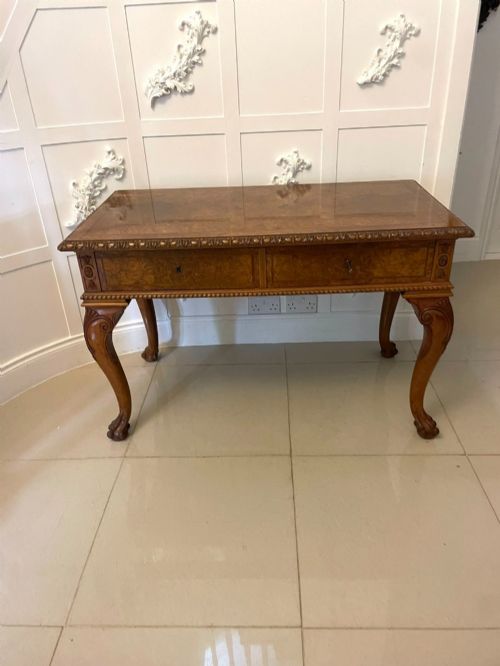
When you search for freestanding console tables, you encounter a selection of pieces designed to be viewed from all sides rather than pushed flat against a wall. The forms span nineteenth century centre tables, sofa tables, and writing tables alongside twentieth century burr walnut examples.
Makers produced these items in various styles including Regency, Victorian, Edwardian, and George III, with materials ranging from figured mahogany and rosewood to pitch pine and oak. You will find rectangular and oval formats intended for hallways, living spaces, and libraries.
The layout of these pieces allows them to function as side tables, card tables, and serving tables while maintaining finished timber across every elevation.
Materials and construction
Cabinet makers utilised dense hardwoods such as mahogany, rosewood, and burr walnut, often highlighting natural grain patterns through careful veneer selection. Brass mounts, leather inserts, and hand-carved details appear across nineteenth century and Edwardian pieces.
Construction methods relied on sturdy internal framing to support writing surfaces, drop leaves, and central pedestals without requiring wall support. Pitch pine and oak provided robust foundations for utilitarian designs alongside formal show woods.
Listings feature woods including mahogany, rosewood, burr walnut, oak, and pitch pine across the nineteenth and early twentieth centuries.
Distinctions in quality
Quality rests in the crispness of carved wooden details and the depth of figured grain across primary surfaces. Superior examples exhibit precise joinery, original brass hardware, and cleanly executed inlay work.
Finishing to the rear of the carcass distinguishes tables intended for central room placement from standard wall-mounted items. Timber selection and balanced proportions further elevate the standing of individual pieces.
The Freestanding Console Tables Glossary
- Freestanding
- Finished on all sides so the piece can stand in the middle of a room without a wall behind it. This design requires finished timber work across the rear elevations.
- Sofa table
- A rectangular table traditionally placed against the back of a sofa, featuring drop leaves on either side. These typically include small drawers beneath the top.
- Centre table
- A round or oval table designed to occupy the middle of a reception room or hall. They are finished identically on all sides for thirty-six-degree viewing.
- Inlaid
- Ornamented by embedding pieces of contrasting wood or other materials into the surface to form decorative patterns. This technique highlights the skill of the cabinet maker.
Freestanding Console Tables: Frequently Asked Questions
Where should I place a freestanding table?
These tables suit placement in the centre of a room, behind a sofa, or within a wide hallway where all four sides remain visible. Their finished backs eliminate the need for a supporting wall.
Position them away from direct heat sources to protect the polished wood surfaces and natural veneers over time.
How do I identify a nineteenth century piece?
Examine the timber species, construction methods, and hardware to determine the era of manufacture. Nineteenth century examples frequently utilise solid mahogany, rosewood, or burr walnut with hand-cut joinery.
Stylistic cues such as Regency curves or Victorian carved detailing offer further clues to the period of origin.
Can these tables be used for writing?
Certain variations within this category are specifically designated as writing tables or library tables, featuring appropriate working heights and inset leather tops. Other formats function primarily as side or centre tables.
Check the clearance beneath the drawers and the stability of the surface before using the table for daily writing tasks.
How do I care for polished wood surfaces?
Maintain the finish by dusting regularly with a soft, dry cloth and applying appropriate beeswax periodically to nourish the timber. Avoid placing damp items directly onto the polished wood.
Keep the tables away from prolonged direct sunlight to prevent fading of rosewood and mahogany veneers.