




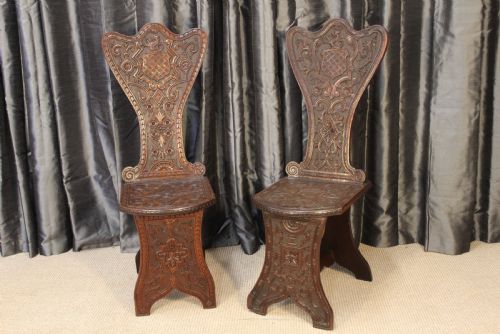


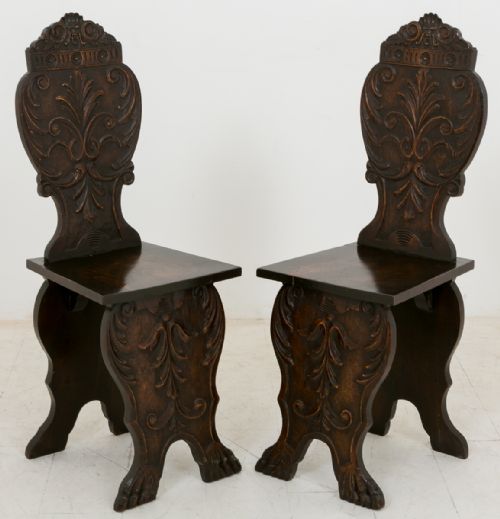
Antique Wooden Sgabello
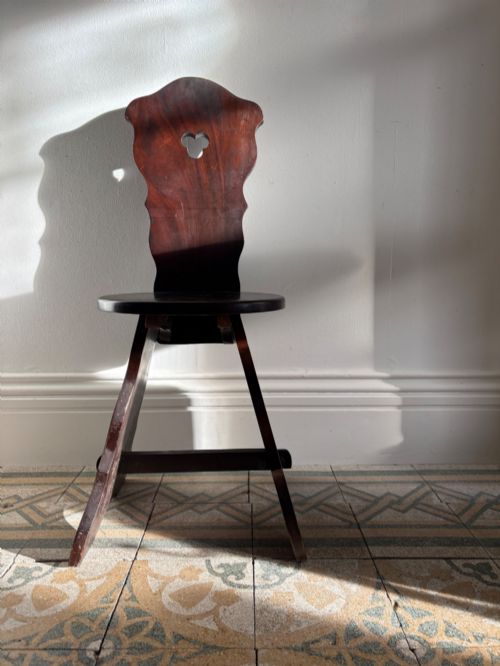
These antique wooden sgabello pieces are sculptural hall chairs built for display and brief seating, offering striking carved profiles to any interior.
Antique Wooden Sgabello
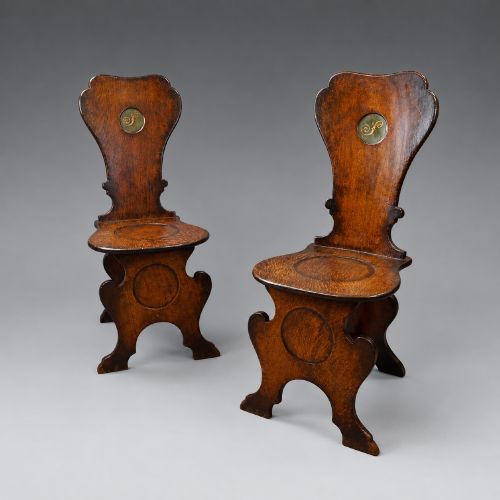
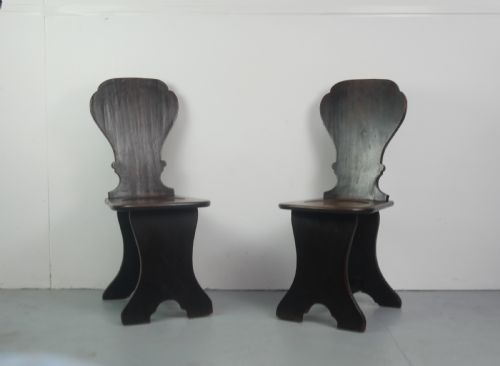
When you search for antique wooden sgabello pieces, you encounter distinct ceremonial hall chairs originating from Italian Renaissance forms but reinterpreted across later centuries. The listings here comprise 19th Century and Georgian examples, including pairs with high carved backs and solid board legs.
Most pieces function as decorative hall chairs or accent chairs rather than domestic lounging seats. They appear in oak, walnut, fruitwood, and lime wood, frequently styled in Renaissance Revival, George II, and Victorian and Gothic aesthetics.
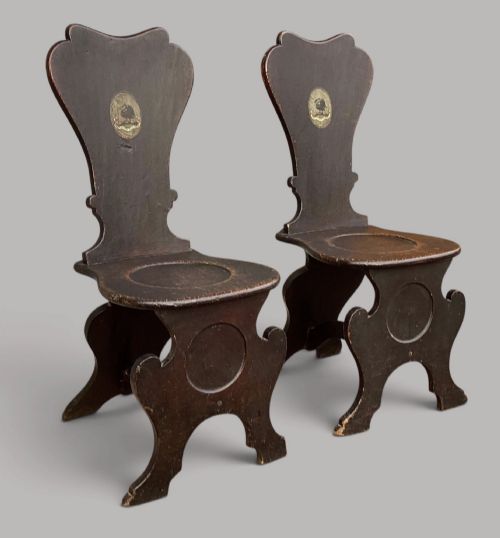
You will notice specific variants featuring armorial painted backs, bone inlay, and heavy relief carving. These forms serve primarily to anchor an entryway or corridor with distinct architectural presence.
Construction and materials
Construction relies on solid hardwoods such as oak, walnut, fruitwood, and lime wood, chosen for stability and dense grain suitable for deep relief work. Artisans fashioned these chairs from thick timber planks joined to form a central back, seat, and trestle or panel supports.
Carving technique defines the category, with makers utilising chisel and gouge to produce elaborate ornamentation across the backrest and supports. Additional decorative treatments involve painted armorial details and contrasting bone inlay set directly into the wood.
Period styles represented across the inventory include George II, Renaissance Revival, and Victorian and Gothic.
Judging quality and execution
Quality rests entirely on the depth and crispness of the carving across the wooden surfaces. Superior examples demonstrate confident, three-dimensional relief work executed by skilled hands rather than shallow, mechanical tooling.
The choice of timber and the integrity of the original construction dictate the standing of a piece. Finer examples retain cohesive proportions and authentic material pairings, such as walnut or fruitwood with period decorative embellishments.
The Antique Wooden Sgabello Glossary
- Sgabello
- A light, portable Italian Renaissance chair featuring a high carved back and two solid vertical board supports instead of conventional legs. Collectors prize these for their sculptural silhouette.
- Armorial
- Bearing a coat of arms or heraldic insignia painted or carved onto the surface. This heraldic detailing often indicates specific lineage or ceremonial commission.
- Trestle support
- A structural upright replacing standard chair legs, taking the form of solid boards or shaped planks. These provide the characteristic flat profile of the sgabello form.
- Relief carving
- Sculpture technique where figures or patterns project from a background plane. Master carvers achieved dramatic shadow play on these chair backs through deep undercutting.
Antique Wooden Sgabello: Frequently Asked Questions
What is a sgabello chair?
A sgabello is a distinct Renaissance chair design characterised by a fan-shaped back and solid board legs rather than four standard posts.
Originally developed in Italy, these chairs were positioned in grand halls for brief seating and visual impact.
Where were sgabello chairs placed?
Historical interiors utilised these chairs primarily in grand entrance halls, corridors, and gallery spaces rather than private rooms.
Their narrow profile allowed them to sit flat against walls while displaying intricate carved armorials to arriving guests.
How do I date an antique sgabello?
Dating relies on examining the timber species, tool marks, and stylistic revival cues such as George II or 19th Century Gothic motifs.
Earlier examples display hand-split hardwoods and worn joinery, whereas later revival pieces often show more uniform machine assistance.
Are sgabello chairs comfortable?
These chairs were built for ceremony and display rather than extended lounging or reading.
The upright wooden seats and rigid carved backs encourage posture rather than relaxation.