



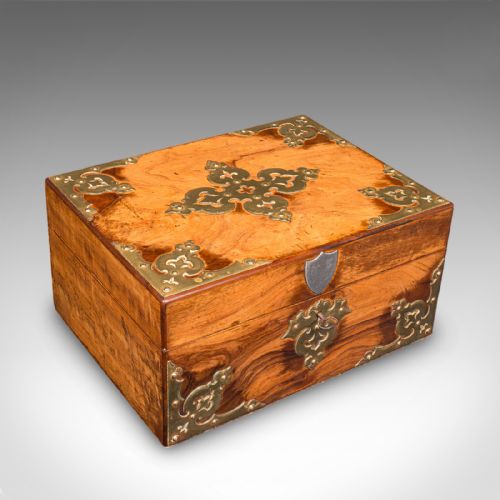


Antique Wooden Sewing Casket
An antique wooden sewing casket organises domestic needlework through compartmentalised timber construction, offering a fitted interior for thread, pins, and small tools.
Antique Wooden Sewing Casket
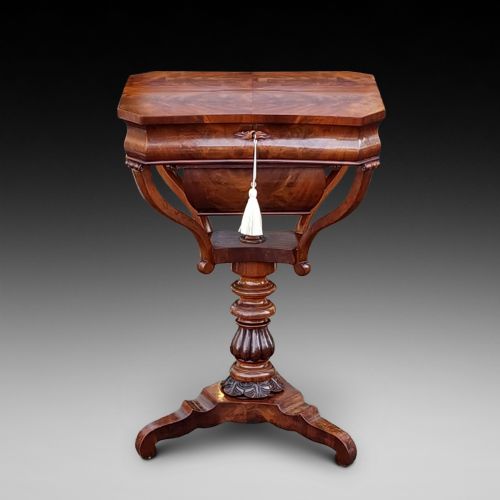
When you search for an antique wooden sewing casket, you encounter workboxes and needlework chests dating from the Georgian, Regency, and Victorian eras. These containers serve to hold threads, needles, and sewing implements inside lidded compartments.
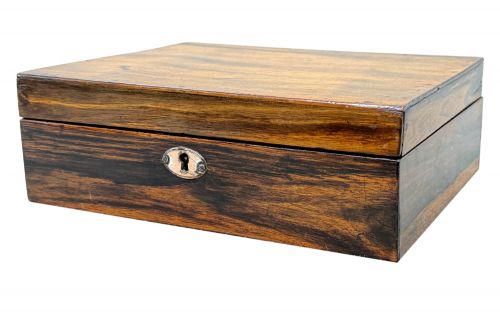
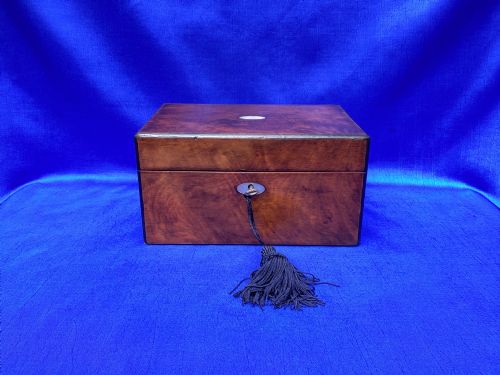
The pieces on this page appear in various timber forms, including rosewood, walnut, coromandel, and mahogany. Many examples incorporate lift-out trays and small fitted lids designed specifically for sewing accessories.
Sarcophagus shapes, rectangular workboxes, and Tunbridge Ware surface designs dominate the selection. Each box reflects the domestic craft habits of the nineteenth century.
Materials and construction
Cabinetmakers constructed these caskets from dense hardwoods such as rosewood, walnut, and coromandel, often applying figural veneers to the exterior surfaces. Brass hinges, escutcheons, and stringing provide structural corners and decorative linear contrast.
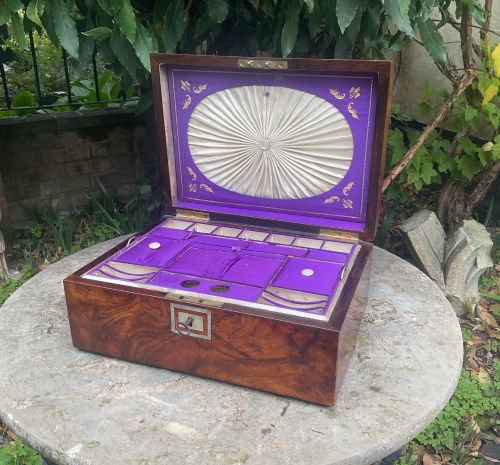
Inlaid mother-of-pearl, bone, and intricate Tunbridge Ware mosaics ornament the lids and panels of finer specimens. Silk linings and fitted interior compartments organise the lower storage space for sewing implements.
Antique Wooden Sewing Casket Retail Price Guide 2026
Typical asking prices for wooden sewing casket among the pieces listed under this phrase on Sellingantiques today, from the lower quarter to the upper quarter. They describe what is for sale here now, not the wider market.
Listings span the Georgian, Regency, and Victorian eras, showcasing timbers such as rosewood, walnut, coromandel, and mahogany alongside Tunbridge Ware.
Judging execution and finish
The distinction between standard examples and superior workboxes lies in the precision of the timber veneer and the complexity of the internal fittings. Elaborate Tunbridge Ware micro-mosaic patterns or detailed mother-of-pearl inlay require advanced joinery skill.
Intact silk linings, functional brass locks, and complete internal trays elevate a piece. The crispness of the exterior carving and the selection of figured wood determine the overall visual success of the casket.
The Antique Wooden Sewing Casket Glossary
- Tunbridge Ware
- A form of woodwork originating in Kent that uses thousands of tiny dyed woodblocks to create pictorial mosaics. These geometric or floral scenes decorate the lids of boxes and caskets.
- Coromandel
- A dense, heavily figured southeast Asian timber prized for dark brown colouring and contrasting streaks. Cabinetmakers utilised this material for high-status nineteenth-century workboxes.
- Sarcophagus
- A box shape featuring a domed or peaked lid resting on a rectangular base, resembling a classical stone coffin. Regency and Victorian makers adopted this profile for larger sewing caskets.
- Workbox
- A container designed to hold sewing materials, embroidery tools, and small trinkets. These boxes typically include lift-out trays and partitioned interior compartments.
- Penwork
- A surface decoration technique using ink drawn directly onto light-coloured wood before varnishing. This method creates detailed linear illustrations on early nineteenth-century boxes.
Antique Wooden Sewing Casket: Frequently Asked Questions
What is an antique wooden sewing casket?
An antique wooden sewing casket is a lidded container built to store needles, threads, and textile tools. These boxes date primarily from the Georgian and Victorian periods.
Inside, makers arranged lift-out trays and partitioned compartments to keep domestic needlework organised.
How do I date a wooden sewing box?
Dating relies on timber choice, construction style, and decorative motifs. Regency boxes often employ rosewood and birdseye maple with classical proportions, while Victorian examples introduce heavy walnut and complex Tunbridge Ware.
Hardware such as brass locks and escutcheons also provide chronological clues.
What woods were used for sewing boxes?
Cabinetmakers selected dense, decorative hardwoods including rosewood, walnut, mahogany, and coromandel. Exotic timbers showed off figured grain patterns suited to domestic display.
Inlays of mother-of-pearl, bone, and satinwood frequently accented these primary woods.
How were sewing caskets used originally?
These boxes served middle and upper-class women as portable stations for mending, embroidery, and lacemaking. Owners kept thimbles, pins, silk threads, and small scissors secured inside the fitted trays.
The boxes sat on parlour tables when not in use.