



Antique Wooden Sconces
Antique wooden sconces bring warmth and character to walls, combining functional lighting with historical craftsmanship.
Antique Wooden Sconces
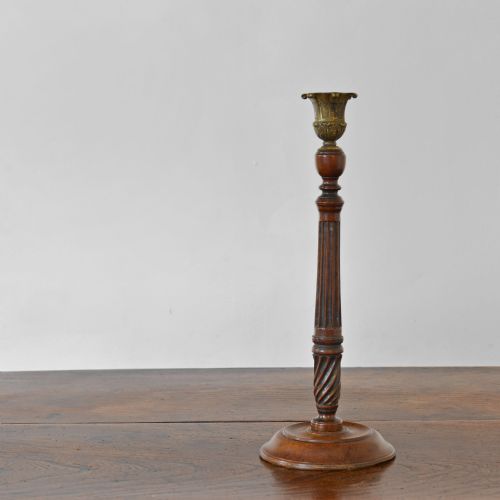
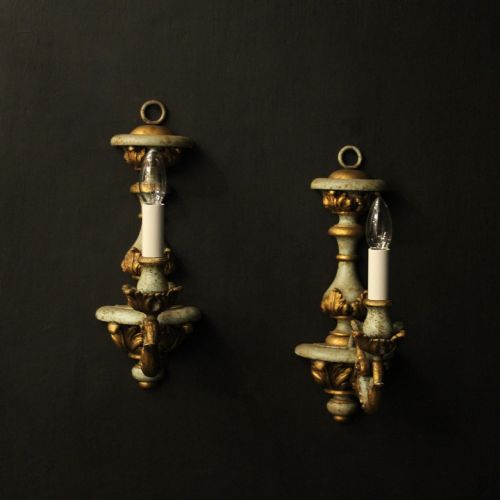
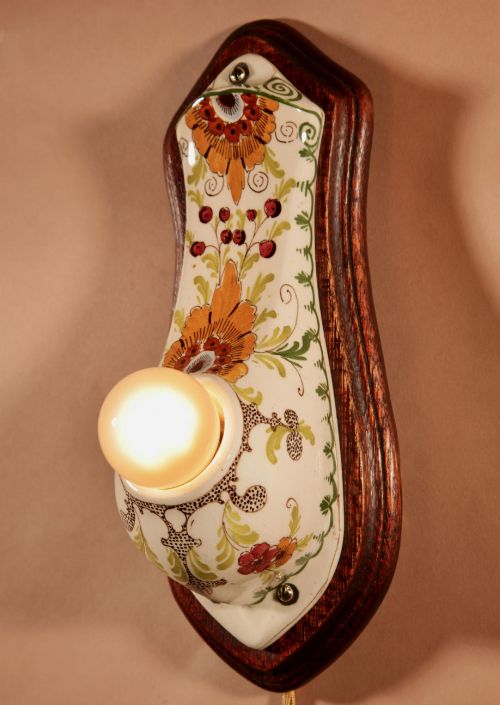
These pieces encompass wall-mounted light fittings, brackets, and candle holders fashioned primarily from timber. When exploring antique wooden sconces, buyers encounter items ranging from simple domestic turned holders to elaborate gilded Italian imports.
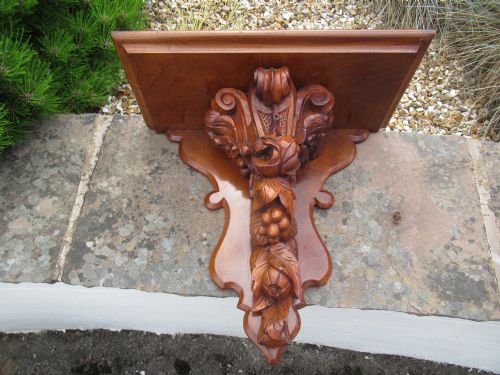
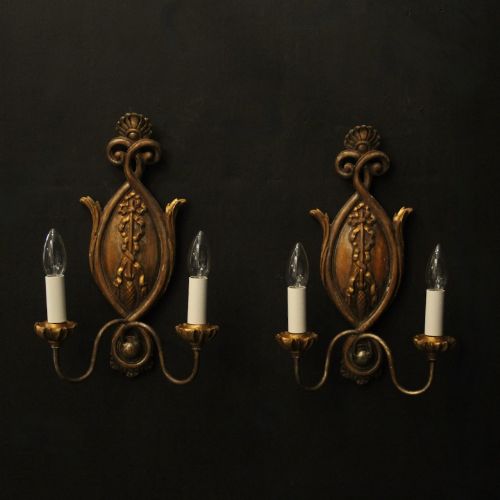
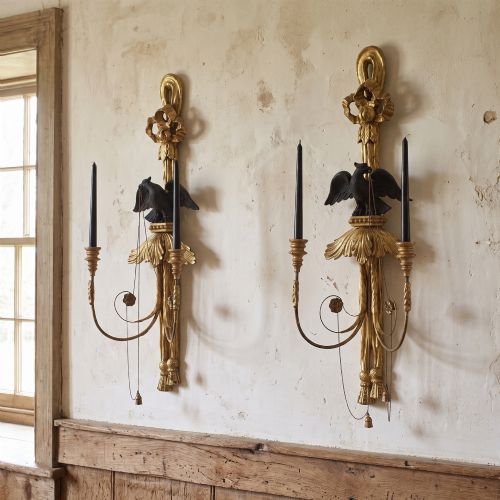
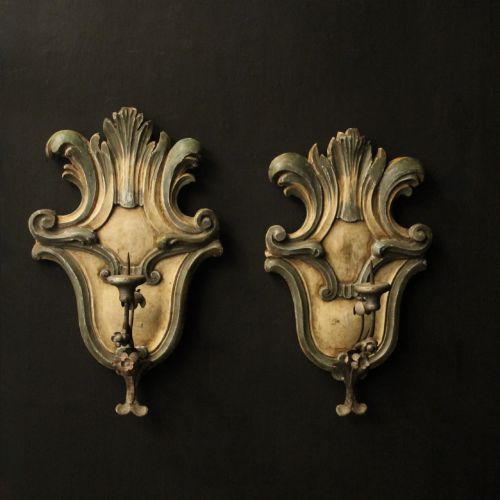
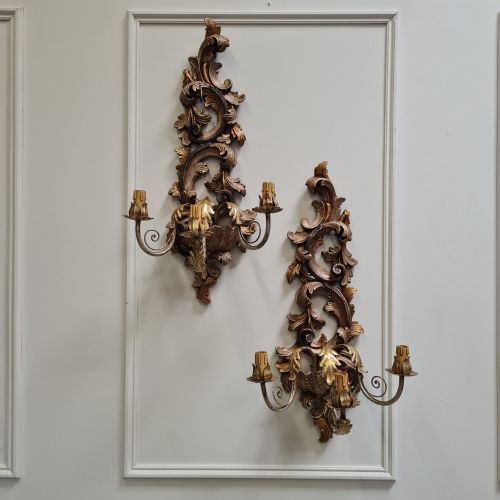
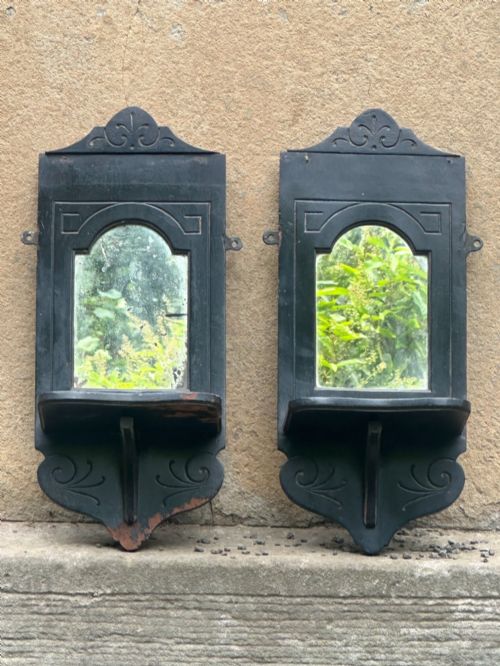
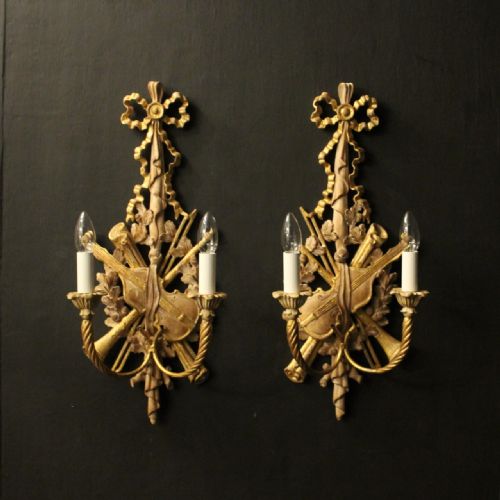
The selection on this page relies heavily on Italian Florentine designs, Victorian decorative brackets, and Georgian mahogany pieces. Pairs appear frequently, often designed to flank a mirror or architectural feature.
Origins span the eighteenth, nineteenth, and early twentieth centuries, drawing on styles such as Baroque, Rococo Revival, and Arts and Crafts. Forms include single-arm lights, twin-arm fixtures, and mirrored wall displays.
How they were made
Carving and turning form the structural foundation of these items, utilising woods such as mahogany, oak, walnut, and olive wood. Artisans shaped solid timber blocks using chisels and lathes to create barley twists, architectural brackets, and figural supports.
Surface decoration frequently involves gesso applied over wood, then finished with gold leaf, silver gilding, or polychrome paint. Brass and metal components often supplement the wooden frames to hold candles or electrical adaptations.
Travelling olive wood candlesticks, known as Brighton buns, unscrew and store safely inside themselves for journeys.
What varies in quality
The depth and crispness of the hand-carved detail distinguish finer examples from simpler production. Crisp acanthus leaves, sharp mouldings, and well-proportioned figures indicate skilled craftsmanship.
The integrity of the surface finish dictates visual appeal, particularly on gilded and polychrome pieces. Intricate application of gold leaf and preserved original paint layers separate superior examples from later repainted surfaces.
Cottier & Co.
The Antique Wooden Sconces Glossary
- Giltwood
- Wood carved and prepared with gesso before applying a thin layer of gold leaf. This technique creates a luminous surface common on Florentine wall lights.
- Polychrome
- Decorated in multiple colours. This finish appears frequently on Italian wooden wall lights and brackets from the nineteenth and early twentieth centuries.
- Barley twist
- A spiral turning resembling a twisted rope. This turned wooden form appears on oak candlesticks from the Edwardian period.
- Pricket
- A sharp metal spike on a candlestick or sconce designed to hold a candle in place. These feature on older Italian candle sconces.
- Girandole
- A decorative wall bracket with a mirror that reflects the light from attached candles. Pairs of these items emerged during the nineteenth century.
Antique Wooden Sconces: Frequently Asked Questions
How do I install antique wooden sconces?
Many historical wall lights were originally designed for candles and require careful conversion for modern electrical wiring by a qualified professional.
Secure mounting is essential due to the weight of solid carved timber and applied gesso.
Where should I place wall sconces?
These fixtures sit effectively on either side of a fireplace, doorway, or large mirror to create balanced illumination.
Placing them at eye level ensures the carved details and finished surfaces remain visible.
How do I clean carved wooden sconces?
Dust surfaces gently with a soft, dry brush to protect delicate gesso and gold leaf from damage.
Avoid liquid cleaners and polishes, which can strip historic finishes or soften exposed wood.
How do I date antique wooden wall lights?
Examine the tool marks, timber species, and construction methods visible on the reverse of the backplate.
Stylistic indicators such as Florentine giltwood or Arts and Crafts oak also point toward specific manufacturing eras.