


Antique Wooden Office Seat
An antique wooden office seat brings sturdy character and functional timber framing to any workspace.
Antique Wooden Office Seat
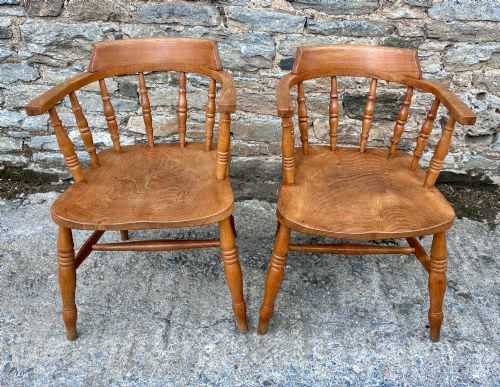
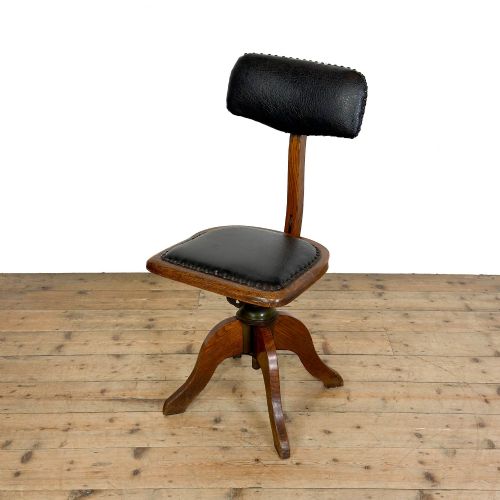
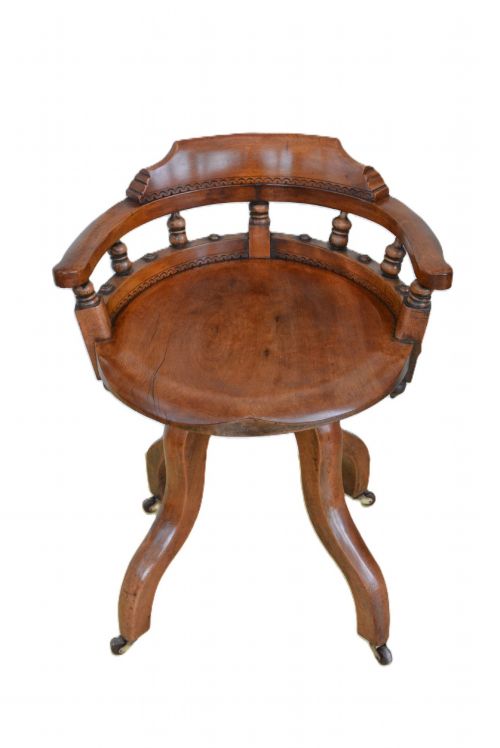
When you search for an antique wooden office seat, you encounter sturdy pieces designed for daily work across the Victorian, Edwardian and early twentieth century periods. The forms range from simple elm country chairs and captains chairs to swivel and tilt desk chairs mounted on pivoting bases.
You are most likely to meet mahogany, oak, beech and elm examples featuring upholstered leather or timber seats. These items originate from domestic studies, libraries and administrative spaces where durability mattered.
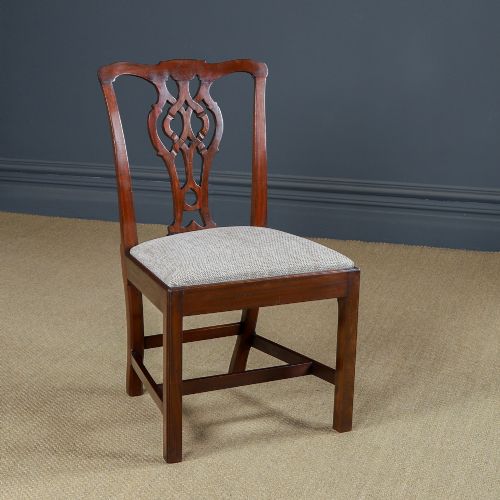
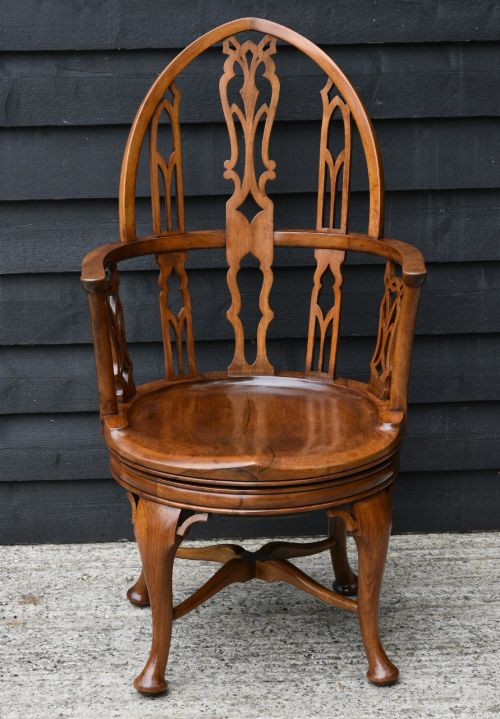
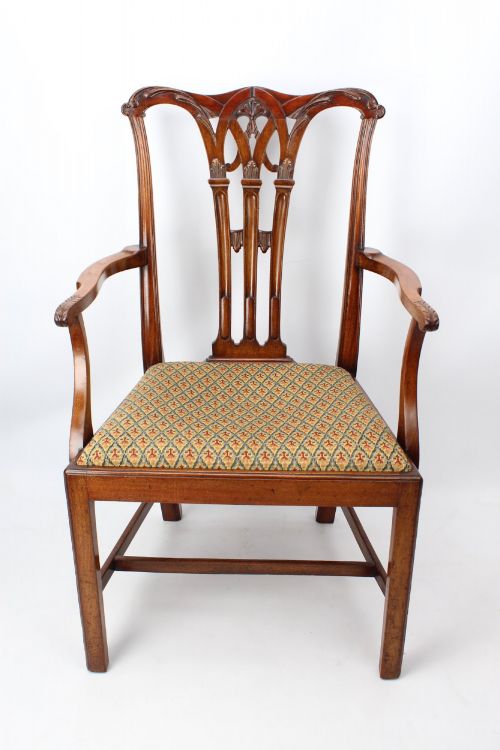
The selection includes armchairs, side chairs, stools and revolving desk chairs reflecting styles such as Chippendale, Gothic Revival, Aesthetic Movement and Georgian Country.
Materials and construction methods
Cabinetmakers utilised solid hardwoods such as mahogany, oak, walnut, beech, elm and yew wood to build frames that could withstand daily movement and weight. Timber was frequently turned, carved or bent to form comfortable arm rails and supportive spindles.
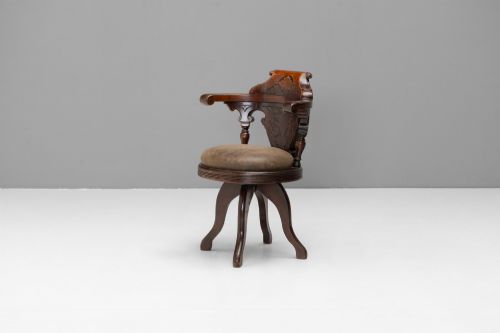
Many revolving and tilt mechanisms incorporated brass hardware and metal spindles to allow rotation and height adjustment. Seats were often shaped from solid wood planks or upholstered in leather, tan hide and bergere cane.
Several chairs include patent swivel actions designed to keep nineteenth-century clerks upright during long ledgers.
Distinctions in construction and design
Quality depends upon the selection of timber figures, such as burr elm or light mahogany, and the integrity of the joinery connecting the seat to the base. Robust turning on the legs and finely carved details on the back splats elevate the standard of a piece.
The sophistication of the swivel and tilt mechanism differentiates standard working seats from superior library and desk chairs. Original brass fittings and smooth mechanical action indicate higher craftsmanship.
The Antique Wooden Office Seat Glossary
- Captains Chair
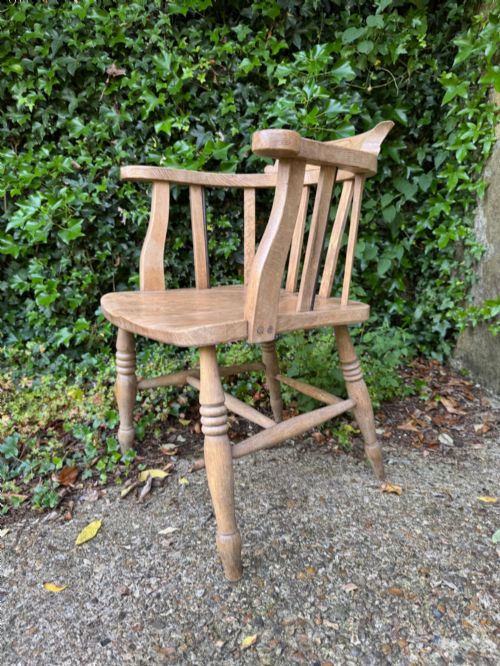
- A sturdy wooden armchair with a rounded back rail supported by spindles, commonly featuring a solid saddle seat.
- Swivel Chair
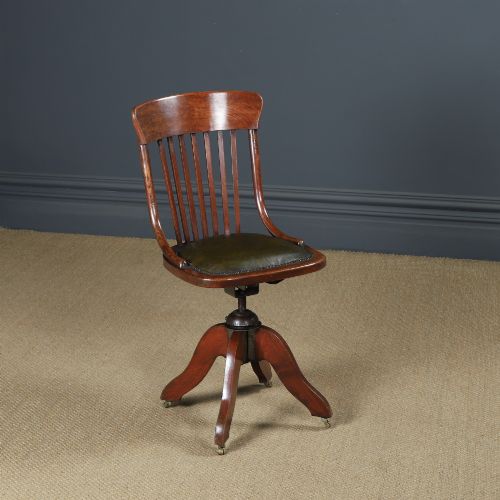
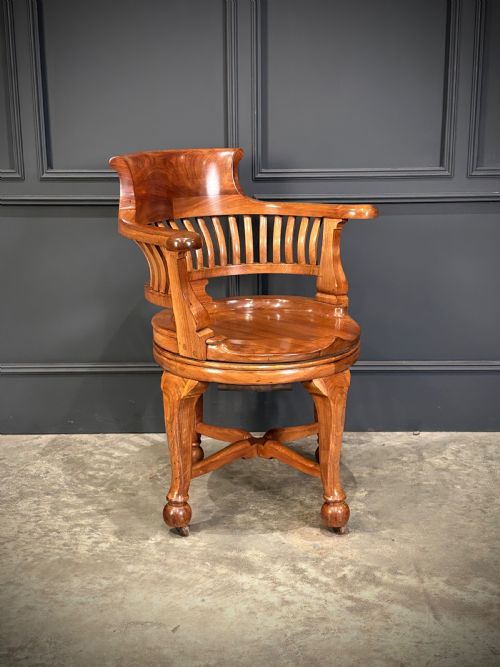
- A seat mounted on a central pivoting spindle that allows the user to turn through a full circle without moving the base.
- Smokers Bow
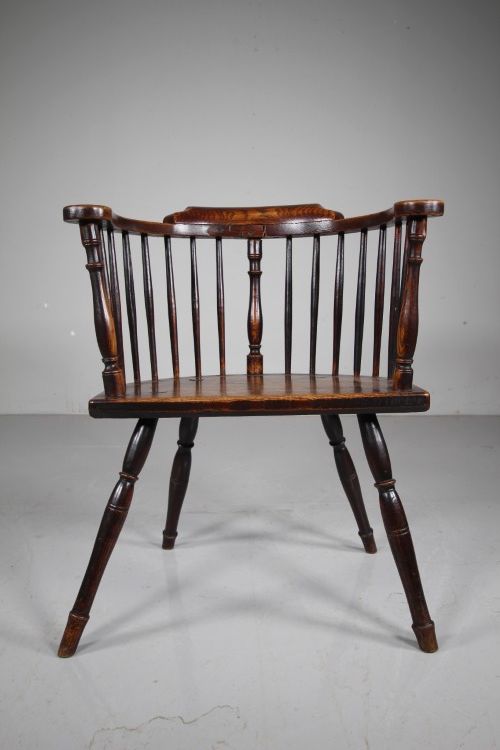
- A low-backed Windsor-style armchair with a continuous curved arm rail, often utilised as a robust office or desk seat.
- Bergere
- A type of upholstered armchair featuring woven cane panels on the back or sides for lightweight flexibility.
- Chippendale Style
- A decorative aesthetic drawing on eighteenth-century design principles, characterised by pierced splats and carved cabriole or square legs.
Antique Wooden Office Seat: Frequently Asked Questions
How do I identify an office seat period?
Examine the timber species, joinery methods and hardware to determine the era of manufacture. Victorian and Edwardian examples often display distinct turning patterns and mechanical swivel designs.
Compare the style influences, such as Gothic Revival or Sheraton revival, against known design timelines to narrow down the decade of production.
Can I use an antique desk chair daily?
These timber seats were built for sustained daily work in nineteenth and early twentieth-century offices and studies. Their robust hardwood frames handle regular seating well.
Ensure that moving parts on swivel and tilt models are lubricated and check that timber joints remain tight before continuous use.
What is a captains chair used for?
Captains chairs served as sturdy seating in offices, ships and libraries where a supportive back rail and solid timber seat were practical. Their compact proportions suited working desks.
The low arms allowed the chair to slide close to a desk surface while offering lateral support.
How do swivel desk chairs work?
Early revolving desk chairs utilise a central wooden or metal spindle secured to a four or five-legged base. A threaded screw or iron pin allows the upper seat portion to rotate.
Some Edwardian examples incorporate tilt mechanisms that let the user lean back against spring tension while remaining supported.