


Antique Wooden Office Cupboard
An antique wooden office cupboard is a functional workspace storage piece built to last, offering period character and sturdy timber construction.
Antique Wooden Office Cupboard
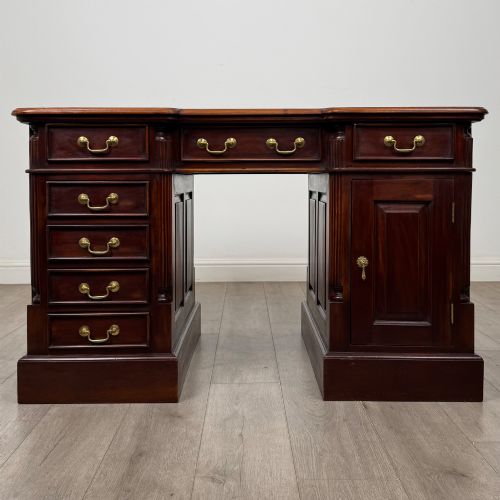
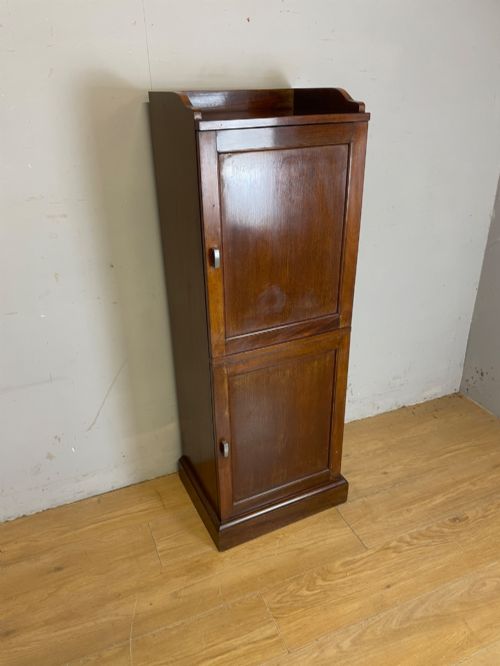
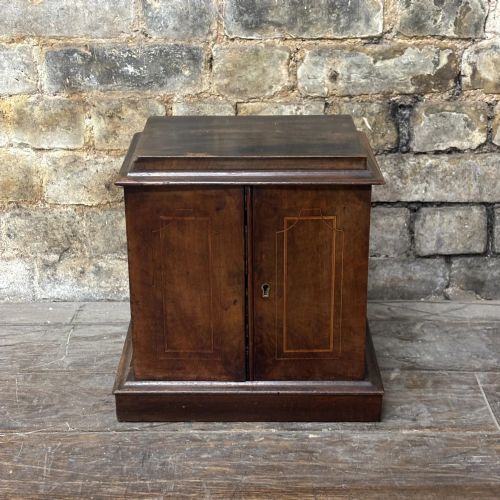
An antique wooden office cupboard encompasses a range of utilitarian storage forms including filing cabinets, stationery boxes, and pedestal desks designed for workspaces. These items appear across multiple periods such as the Georgian era, Victorian period, Edwardian years, and early twentieth century.
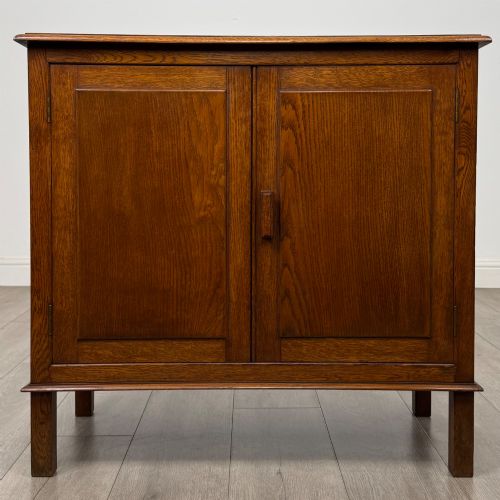
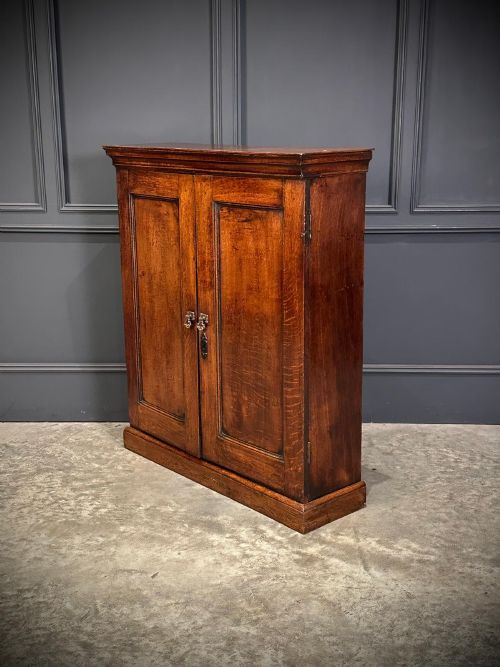
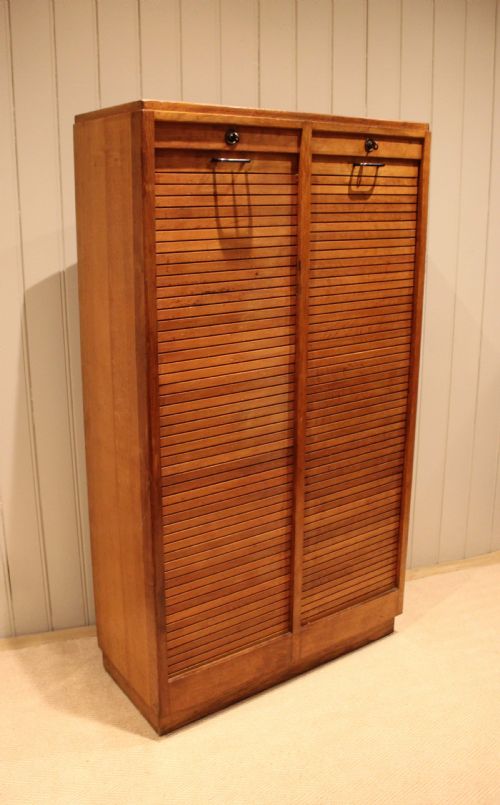
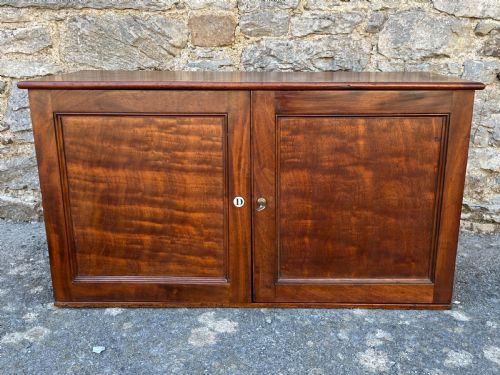
Buyers meet pieces fashioned from robust timbers like oak, mahogany, flame mahogany, and pine, often complemented by brass hardware. Functional variations include tambour fronts, fitted interiors, music filing compartments, and double doors.
Originating from institutional, school, and domestic contexts, these pieces range from military filing chests to country house library cupboards and industrial units. The selection on this page reflects practical workspace furniture built to endure decades of daily use.
How They Were Made
Joiners built these cabinets using solid timbers and veneered panels, selecting oak and mahogany for their structural stability and durability. Secondary woods such as pine appear on internal drawer linings and carcass backs.
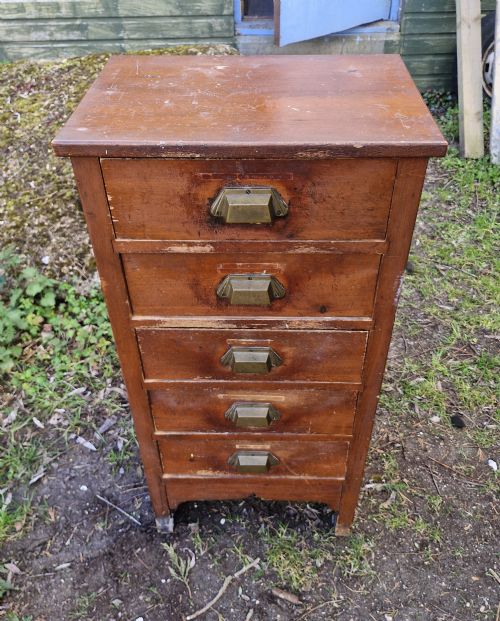
Hardware components like brass drop handles, key escutcheons, and patent locking mechanisms were fitted to secure contents. Surface finishes involved polishing to highlight the natural grain of flame mahogany, walnut, and oak.
Patent letter files from American makers brought clever spring-loaded clips to Victorian offices, keeping paperwork surprisingly tidy.
What Varies in Quality
Timber selection dictates the visual impact, where figured flame mahogany or quarter-sawn oak distinguishes superior examples from standard utility pieces. Cabinetmaking execution shows in the precision of dovetailed drawer joints and the smooth operation of tambour shutters.
Original hardware, intact patent mechanisms, and matching period brass fittings elevate a piece above those altered or repaired with replacement parts. The integrity of the original polish and secondary woods preserves the historical character of the furniture.
Johnstone and Jeanes·Gillows·Amberg
The Antique Wooden Office Cupboard Glossary
- Tambour
- A flexible shutter door formed of narrow slats of wood glued to a canvas backing, allowing it to slide smoothly around a curved track on a cabinet.
- Kneehole desk
- A writing table featuring a central recess for the user's legs, flanked by pedestals containing banks of drawers or cupboards.
- Book press
- A heavy mechanical device fitted with a large screw press, historically used in offices for copying documents or flattening paper.
- Flame mahogany
- A decorative veneer cut from where a branch joins the main tree trunk, displaying a fiery, undulating grain pattern prized in fine cabinetry.
Antique Wooden Office Cupboard: Frequently Asked Questions
What periods do these office cupboards date from?
The pieces span several centuries, with examples originating from the Georgian era, the Victorian period, and the Edwardian years. Twentieth-century pieces also feature prominently.
Craftsmanship methods shifted over time, moving from hand-cut joints in earlier eras to specialised institutional designs by the early nineteen-twenties and nineteen-thirties.
How were tambour front cabinets used?
Tambour fronts provided secure storage for correspondence and files in busy offices while saving space by eliminating swinging doors. The slatted wooden curtain slid back into the cabinet body.
These mechanisms required precise joinery to ensure smooth daily operation without binding in the wooden tracks.
What timbers were commonly used for office furniture?
Mahogany and oak predominate across these listings, valued for their strength and resistance to heavy daily use in commercial and domestic settings. Flame mahogany provided a more decorative surface for prominent reception rooms.
Secondary woods like pine and boxwood appear internally for drawer construction and stringing details.
How do I distinguish between desk and cupboard types?
Desks incorporate writing surfaces, such as pedestal desks and kneehole tables, designed for working directly at the piece. Cupboards and filing cabinets focus entirely on vertical storage with shelves, drawers, or document slots.
Some hybrid pieces combine a writing slope or book press with enclosed shelving below.