

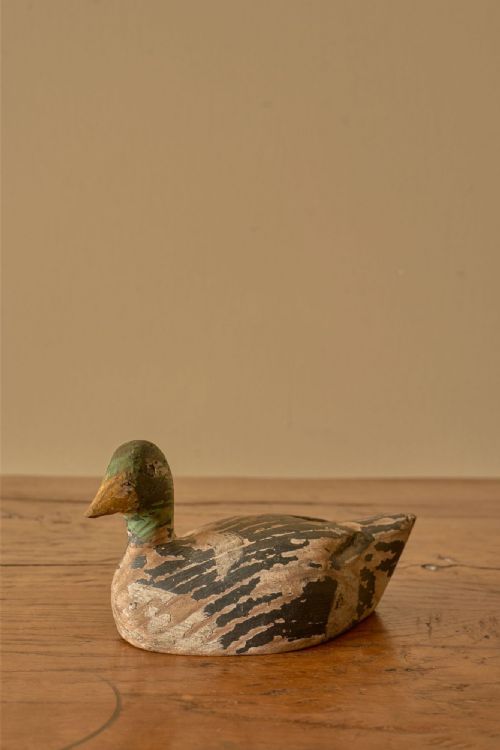
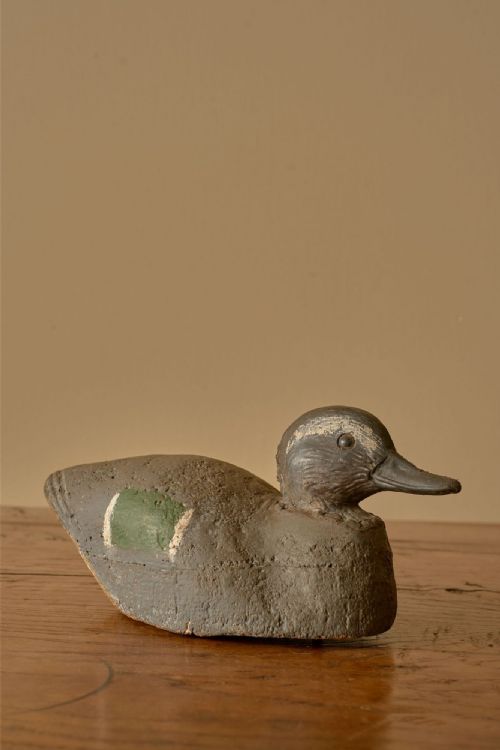
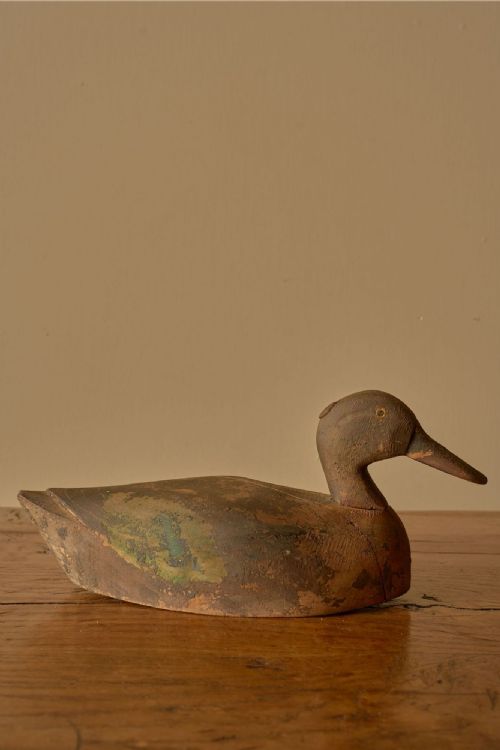
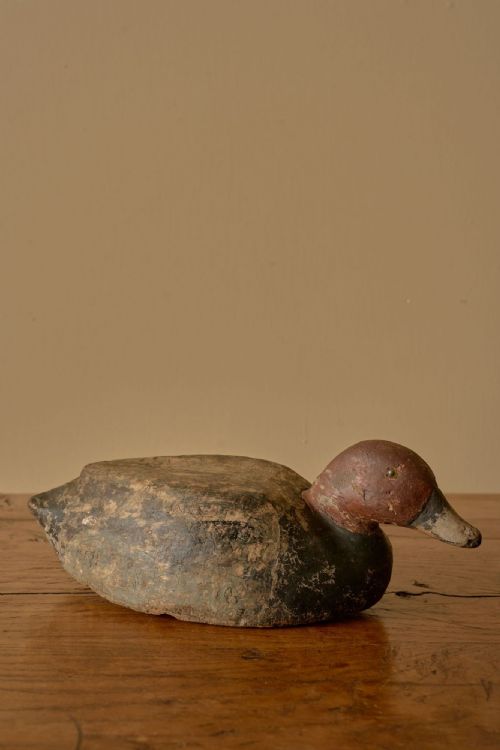
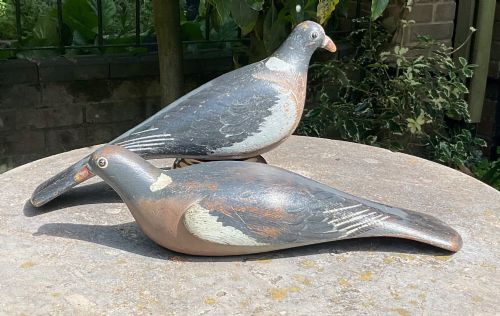


Antique Wooden Decoy
An antique wooden decoy brings honest rural character indoors, shaped for the water and finished by hand.
Antique Wooden Decoy
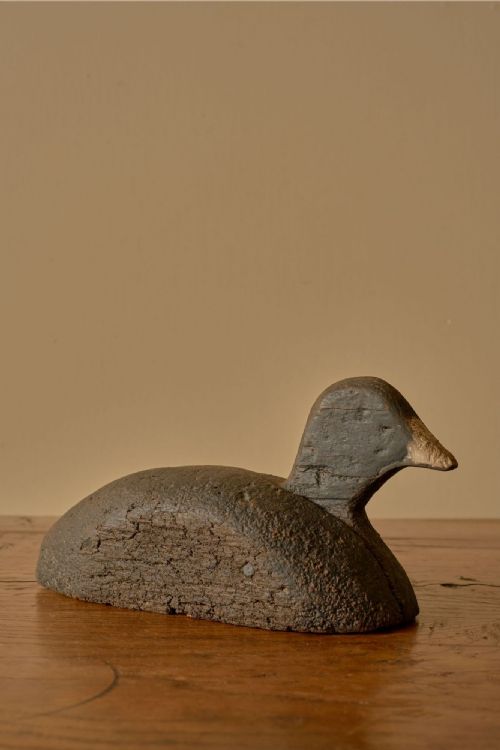
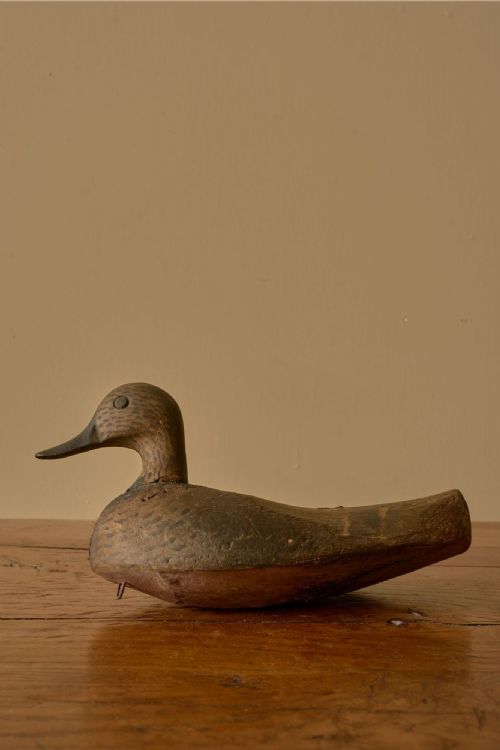
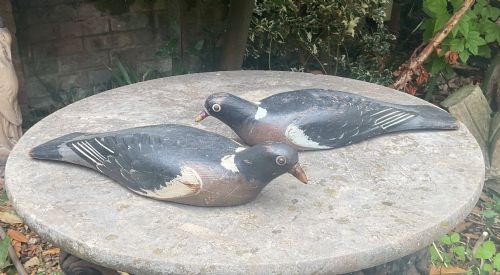
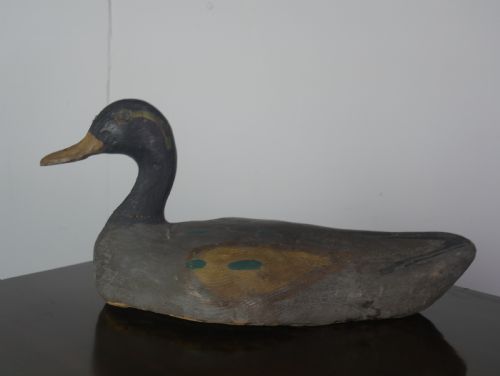
When you search for an antique wooden decoy, you are looking at working carvings that once lured fowl on lakes and fields. The examples on this page are predominantly decoy ducks, alongside decoy pigeons, doves, geese, and occasional birds like the loon.
Most pieces date from the nineteenth century, the Edwardian era, and the early twentieth century. They arrive as individual sculptures, pairs, or small sets, reflecting both English and French folk art traditions.
How they were made
Carvers shaped blocks of timber and carved wood into convincing bird forms, sometimes incorporating glass for eyes or metal and iron for structural fittings. A few pieces employ papier-mâché and straw to build up the lighter body of a duckling.
Makers applied hand paint directly onto the wood, often layering colours to mimic natural plumage and weathering over decades of use.
Antique Wooden Decoy Retail Price Guide 2026
Typical asking prices for wooden decoy among the pieces listed under this phrase on Sellingantiques today, from the lower quarter to the upper quarter. They describe what is for sale here now, not the wider market.
Listings span from the nineteenth century through the Edwardian era to the 1930s, featuring carved wood, paint, glass, and iron.
What varies in quality
The strength of the carving distinguishes a competent utilitarian bird from a truly striking piece of folk art sculpture. Bold tool marks and confident bodily proportions show the hand of a skilled maker.
Original painted surfaces that retain their character without heavy modern intervention elevate a piece significantly. The harmony between the carved silhouette and the surviving pigment dictates the visual presence of the bird.
The Antique Wooden Decoy Glossary
- Treen
- Small handmade wooden domestic objects and carvings. The term covers everything from small bird calls to utilitarian treen gathered from country houses.
- Dovecote
- A structure or shelter for domesticated pigeons or doves. Dovecote decoys were utilised in these rural settings to attract birds.
- Decoy
- A carved or moulded figure used to entice wild birds within shooting range. Many now survive purely as decorative sculptures.
Antique Wooden Decoy: Frequently Asked Questions
What are antique wooden decoys?
They are carved and painted birds originally utilised by hunters to attract waterfowl and pigeons into range.
Today they are collected as expressive examples of folk art and decorative sculpture.
How do I date a decoy?
Dating relies on observing the tooling marks, the type of timber, and the composition of the layered paint.
Pieces on this page span the nineteenth century, the Edwardian period, and the early twentieth century.
Where should I display them?
Their sculptural silhouettes suit plain wooden surfaces, bookshelves, and table centres where their handmade qualities stand clear.
Pairs and sets look particularly striking grouped together on a sideboard or mantelpiece.
Are all decoys made of wood?
While timber and carved wood form the majority of bodies, makers also utilised iron, metal, and glass for eyes and fittings.
Alternative materials like papier-mâché and straw occasionally appear in specific bird studies.