
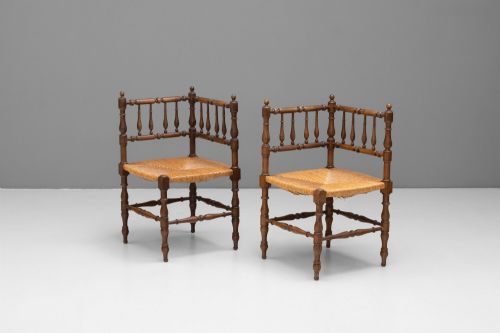


Antique Wooden Corner Seat
An antique wooden corner seat fits neatly into a room, offering clever seating built from oak, mahogany or walnut.
Antique Wooden Corner Seat
An antique wooden corner seat is a practical and space-saving furniture form designed to fit snugly into the angle of a room. When you search for this phrase, you will encounter examples stretching from the Georgian period through the Victorian and Edwardian eras up to the nineteen-twenties.
The selection here includes solid mahogany corner armchairs, oak side chairs, and occasional pieces featuring rush, leather, or fabric pads. Many adopt traditional vernacular forms such as Turner's chairs or spinning chairs, alongside inlaid Edwardian designs and carved styles.
How they were made
Surfaces receive carved detailing, hand-painted folk art, or mother-of-pearl accents, while seats are fitted with rush, caned panels, or upholstered pads covered in tapestry, leather, or woven fabric. Mashrabiya panels and lacquered finishes appear on specialised Anglo-Moorish and Chinese variants.
Some Victorian spinning chairs were built low to the floor so workers could comfortably keep their feet pumping while working.
What varies in quality
The grade of timber and the crispness of the carving dictate much of the distinction between standard examples and finer works. Selected mahogany or figured walnut with deep patination commands attention, whereas simpler country-made elm or beech pieces rely on honest vernacular charm.
Construction methods also separate workshop tiers, as seen in the complexity of turned spindles, the tightness of corner joints, and the intricacy of inlay or applied fretwork. Original upholstery materials and intact rush or cane seating elevate the integrity of a piece.
Liberty and Co
The Antique Wooden Corner Seat Glossary
- Turner's Chair
- A sturdy armed seat constructed entirely from turned wooden spindles and members, often associated with traditional vernacular English seating of older periods.
- Mashrabiya
- An architectural wooden screen or panel composed of intricate turned lattice work, seen on imported or influenced seating styles.
- Bergère
- An enclosed armchair with upholstered sides and back, often incorporating cane work panels into the wooden frame.
- Glastonbury Chair
- A folding ecclesiastical chair style with an X-framed base and a sloping back, popularised during the Gothic Revival.
Antique Wooden Corner Seat: Frequently Asked Questions
Where did people put corner seats?
These seats were designed to occupy awkward angles in hallways, parlours, and bedchambers where standard straight chairs wasted floor space. Their triangular footprint allowed them to tuck against two adjoining walls.
In period homes, they also served as writing seats or convenient resting places near doorways and hearths without obstructing movement through the room.
How do I spot a Georgian corner chair?
Georgian examples, typically dating from the eighteenth century, display substantial mahogany or elm timbers with heavy cabriole or square legs. They often feature drop-in seats and restrained carving rather than heavy inlay.
Later Victorian and Edwardian revivals tended to add lighter decorative touches, stringing, or painted surfaces, whereas Georgian pieces prioritize structural joinery and rich natural timber grain.
Are these seats comfortable to sit in?
Comfort varies considerably depending on the specific form, as many historical corner seats were built for posture and display rather than lounging. Early wooden saddle seats or upright spindle backs offer firm support.
Examples fitted with upholstered pads, tapestry seats, or woven rush provide a softer sit, though the angled backrest encourages an upright, formal posture rather than a relaxed slouch.