


Antique Wooden Corner Display
An antique wooden corner display offers a clever way to utilise overlooked angles while showcasing precious objects in mahogany, oak or walnut.
Antique Wooden Corner Display
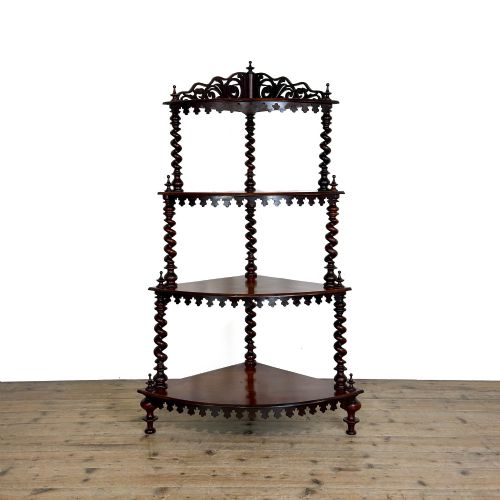
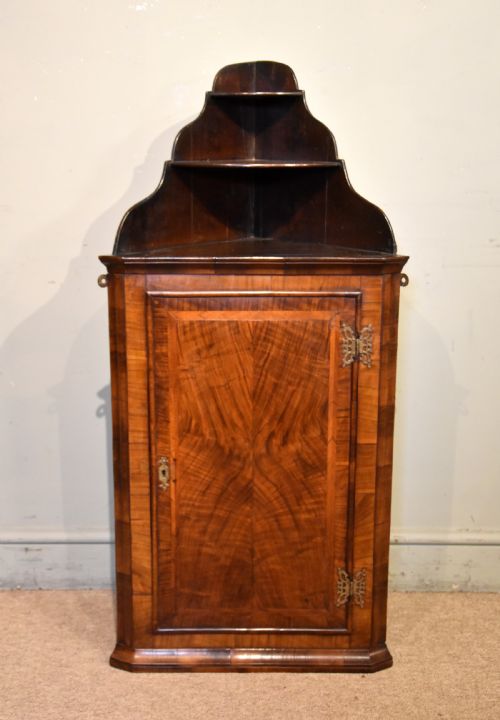
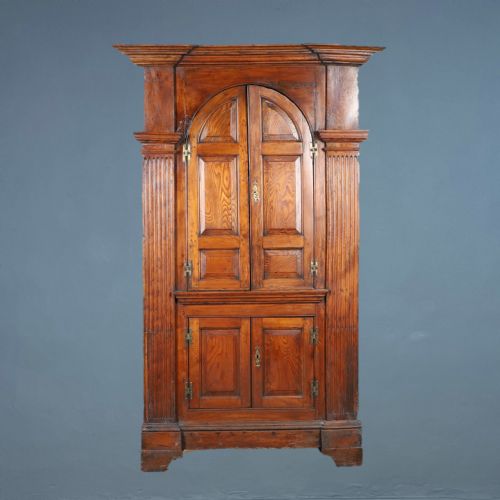
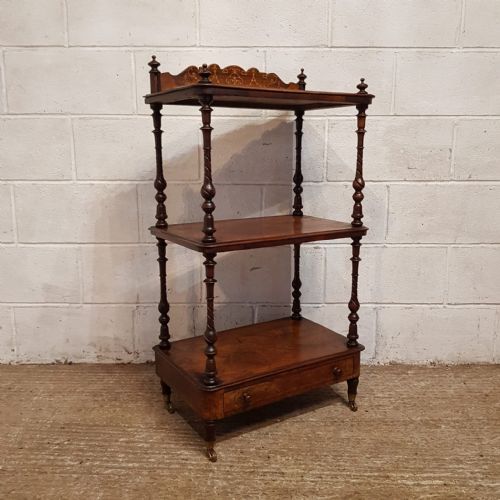
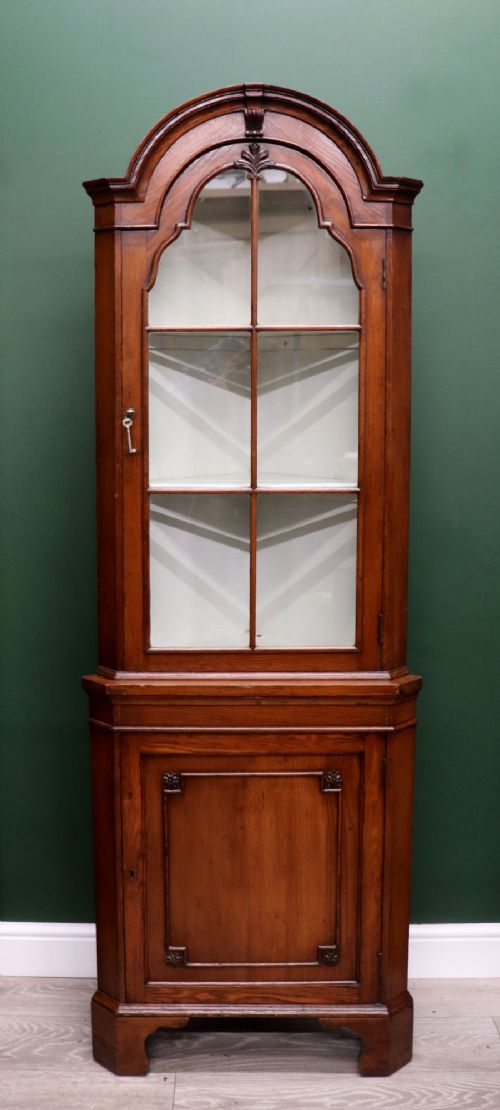
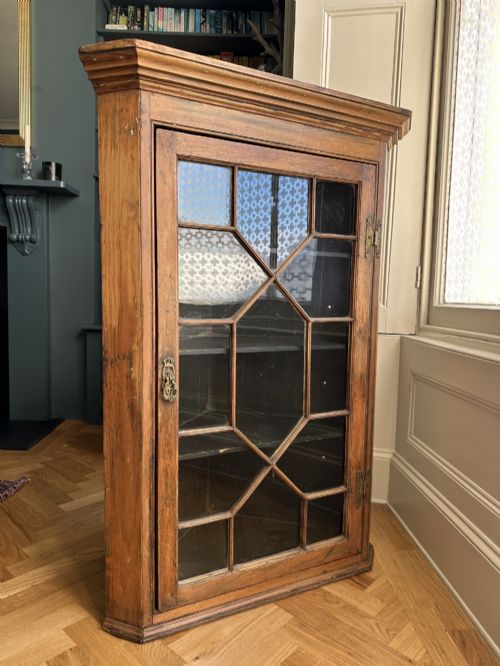
An antique wooden corner display is designed to fit snugly into room junctions, transforming dead space into practical shelving or cabinet storage. These items range from wall-mounted cupboards with glazed doors to multi-tiered freestanding whatnots and architectural floor-standing units.
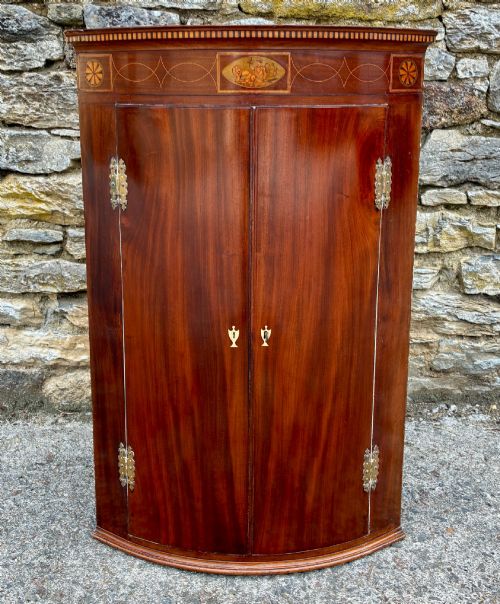
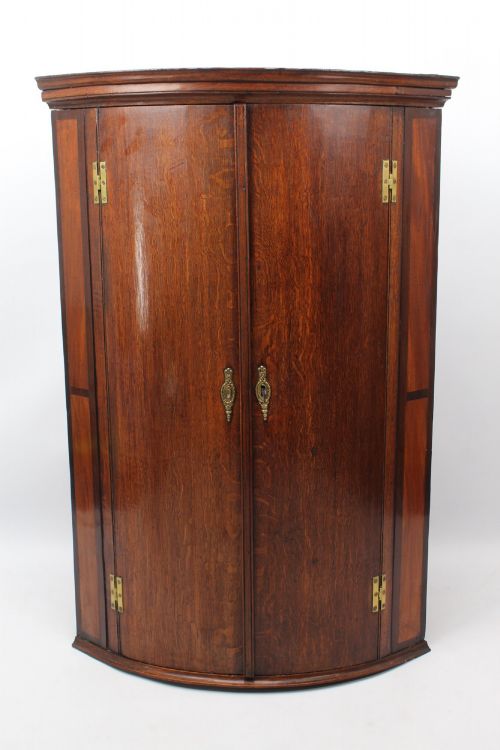
The versions most commonly met on this page date from the Georgian and Victorian eras, alongside Edwardian and early twentieth-century examples. Mahogany and oak dominate the selection, appearing in both bow-fronted cupboard forms and open tiered stands.
Makers utilised these corner sites to display ceramic collections, glassware and small ornaments without crowding floor space. The underlying geometry allows tall furniture to sit comfortably in smaller rooms where flat-wall cabinets would overwhelm the interior.
Materials and construction methods
Cabinet makers relied primarily on solid mahogany, oak and walnut for structural integrity, often adding decorative veneers like burr walnut, birdseye maple or olive wood to the visible surfaces. Boxwood stringing and brass fittings appear frequently as detailing on refined Georgian and Sheraton Revival pieces.
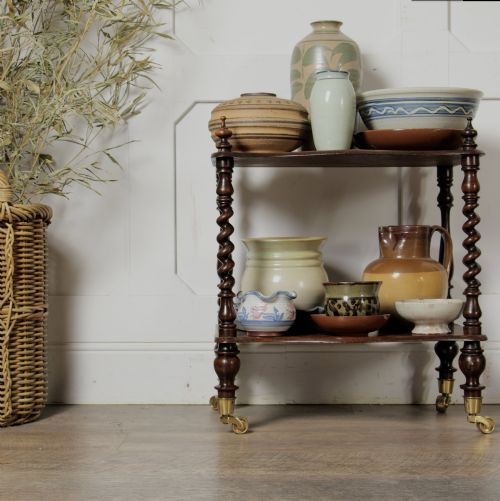
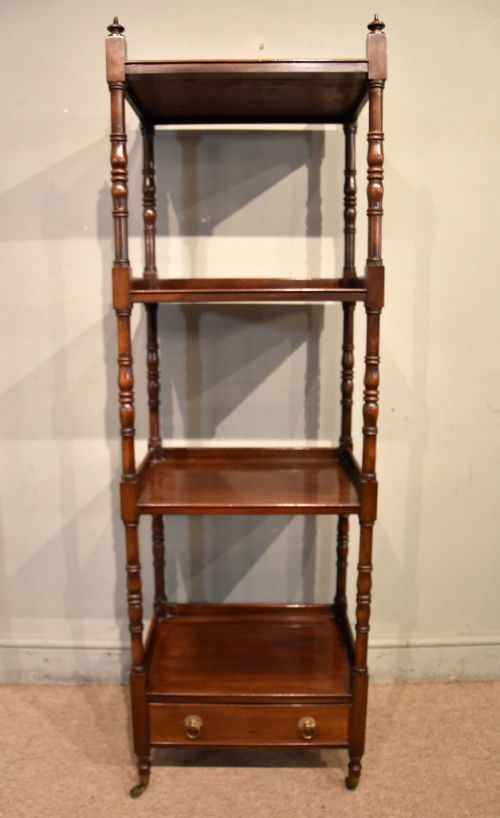
Joinery techniques involved precise angled housing joints and dovetailed construction to ensure stability within the ninety-degree corner. Glazed doors utilised delicate wooden astragals, while tiered whatnots employed turned supports or barley twist columns to separate the display shelves.
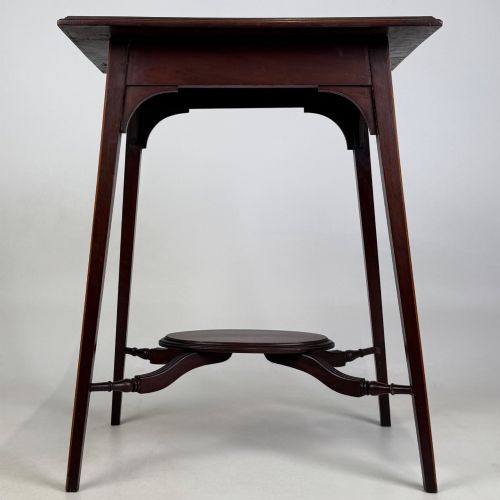
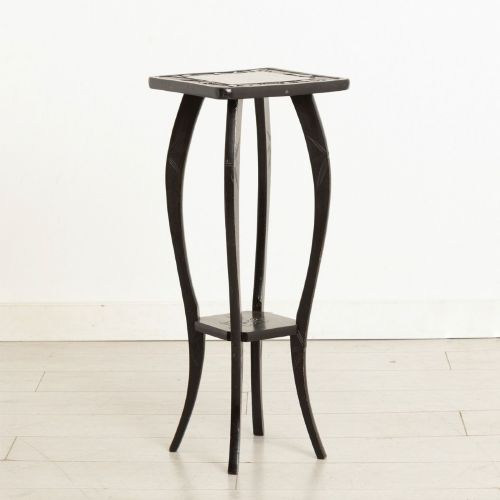
The documented object forms include corner cabinets, cupboards, whatnots, side tables, occasional tables, etageres, plant stands and display chests.
Distinctions in craftsmanship and design
The distinction between standard examples and superior pieces rests on timber selection and architectural ambition. Cabinets featuring figured veneers, broken arch pediments or fine inlaid stringing demonstrate a higher level of workshop skill than plain utility cupboards.
Proportion and interior treatment also separate the ranges. Pieces retaining original painted interiors, working brass locks with functional keys, and well-balanced tiers represent the more accomplished end of surviving cabinet making.
Liberty of London
The Antique Wooden Corner Display Glossary
- Whatnot
- A piece of furniture consisting of a set of open shelves for displaying small objects, standing on upright supports. They often feature multiple tiers and can be designed specifically for corner placement.
- Bow front
- A convex curved front facade common on Georgian and Victorian cabinets. This shape softens the hard angles of a room.
- Pediment
- A decorative architectural crowning feature above a cabinet door, sometimes shaped in a broken arch design. It elevates the visual presence of a wall-mounted or standing cupboard.
- Stringing
- Thin inlay lines of a contrasting wood, such as boxwood, used to edge panels and drawers. It adds delicate linear detail to mahogany surfaces.
- Astragal
- A small moulded bar or strip of wood dividing the panes of glass within a cabinet door. Fine astragals indicate meticulous glazing work.
Antique Wooden Corner Display: Frequently Asked Questions
Where should I place an antique corner cabinet?
These units suit empty room angles that standard rectangular furniture cannot fill. They anchor dead space effectively while keeping walkways clear.
Position them away from direct sunlight and heat sources to protect timber veneers and prevent the wood from drying out over time.
How do I clean wooden display shelves?
Dust the timber surfaces regularly with a soft, dry cloth to prevent dirt accumulation. Avoid silicone-based polishes which build up residue.
Feed the wood occasionally with a traditional beeswax polish to maintain the natural lustre of mahogany or oak without sealing the pores.
Can these cabinets hold heavy items?
Tiered open whatnots and delicate display stands suit lighter decorative objects like porcelain, small books and glassware. Their slender upright supports are not built for heavy loads.
Sturdier floor-standing cupboards with solid oak or mahogany shelves handle heavier collections securely within their enclosed spaces.
How do I distinguish Georgian from Victorian pieces?
Georgian examples often display restrained classical proportions, architectural cornices, and understated mahogany or oak grain. They date from the eighteenth and early nineteenth centuries.
Victorian cabinets tend to introduce heavier proportions, richer burr walnut veneers, elaborate carved details, or turned elements like barley twist columns.