
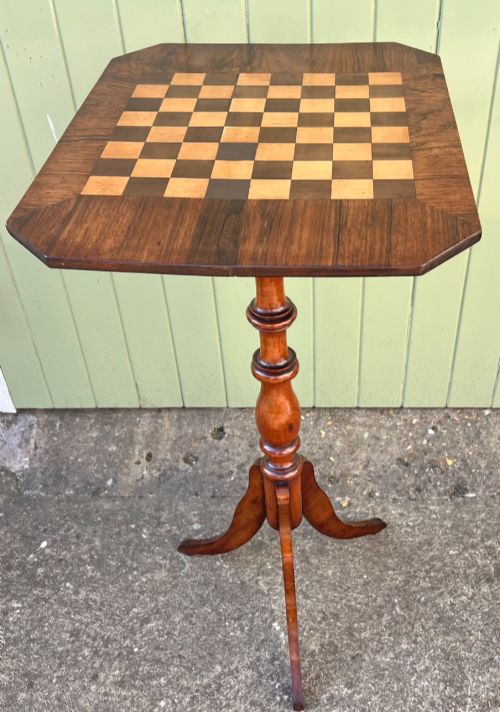
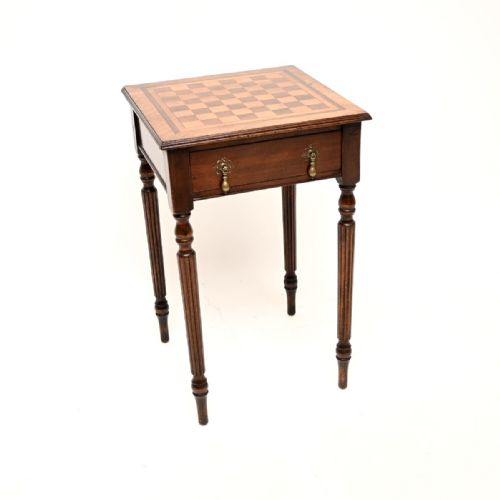


Antique Wooden Chessboard
An antique wooden chessboard is a traditional surface for play, combining timber craft and geometry to offer both a functional game and a decorative object.
Antique Wooden Chessboard
When searching for an antique wooden chessboard, a buyer encounters a variety of forms ranging from folding boards and games boxes to substantial pedestal tables. The nineteenth century yields many of the surviving examples, often executed in rich timbers or detailed with intricate inlay work.
Beyond standalone boards, many listings include multi-purpose items such as games compendiums, sewing tables with integrated boards, and reversible surfaces that incorporate backgammon. These multi-functional pieces reflect the social pastimes of the Victorian and Edwardian eras, combining utility with fine cabinetmaking.
English and continental origins dominate the selection, alongside specific regional variations like Anglo-Indian or Swedish Biedermeier examples. The boards and tables frequently pair contrasting light and dark woods to delineate the playing squares clearly.
Materials and technique
Cabinetmakers utilised a palette of contrasting hardwoods to achieve the traditional light and dark check pattern. Boxwood and sycamore provide the pale squares, while rosewood, mahogany, walnut, and ebony supply the deeper tones.
Surface decoration frequently relies on precise inlay, marquetry, and mother-of-pearl accents embedded directly into the timber. Tables and boxes often feature turned pedestals, carved details, or scumbled finishes depending on the regional style and period.
Materials across the listings include walnut, mahogany, rosewood, boxwood, and mother-of-pearl, spanning the Regency to Edwardian periods.
Judgement of quality
Quality in these pieces rests primarily on the precision of the timber selection and the accuracy of the geometric inlay. The alignment of the alternating squares requires meticulous woodworking to ensure a stable, flush playing surface that withstands changes in humidity.
The sophistication of the secondary furniture elements - such as the turning of a games table pedestal, the integration of a sewing compartment, or the weight of a folding board hinge - separates standard utility items from finer parlour pieces.
British Chess Company
The Antique Wooden Chessboard Glossary
- Boxwood
- A dense, pale wood commonly utilised for the lighter squares on a chessboard or for carved chess pieces. It provides a smooth surface that takes fine detail well.
- Marquetry
- The art of applying small pieces of veneer to a structure to form decorative patterns. This technique frequently ornaments the borders and playing surfaces of nineteenth-century tables.
- Scumbled
- A paint finish applied to simulate the grain of a more expensive timber or to create a mottled decorative effect. It appears on certain Regency games tables.
- Compendium
- A boxed collection of multiple parlour games stored together. These often house chess, backgammon, and cards in fitted wooden compartments.
Antique Wooden Chessboard: Frequently Asked Questions
How do I care for an antique wooden chessboard?
Keep the timber away from direct sunlight and extreme temperature fluctuations to prevent the wood from warping or splitting. Occasional light dusting and careful handling of inlaid edges preserve the surface.
Avoid using modern chemical polishes that can degrade nineteenth-century finishes. A microcrystalline wax applied sparingly can help protect the timber if needed.
Are these boards suitable for regular play?
Most antique wooden chessboards and tables are structurally sound enough for occasional games. The timber and joinery on nineteenth-century surfaces generally remain robust.
Consider the square size and overall dimensions when matching a board with specific chess sets. Some miniature or older sets require smaller playing fields.
What is the difference between a board and a games table?
A chessboard is typically a portable folding board or a rigid flat panel designed to sit on any surface. These are straightforward items intended solely for the game.
Games tables are dedicated pieces of furniture featuring integrated boards, sometimes with drawers, folding leaves, or dual-purpose reverse sides for backgammon and cards.
How can I tell the period of a chessboard?
Dating relies on the choice of timber, construction methods, and associated decorative styles such as Victorian Rococo Revival or Regency turning. Inlaid materials and edge banding also offer clues to the era of manufacture.
Makers' marks or stamps, when present, provide a direct reference to the workshop or manufacturer. Compendiums and tables often carry hardware typical of the mid to late nineteenth century.