





Antique Wooden Caddy Handle
These antique wooden caddy handle pieces span Georgian to Victorian eras, offering collectors authentic brass and timber containers to elevate period interiors.
Antique Wooden Caddy Handle
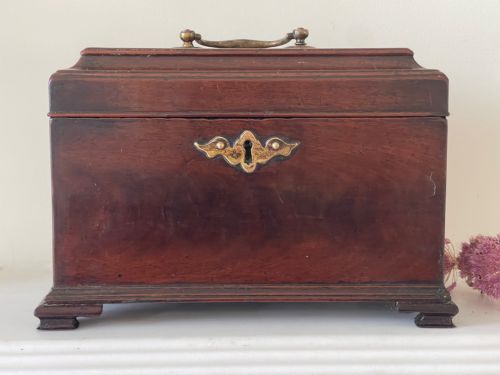
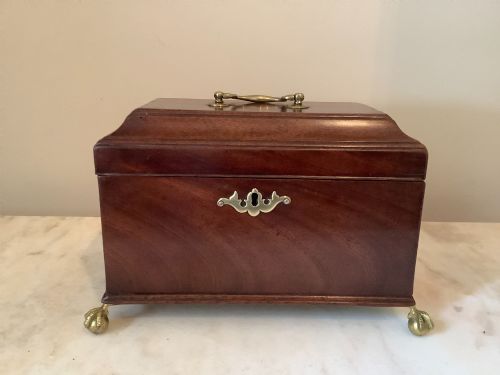
These items served domestic functions in polite drawing rooms and dining rooms, often incorporating brass handles, lion masks, or bound mounts to facilitate movement by servants. While tea chests and wine carriers dominate the selection, related items such as bracket clocks and stationery boxes also appear with period carrying fixtures.
The objects stem from distinct eras ranging from mid eighteenth century workshops up to early twentieth century revival pieces. Mahogany and rosewood form the core of the physical evidence, accompanied by boxwood stringing, bone escutcheons, and steel fittings.
Materials and construction methods
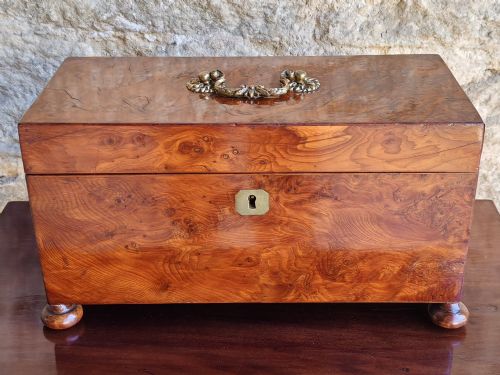
Cabinetmakers utilised dense hardwoods such as mahogany, rosewood, burr walnut, and yew wood to construct the heavy carcasses of tea caddies and wine coolers. These timbers were frequently polished to a high sheen, revealing natural grain patterns and rich colour variations.
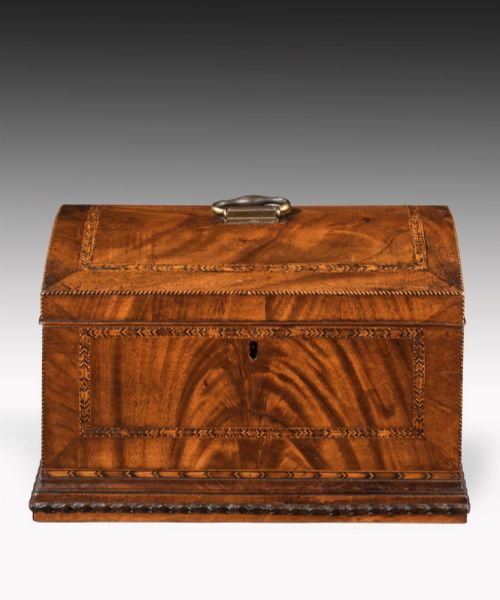
Metal components played a structural and decorative role, with cast brass drop handles, lion mask rings, and steel locks fitted securely to the wooden bodies. Boxwood stringing and inlay work added precise geometric detail to the lid surfaces and panelled sides.
Antique Wooden Caddy Handle Retail Price Guide 2026
Typical asking prices for wooden caddy handle among the pieces listed under this phrase on Sellingantiques today, from the lower quarter to the upper quarter. They describe what is for sale here now, not the wider market.
The material record for these items includes mahogany, rosewood, boxwood, yew wood, brass, steel, bone, and glass.
Distinctions in craftsmanship and design
Superior examples display precise joinery, such as secret drawers, interior compartmentalisation with fitted lids, and well-cast brass hardware that integrates harmoniously with the timber carcase. Lesser pieces rely on simpler box construction with plain panels and minimal internal architecture.
The choice of veneer significantly influences the overall character, where burr walnut or figured mahogany demonstrates superior selection by the original cabinetmaker compared to plain, unfigured boards.
Mappin and Webb·Watson London
The Antique Wooden Caddy Handle Glossary
- Tea caddy
- A small box or chest designed to store loose tea leaves securely under lock and key. These containers often featured internal foil lining and divided compartments for green and black teas.
- Cellarette
- A lockable container or cabinet used to store bottles of wine or spirits in the dining room. They frequently incorporated lead linings and robust brass carrying handles.
- Sarcophagus
- A coffin-like box shape with a domed or stepped lid popular during the Regency period. This architectural form was widely applied to mahogany tea caddies and wine coolers.
- Stringing
- Thin inlaid lines of contrasting wood, such as boxwood, used to edge panels and borders on fine furniture. It provides a crisp visual frame to mahogany surfaces.
Antique Wooden Caddy Handle: Frequently Asked Questions
What were tea caddies used for?
Tea was an expensive commodity in the eighteenth and nineteenth centuries, requiring secure storage away from household servants. Tea caddies preserved the aroma and dryness of valuable leaf teas.
Containers often featured two or three internal compartments alongside a central mixing bowl space, allowing domestic hosts to blend different tea varieties.
How do I date a wooden caddy?
Dating relies on architectural styles, timber choices, and hardware types visible across the piece. Georgian items typically display simpler rectilinear or octagonal forms with bracket feet.
Regency examples introduce sarcophagus shapes, heavy brass lion mask handles, and bolder veneering techniques such as rosewood and burr timbers.
Are brass handles original to the box?
Original brass handles show consistent patination, wear patterns, and screw types appropriate to the period of manufacture. Replacement hardware often leaves mismatched fixing marks on the timber interior.
Examining the backplate and screw slots reveals whether the fittings have remained undisturbed since the eighteenth or nineteenth century.
How should I clean antique wood?
Maintenance requires gentle dusting with a dry, soft cloth to prevent particulate buildup on polished mahogany and rosewood surfaces. Avoid modern silicone sprays and abrasive liquid cleaners entirely.
Applying occasional microcrystalline wax feeds the dry timber without damaging the historic polish or softening delicate boxwood stringing details.