


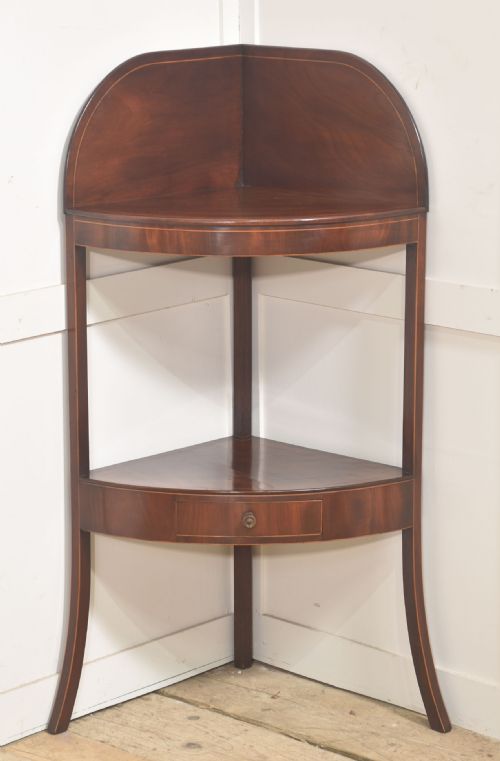

Antique Wood Washstand
An antique wood washstand brings solid period timber and practical wash-house utility into modern rooms as a versatile side table or cabinet.
Antique Wood Washstand
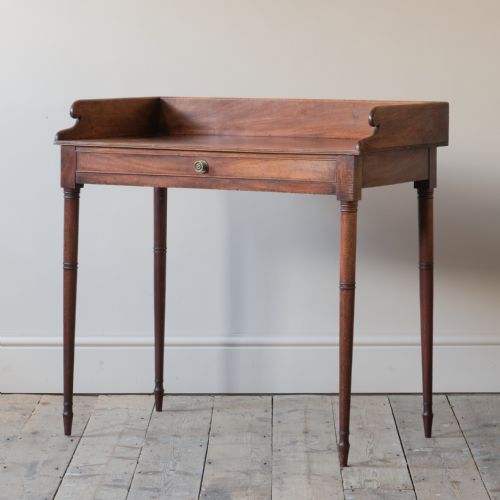
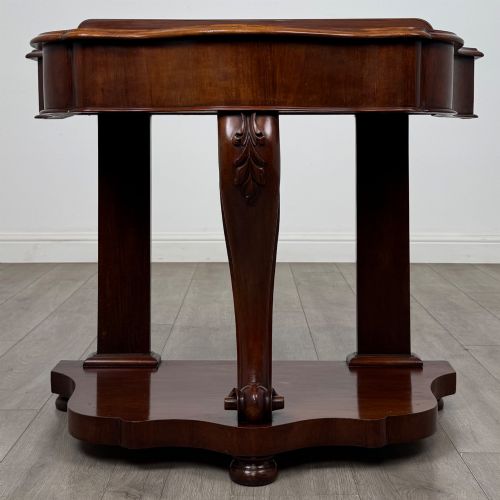
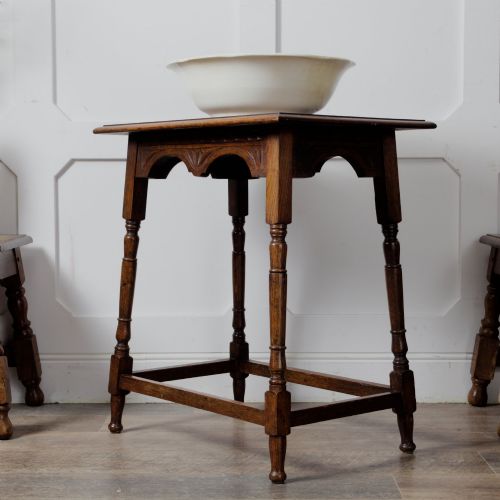
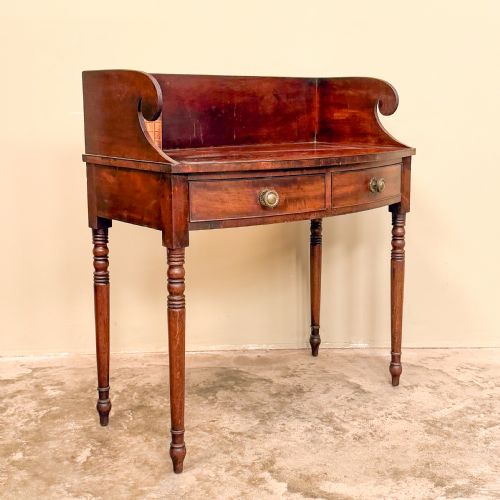
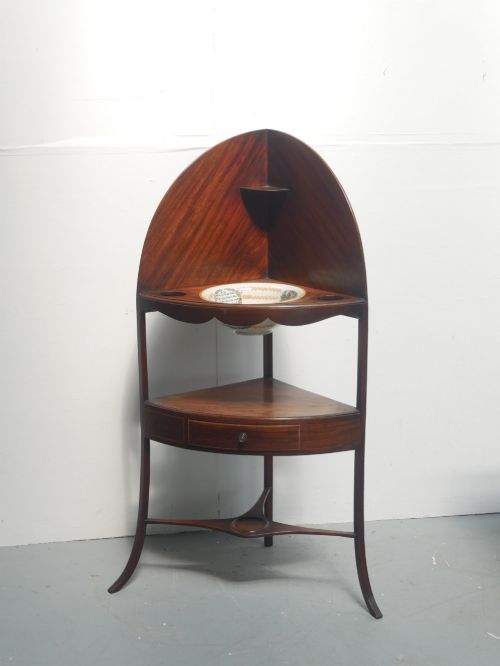
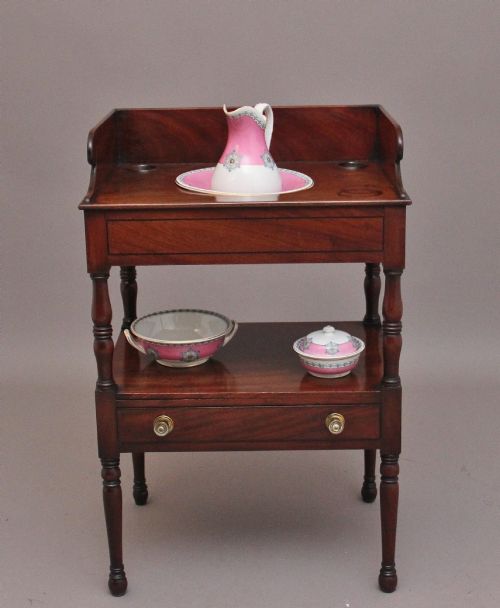
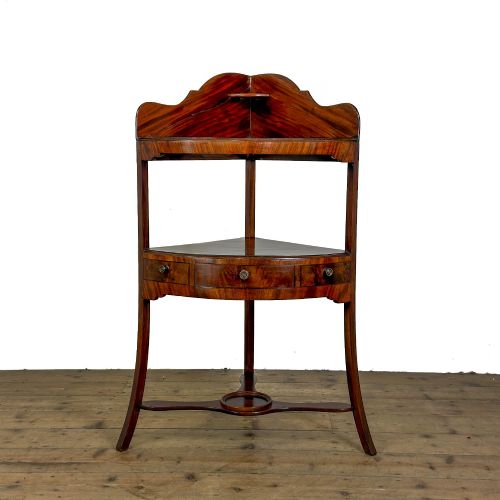
An antique wood washstand is a functional bedroom furnishing designed for personal hygiene before plumbed bathrooms, appearing in various corner and freestanding formats across this selection. Buyers find pieces spanning the Georgian, Victorian, and Edwardian eras, alongside French Provincial and campaign designs.
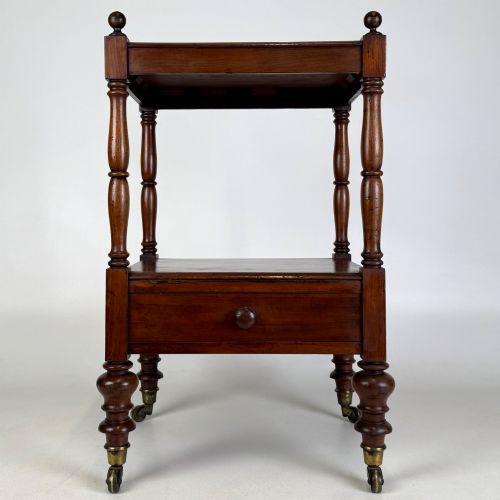
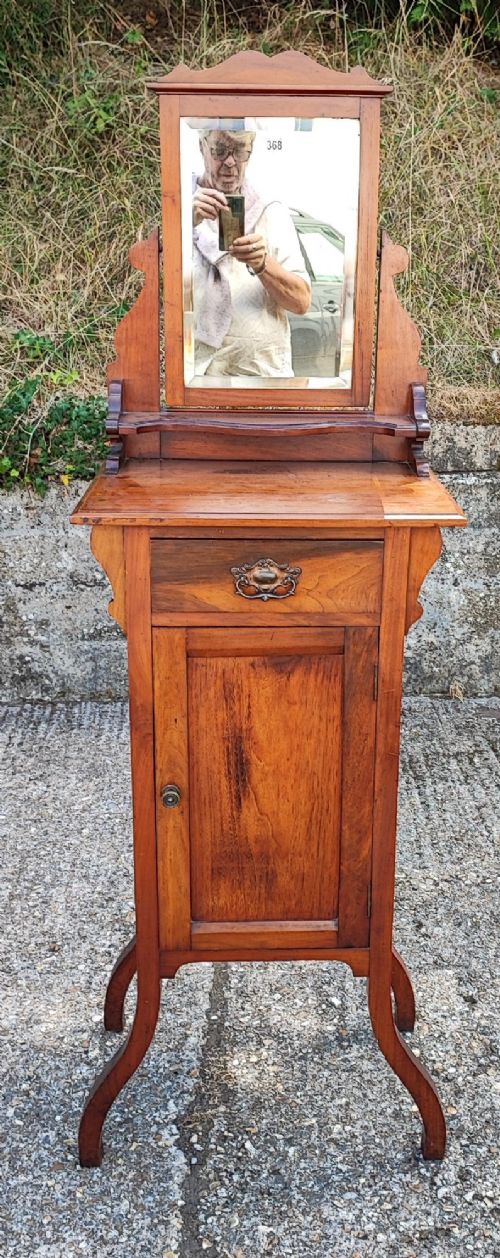
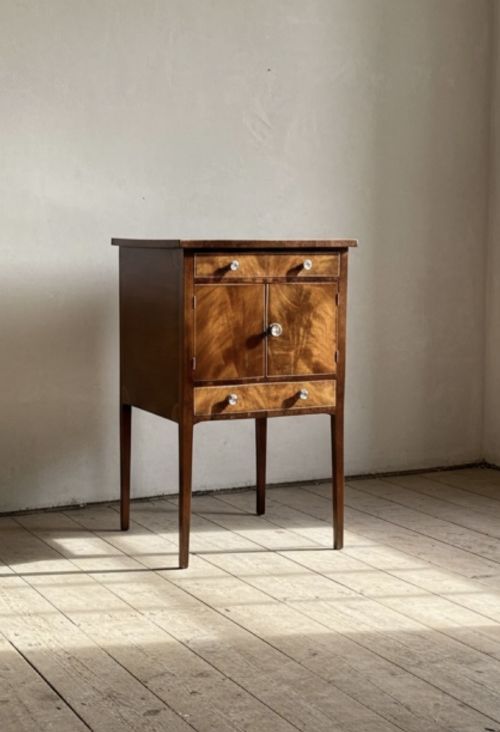
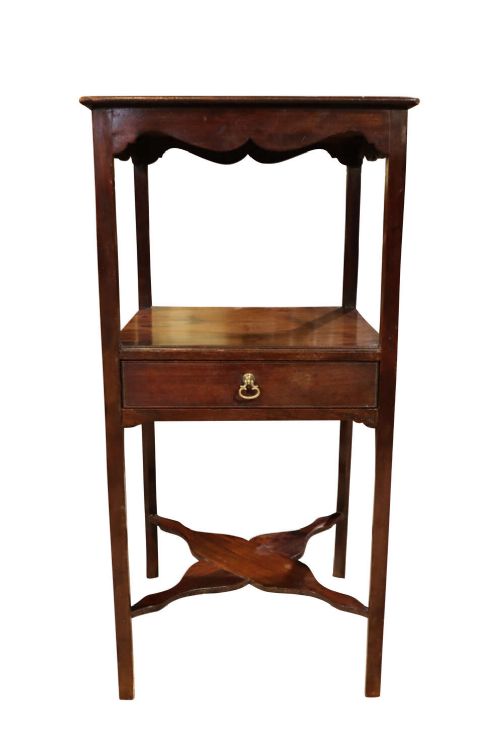
The freestanding mahogany washstand dominates the options here, frequently accompanied by corner washstands built to utilise tight spaces. Cabinet makers also produced bedside tables, shaving stands, and wig stands that share the same domestic lineage.
Origins stretch from English workshops to French provincial makers, utilising local hardwoods suited to daily moisture and heavy use. Many survivors now serve alternative roles as lamp tables, plant stands, or hallway consoles.
Materials and Construction
Cabinet makers relied primarily on solid mahogany and walnut, augmented by flame mahogany veneer, boxwood inlay, satinwood, chestnut, and fruitwood. These timbers provided the structural integrity required to support heavy ceramic basins and marble tops.
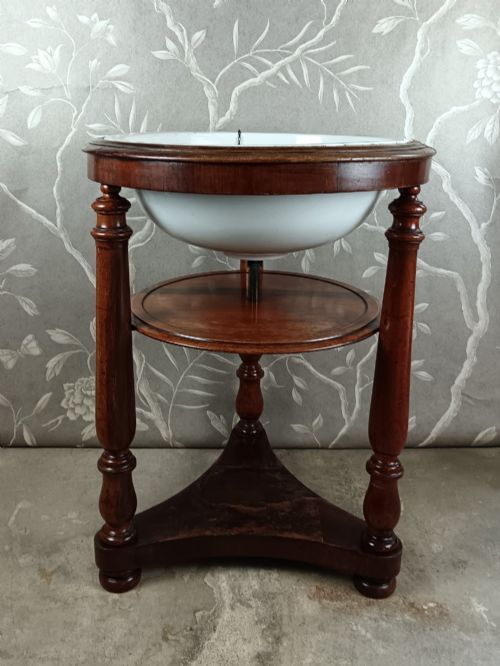
Hardware additions of brass and glass appear alongside fitted ceramic basins and pewter cisterns in pieces like the French Provincial lavabo. Secondary woods and dovetailed drawer construction underpin the longevity of these functional items.
The listings on this site span four distinct centuries, featuring Georgian, Victorian, and Edwardian periods in mahogany, walnut, and marble.
Craftsmanship and Integrity
Quality rests in the selection of timber figures, such as flame mahogany veneer, and the crispness of boxwood inlay or carved details. Superior examples maintain original hardware, intact marble surfaces, and unaltered structural joinery.
Converted or heavily adapted pieces sit lower in the range, where interior shelving or basins have been removed to suit modern storage needs. The integration of secondary woods and the precision of dovetailing distinguish master workshops from standard regional output.
Harrods·James Shoolbred
The Antique Wood Washstand Glossary
- Washstand
- A freestanding or corner piece of bedroom furniture designed to hold a basin, jug, and washing accessories. These items date primarily from the Georgian, Victorian, and Edwardian periods.
- Campaign washstand
- A collapsible or portable variant constructed for travel, typically featuring brass mounts and folding frames. These pieces were built for military officers or colonial administrators.
- Lavabo
- A wall-mounted or cabinet-enclosed washing apparatus featuring a cistern and basin. French provincial examples often include original pewter hardware.
- Flame mahogany veneer
- A decorative wood slicing displaying a distinctive swirling flame pattern. Cabinet makers applied this to drawer fronts and tabletops for visual impact.
- Wig stand
- A specialised compact stand with a small circular basin or platform at the head. Georgian examples were used for powdering and storing gentlemanly wigs.
Antique Wood Washstand: Frequently Asked Questions
How were antique washstands used originally?
These pieces served as the primary washing station in bedrooms before running water became standard in homes. They held ceramic basins, water jugs, and soap dishes for morning routines.
Over time, many lost their original basins and converted into bedside cabinets, plant stands, or hallway side tables.
What woods appear most often?
Mahogany forms the vast majority of English pieces across the Georgian and Victorian eras, often enhanced by boxwood inlay or flame veneer. Walnut, satinwood, chestnut, and fruitwood also appear in regional and continental examples.
Marble tops and brass fittings are common additions on later Victorian and Edwardian washstands designed to resist water damage.
How do I date an antique washstand?
Georgian pieces generally display clean lines, tapered legs, and subtle corner configurations designed for smaller rooms. Victorian and Edwardian versions often incorporate heavier turnings, marble inserts, and integrated towel rails.
Construction details like hand-cut dovetails and timber choice help narrow the decade of manufacture.
Can I use a washstand as a modern bathroom vanity?
Many buyers adapt these sturdy wooden frames to hold modern countertop basins and plumbing. The solid timber construction provides a durable base when sealed against moisture.
Corner washstands and cabinet styles offer enclosed storage beneath the surface for bathroom supplies.