
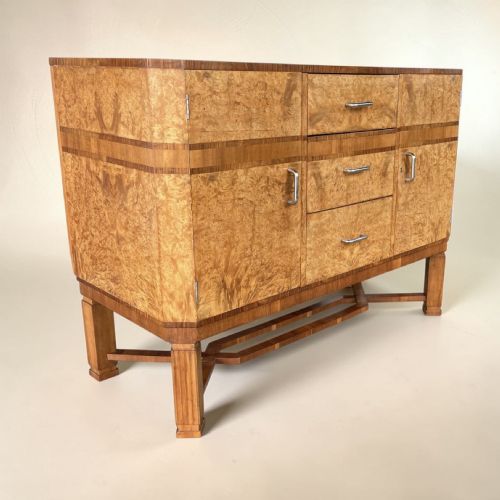
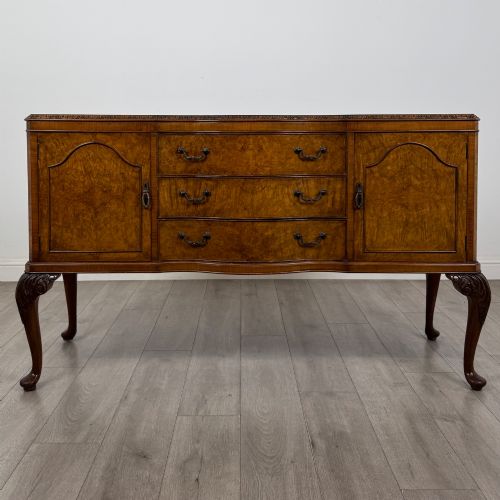
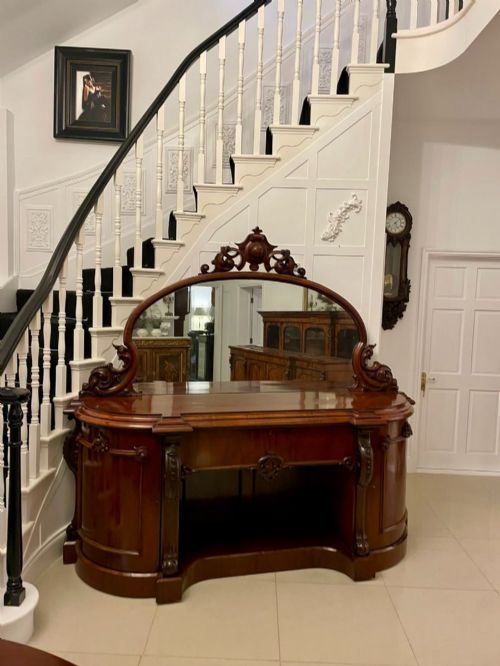
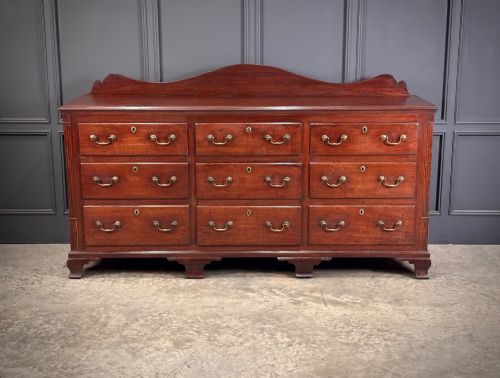
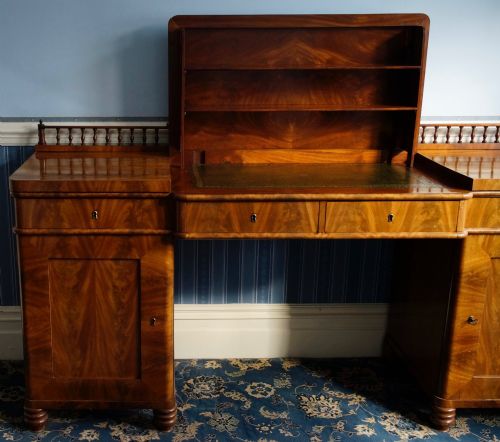
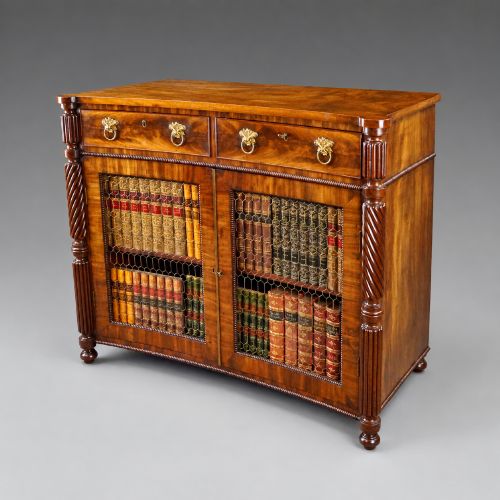
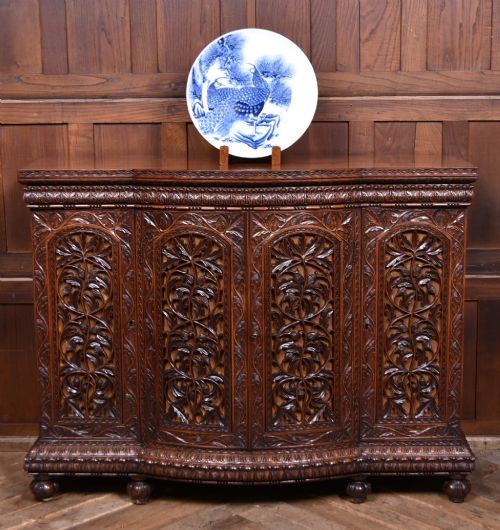
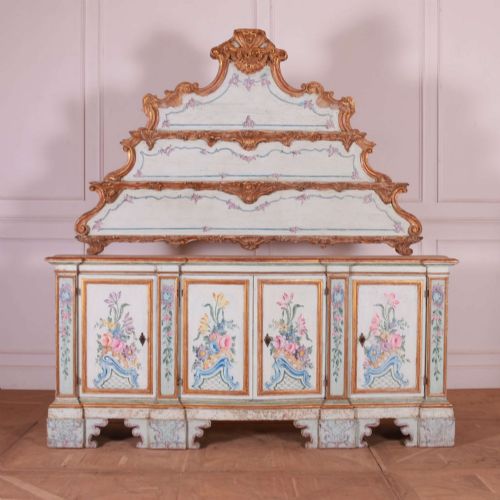
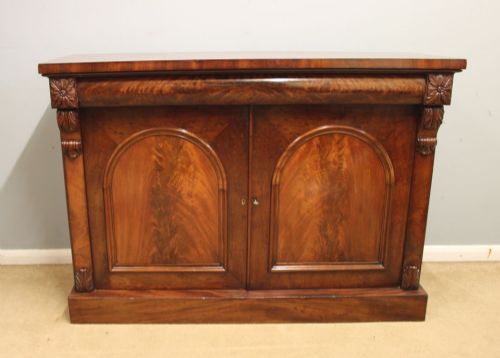
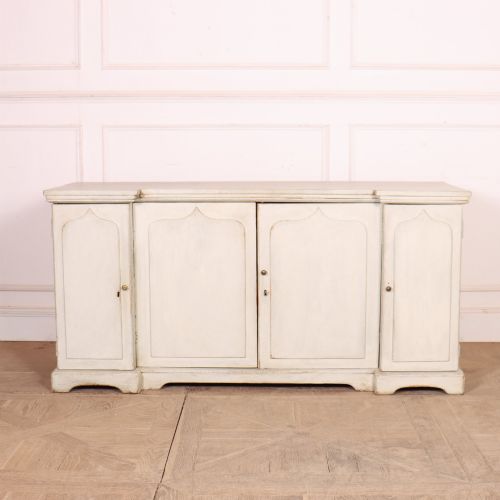
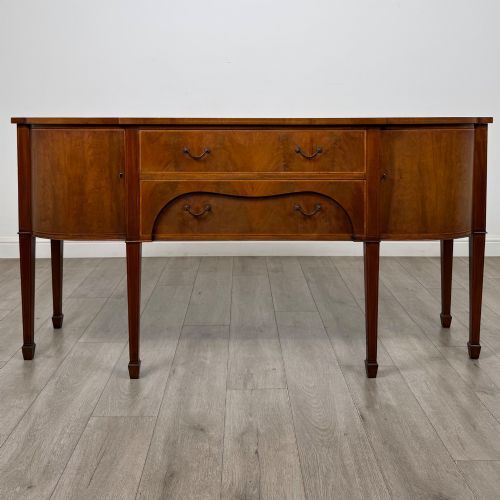
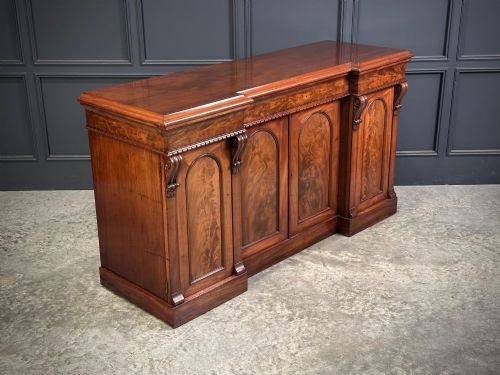
Antique Wood Sideboard Cabinet
An antique wood sideboard cabinet anchors a dining room or hall with solid proportions and useful storage.
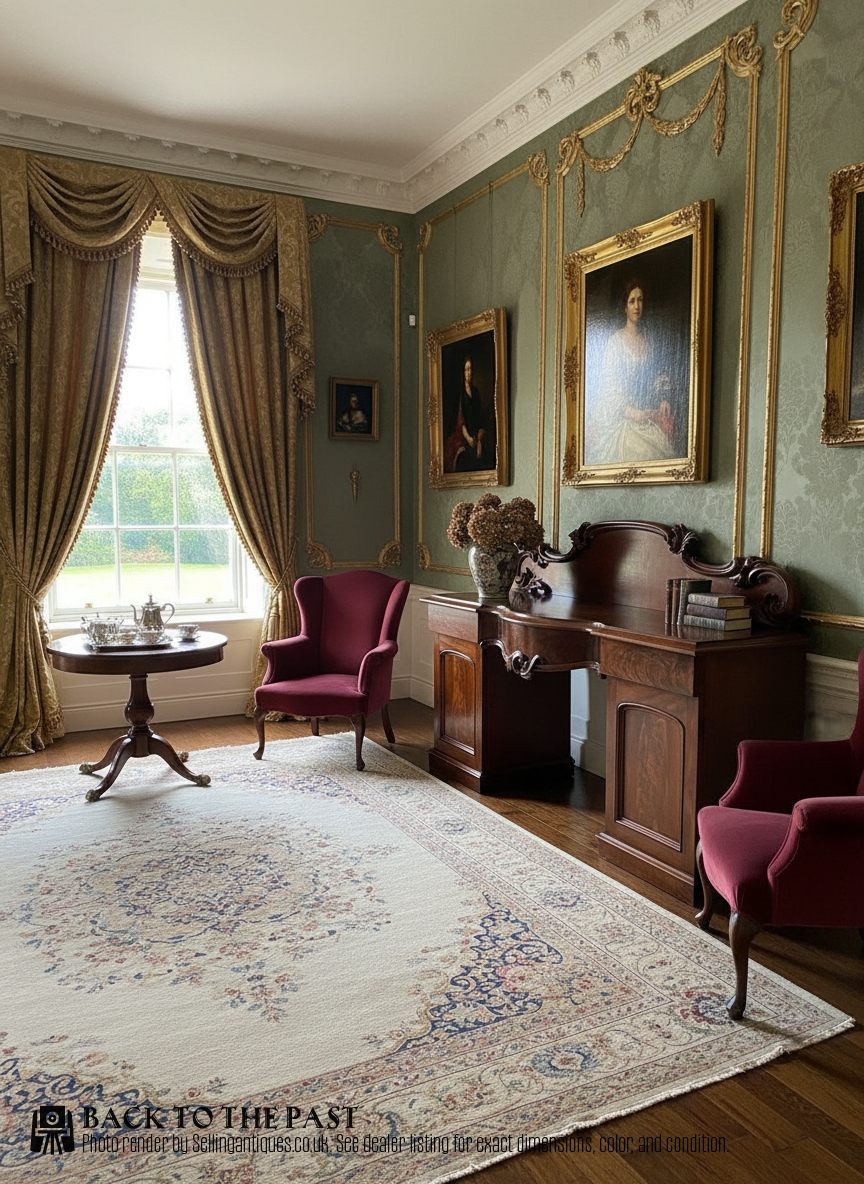
Antique Wood Sideboard Cabinet
When you search for an antique wood sideboard cabinet, you encounter substantial serving furniture built to hold linen, silver and dining ware. These pieces originate from domestic and institutional settings across the eighteenth, nineteenth and early twentieth centuries.
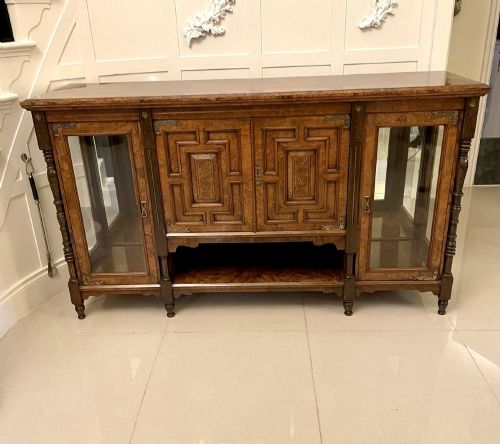
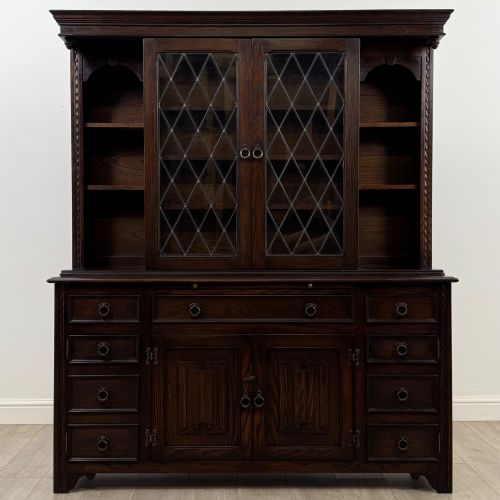
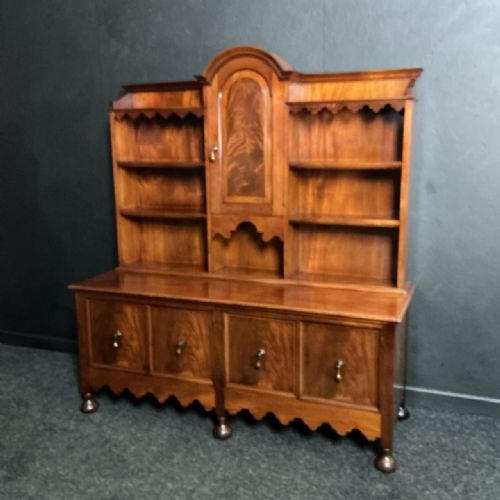
Mahogany and oak examples dominate the selection, spanning formal Georgian designs through robust Victorian iterations to lighter Edwardian interpretations. You find bow-fronted servers, breakfront dressers, and enclosed cabinets fitted with doors and drawers.
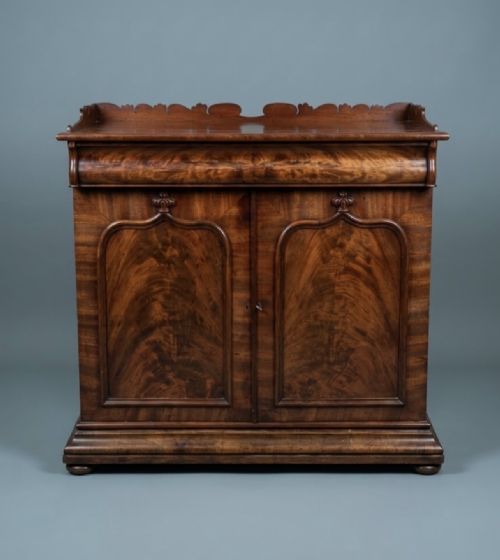
The nineteenth-century pieces frequently employ flame mahogany veneers and rich rosewood timbers, whilst earlier centuries favour straight-grained mahogany or carved oak. These forms evolved from simple servers into complex display furniture incorporating mirrors, shelves and marquetry.
Materials and technique
Cabinetmakers constructed these frames from native and imported timbers, applying figured mahogany, rosewood, amboyna or walnut veneers to primary surfaces. They utilised solid oak and pine for internal linings, drawer boxes and structural framing.
Surface ornament relied on contrasting stringing, marquetry inlays, brass hardware and intricate hand carving rather than applied composition. Carved details such as lion paw feet, barley twists and gothic panelling required skilled timber shaping.
French polishing and wax finishes built up the surface sheen on fine hardwoods, while ebonising transformed lighter woods to imitate ebony. Cabinet doors utilised panel-and-frame construction to accommodate seasonal timber movement.
The inventory records regional British furniture alongside French hunting cabinets and Anglo-Indian carved creations.
Design and construction standards
The hierarchy of quality rests on the selection of timber veneers and the precision of the joinery. Superior examples display book-matched flame mahogany or intricate amboyna with continuous grain patterns across drawer fronts and doors.
Subtle details separate standard production from exceptional workshops, such as hand-cut dovetails on drawer boxes, solid brass locks, and crisply carved mouldings. Pieces featuring signed maker plaques or documented attributions command attention for their recorded provenance.
Hewetsons London·Collinson and Lock
The Antique Wood Sideboard Cabinet Glossary
- Chiffonier
- A low sideboard or cabinet featuring shelves or a raised back, commonly utilised in nineteenth-century dining rooms and drawing rooms. These pieces provided compact storage for serving accessories.
- Breakfront
- A cabinet or sideboard whose central section projects forward from the flanking outer sections. This architectural arrangement creates depth and visual rhythm on large dining room walls.
- Marquetry
- Decorative veneer work forming pictorial or geometric patterns using various coloured woods and shell. Artisans cut these delicate elements by hand before pressing them into the carcase.
- Serpentine
- A curved furniture front characterised by a convex centre flanked by concave curves. This undulating shape demands advanced woodworking skill to fit doors and drawers precisely.
Antique Wood Sideboard Cabinet: Frequently Asked Questions
How do I date an oak sideboard?
Examine the drawer construction and timber marks for clues to the manufacturing decade. Hand-cut dovetails and pegged joints generally indicate nineteenth-century or earlier craftsmanship.
Secondary woods inside the drawers also provide evidence. Oak and deal linings point towards specific regional workshops and historical periods.
What is a chiffonier cabinet?
A chiffonier is a compact sideboard equipped with enclosed lower cupboards and often a raised shelf or mirror back. Victorian households utilised them in smaller dining spaces and drawing rooms.
They served primarily for storing glassware and serving silver without occupying the floor space of a large breakfront.
Are marble top sideboards original?
Many nineteenth-century rosewood and kingwood side cabinets feature fitted white or veined marble tops. These slabs protected the timber surface from spilled liquids during serving.
They were standard specifications for high-end dining and salon pieces intended for heavy daily use.
How do I clean mahogany veneer?
Dust the polished surfaces regularly with a soft, dry cloth to prevent grit accumulation. Avoid modern silicone sprays that build up and attract atmospheric dust.
Nourish the aged timber periodically with a quality beeswax to preserve the depth of the French polish.