

Antique Wood Screen
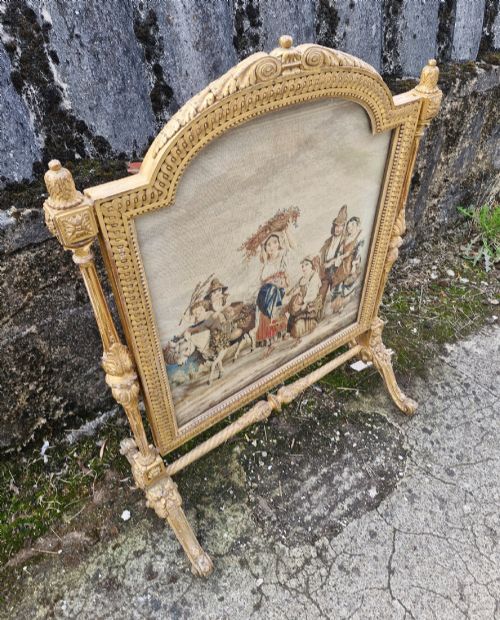
An antique wood screen divides a room or shields a hearth, bringing architectural warmth and decorative panelwork into an interior.
Antique Wood Screen
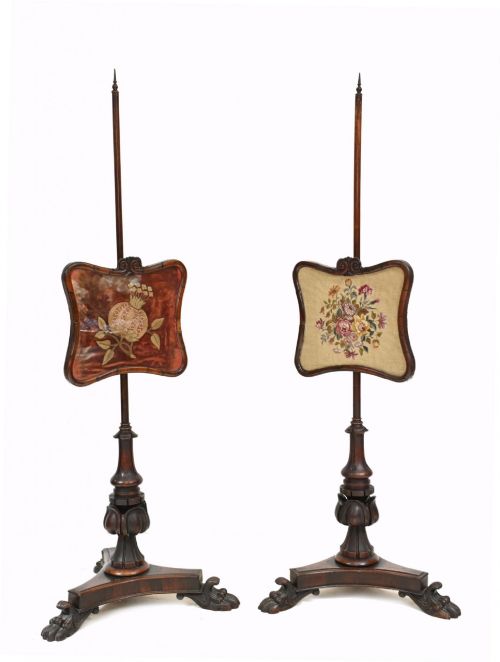
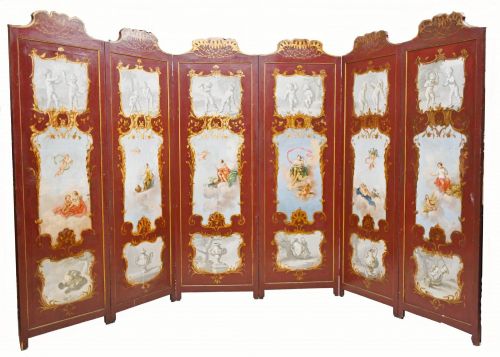
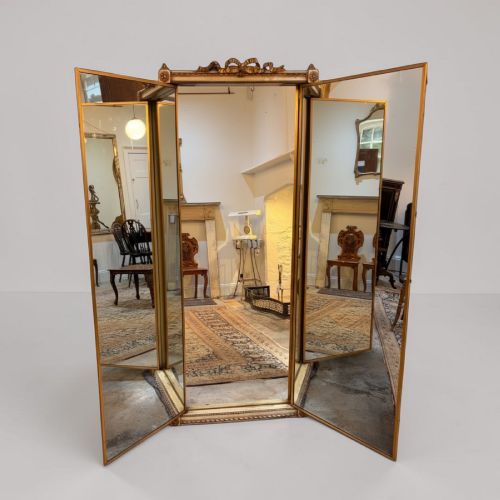
When you search for an antique wood screen, you encounter several distinct forms fulfilling different domestic roles, from small tabletop pieces to towering room dividers and hearth protectors. The selection spans compact pole screens designed to block fireplace heat, multi-panel folding screens for privacy, and structural entrance dividers.
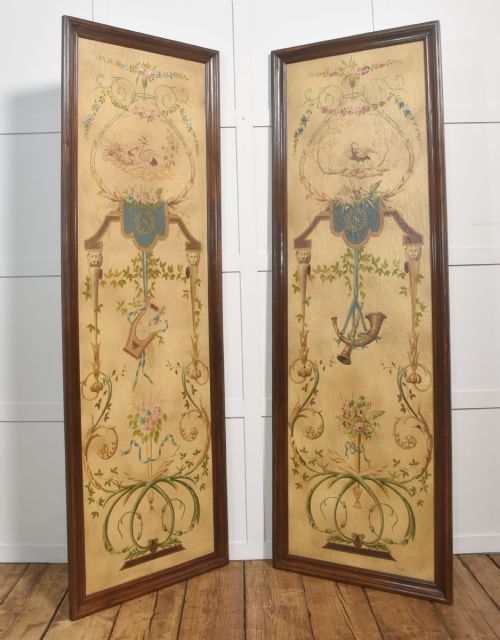
The material origins stretch across British, European, and Asian workshops, incorporating styles from the Georgian and Regency eras through the Victorian period and into the early twentieth century. Rosewood, mahogany, and oak form the structural backbone of these pieces, often supporting intricate textile panels, needlework, embroidery, or painted decoration.
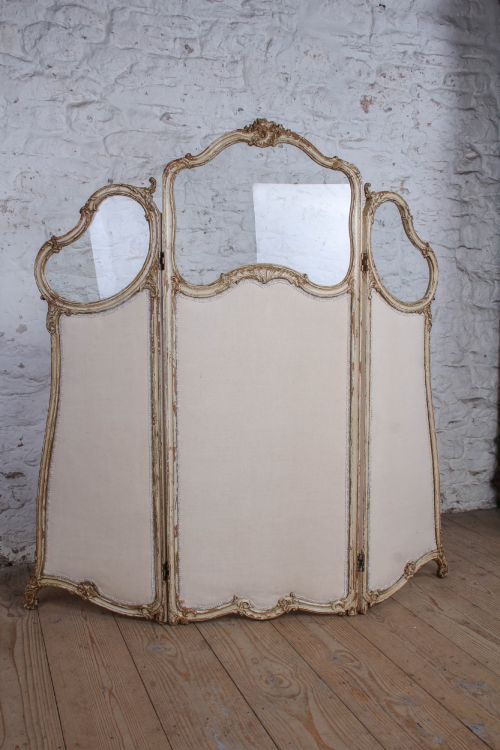
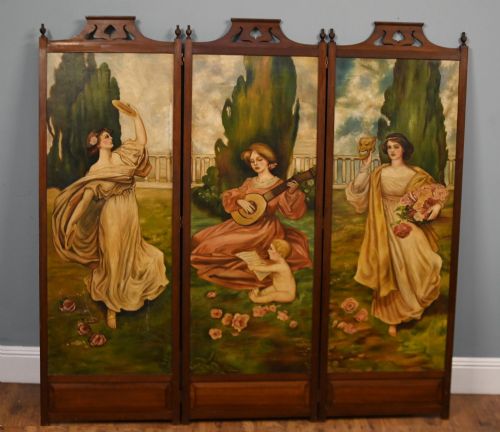
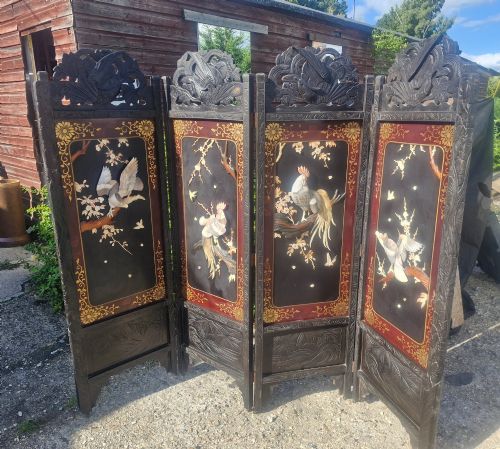
Smaller variants include table screens and metamorphic items that double as occasional tables or butlers trays, while larger examples comprise three-fold and four-fold screens featuring scrap work, carved bone figures, or fretwork panels.
Materials and Construction
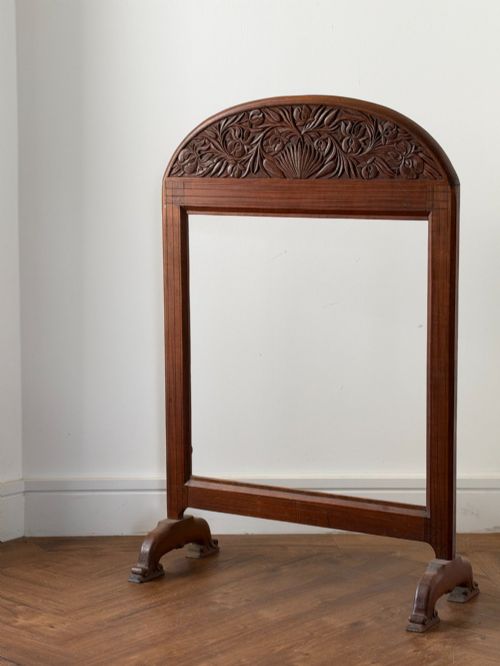
Makers utilised dense hardwoods such as rosewood, mahogany, walnut, and oak to construct stable frames capable of supporting hinged panels or heavy pole screen bases. Turning, carving, and giltwood finishing define the woodwork, seen in tripod bases, spade feet, and deep relief carvings.
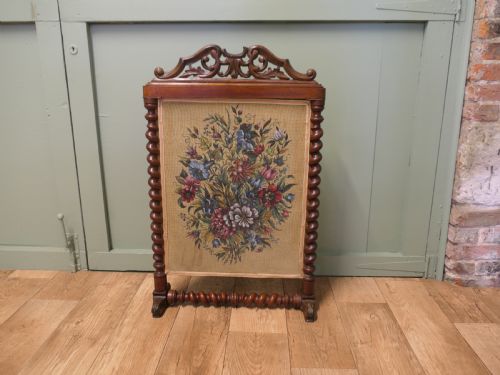
The visual insert within the wooden frame frequently relies on textiles, encompassing needlework, floral tapestry, silk embroidery, and printed panels under glass. Brass components, including chased plates, hinges, and pole mounts, provide functional hardware and decorative contrast against the dark timber.
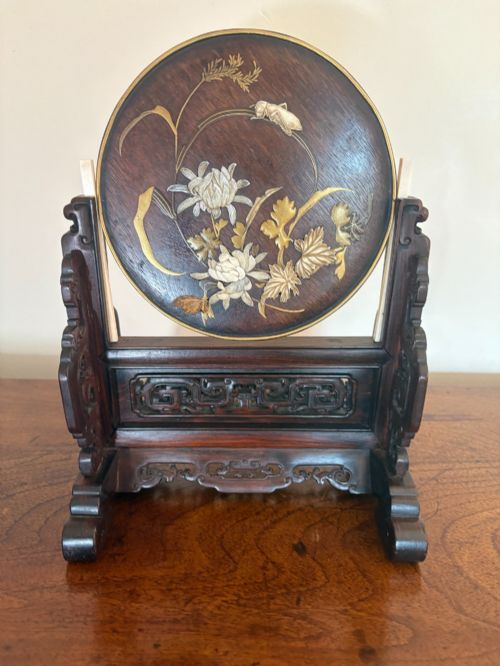
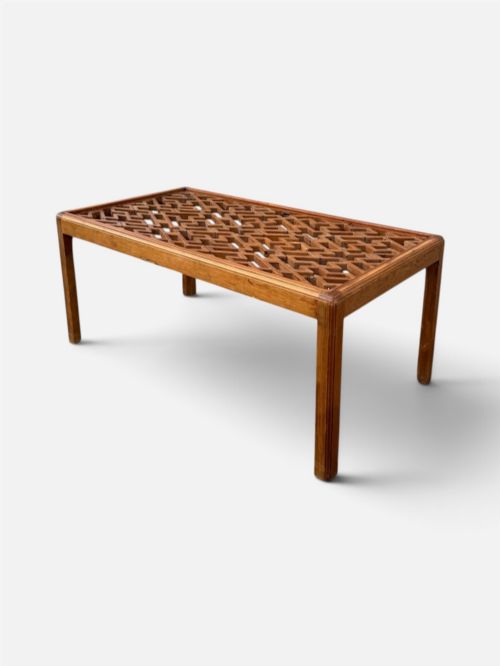
Specialist regional techniques appear across the inventory, including Shibayama inlay, bone carving, mashrabiya lattice work, and embossed brass panels mounted into European oak frames.
Antique Wood Screen Retail Price Guide 2026
Typical asking prices for wood screen among the pieces listed under this phrase on Sellingantiques today, from the lower quarter to the upper quarter. They describe what is for sale here now, not the wider market.
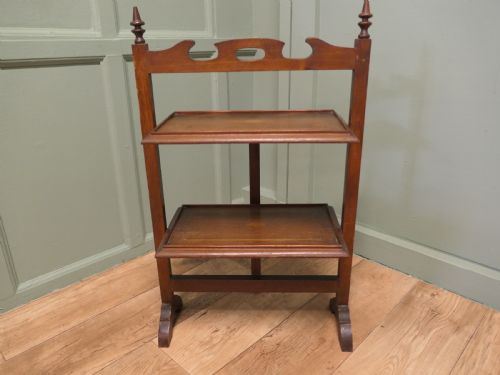
One listed metamorphic piece transforms cleverly from a fireside screen into an occasional butler's table for when tea is required.
Standards of Execution
Quality rests upon the crispness of the timber carving and the architectural integrity of the joints, particularly on folding hinges and adjustable pole screen mechanisms that endure regular handling. Superior examples display refined proportions and balanced design, whether in the delicate reeding of a Regency pole screen or the deep, precise undercutting on Chinese hardwood panels.
The secondary medium dictates much of the visual merit, distinguishing standard utility items from masterworks. Finely executed needlepoint, double-sided silk embroidery, or hand-painted decorative panels elevate a piece, whereas loose joinery, mismatched hinges, or degraded fabric lower the overall standing.
Gillows
The Antique Wood Screen Glossary
- Pole screen
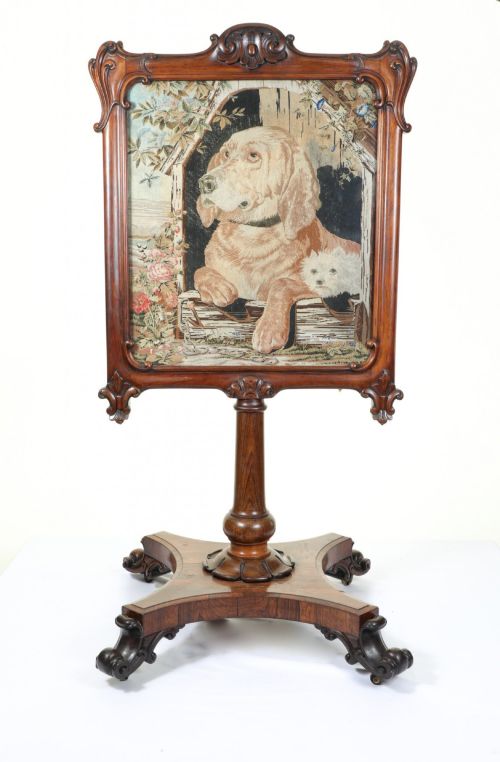
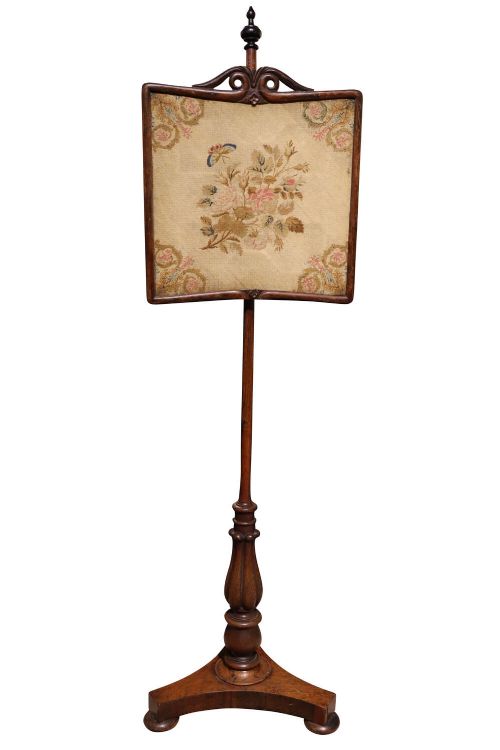
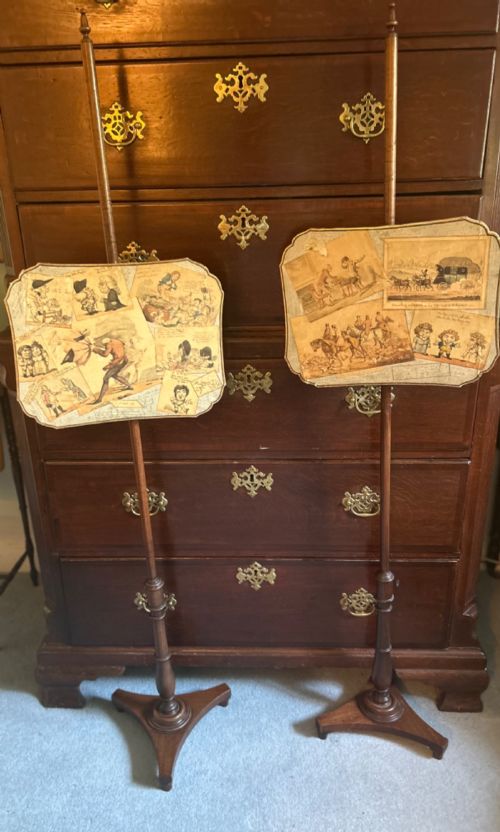
- A vertical wooden stand supporting an adjustable sliding panel designed to shield the face from fireplace heat. The screen typically mounts on a tripod base and dates frequently to the Georgian and Victorian periods.
- Modesty screen
- A small decorative panel used historically to shield a person from the heat of a hearth or to provide visual privacy in a room. These pieces often feature painted decoration or fabric inserts.
- Shibayama
- A Japanese decorative technique involving the inlay of precious materials such as ivory, bone, mother-of-pearl, and tortoiseshell onto a wooden ground. It appears on fine table screens and decorative panels.
- Mashrabiya
- An architectural element adapted into room dividers, consisting of wooden lattice work formed from turned bobbins fitted closely together. This technique creates complex geometric screens that filter light and air.
- Scrap work
- A Victorian craft method where paper chromolithographs and cutouts are applied directly to a folding screen surface and subsequently varnished. These pieces record popular imagery and domestic pastimes of the nineteenth century.
Antique Wood Screen: Frequently Asked Questions
How do I use a pole screen today?
A pole screen functions effectively as a movable piece of art or a subtle room accent behind a chair or in a corner.
The adjustable panel allows you to alter the height to suit your sightline, turning a historical hearth accessory into a decorative display stand.
What is the difference between a pole screen and a room divider?
A pole screen stands on a single vertical shaft with a tripod base, holding one small adjustable panel designed originally for heat protection.
A room divider consists of multiple hinged panels designed to fold across a space to create privacy or section off a larger room.
How do I identify a Victorian screen?
Victorian screens frequently employ dark timbers like rosewood and walnut, often combined with heavy needlepoint tapestry, floral embroidery, or scrap work.
They tend to exhibit ornate carved details and revival styles, reflecting the eclectic design preferences of the nineteenth century.
Are antique folding screens stable?
Most antique folding screens remain stable if the original hinges are intact and the wood has not suffered from extreme moisture.
Heavier multi-panel dividers support their own weight through the alternating angles of the folds, though care should be taken when extending wide units.