




Antique Wood Milking Stool
An antique wood milking stool brings honest domestic utility and sculptural rustic form directly into a modern room.
Antique Wood Milking Stool
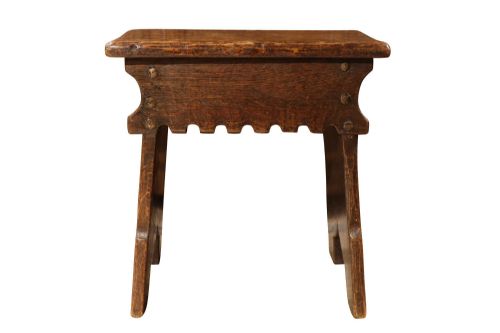
When searching for an antique wood milking stool, buyers encounter an array of vernacular seating spanning the eighteenth century through to the early twentieth century. These pieces range from simple three-legged country versions to specialised trade seats like jeweller's, cutler's, and alehouse stools.
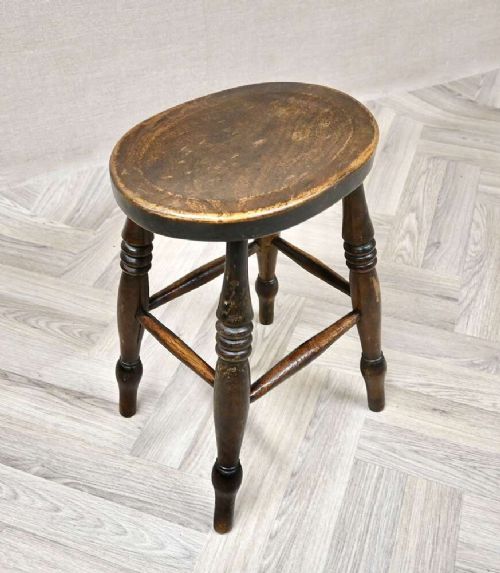
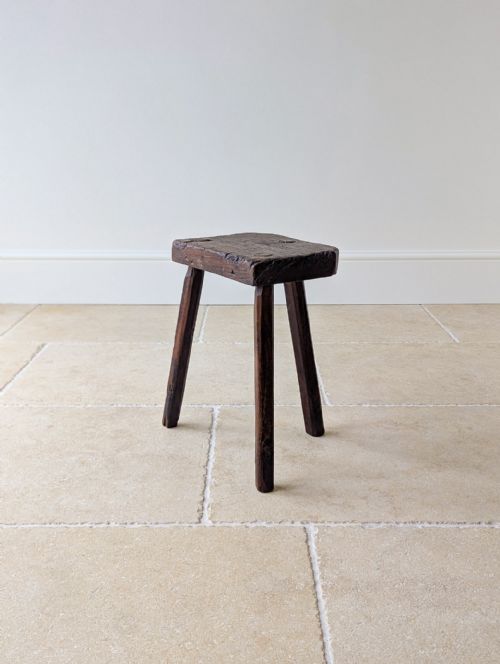
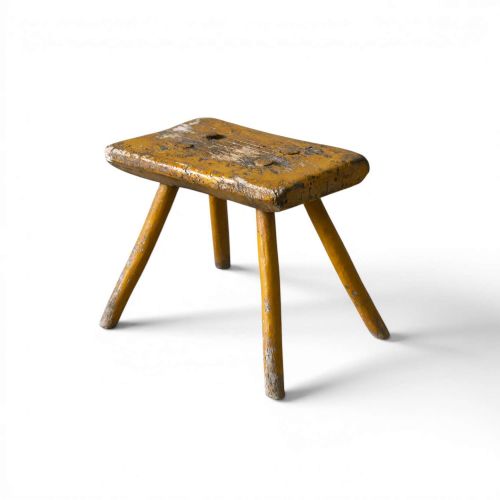
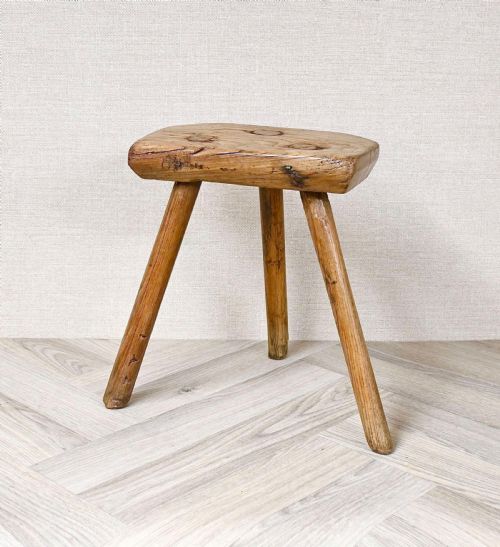
The most common examples on this page are nineteenth-century country stools featuring round or oval wooden seats supported by three or four splayed legs. Makers drew on regional traditions across England, France, China, and Eastern Europe, utilising whatever local timber was close to hand.
Forms vary from diminutive children's furniture and natural form oak childs stools to Windsor styles and pokerwork pieces carrying inscribed Scottish mottoes. Survival often depends on the sturdiness of the original pegged construction and the preservation of original paint finishes.
Materials and construction methods
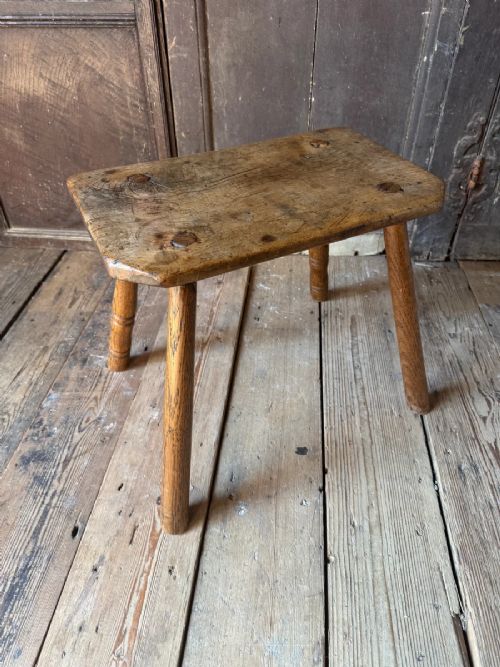
Carpenters and rural makers constructed these stools using a combination of dense hardwoods and pliable timbers such as elm, ash, oak, sycamore, beech, and pine. Seats were frequently carved from a single solid slab of timber, sometimes utilising burr yew or hardwood variants.
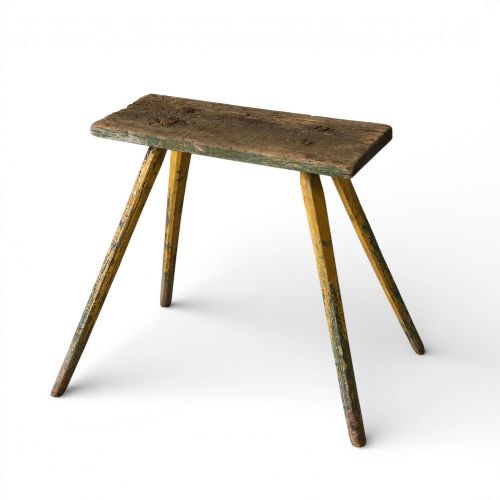
Legs were commonly secured into the seat base using traditional pegged or wedged tenon joints, creating a robust splayed structure designed to remain stable on uneven floors. Original surfaces often display traces of early ochre paint, natural patination, or pokerwork decoration.
Distinguishing quality in rustic seating
Quality in a vernacular stool lies in the balance between sculptural form and structural integrity, where excessive restoration diminishes the honest character of the piece. A desirable surface exhibits deep, authentic patination earned through decades of genuine use rather than applied artificial distressing.
The sophistication of the turning on the legs and the ergonomic shaping of the solid wood seat separate standard utilitarian seating from finer Arts and Crafts or Liberty style interpretations. Proportion and stance dictate visual appeal, with well-splayed legs offering a more pleasing silhouette than rigid vertical supports.
The Antique Wood Milking Stool Glossary
- Vernacular
- Everyday objects made by regional craftsmen for local domestic or trade use without grand architectural pretensions. These pieces prioritize function and local material availability over high-style academic design.
- Windsor
- A chair or stool construction method where legs and back spindles are fitted directly into bored holes in a solid wooden seat slab. This technique ensures immense strength through mechanical wedging.
- Pegged construction
- A method of joining wooden elements where interlocking parts are secured by driving wooden pins through pre-drilled mortise and tenon joints. It avoids metal fasteners entirely.
- Pokerwork
- The art of decorating wood surfaces by burning designs using heated metal points. Pieces often feature traditional inscriptions, crests, or floral motifs.
- Patina
- The surface sheen and colour depth developed by wood and paint over long periods of handling, light exposure, and wear. It serves as a primary indicator of age and authenticity.
Antique Wood Milking Stool: Frequently Asked Questions
What were milking stools originally used for?
These low stools provided stable seating for agricultural workers during daily milking tasks in byres and fields. Their compact three-legged design prevented rocking on uneven farm floors.
Over time, similar sturdy forms were adopted for various trades, including cutting, jeweller work, and alehouse hospitality, as well as general household chores.
Can I use an antique milking stool as a seat?
Most sturdy nineteenth-century examples remain structurally sound for occasional sitting, provided the leg joints and seat slab are secure. Check underneath to ensure the wedged tenons show no excessive movement before daily use.
Lighter childs stools or extremely diminutive vernacular pieces function best as plant stands or decorative display surfaces rather than primary seats.
How do I date an old wood stool?
Examine the tool marks on the underside of the seat, which reveal whether the maker used an adze, drawknife, or modern saw. Hand-turned legs and hand-cut peg joints generally point toward eighteenth or nineteenth-century production.
Compare the timber shrinkage, wear patterns around the footings, and any remaining traces of early paint with documented regional examples from the same period.