
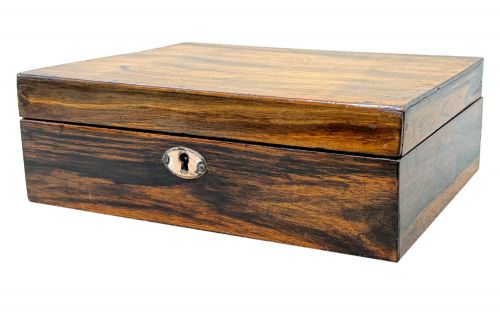


Antique Wood Jewellery Casket
An antique wood jewellery casket holds trinkets and keepsakes in a sturdy timber housing crafted across the Georgian, Victorian, and later periods.
Antique Wood Jewellery Casket
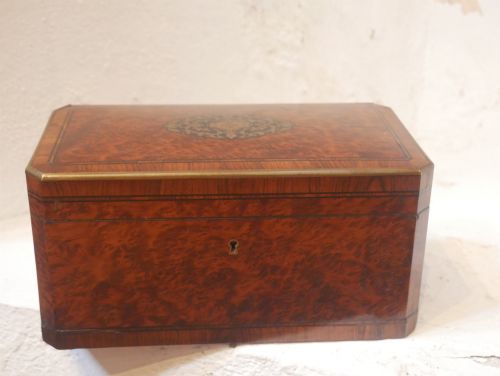
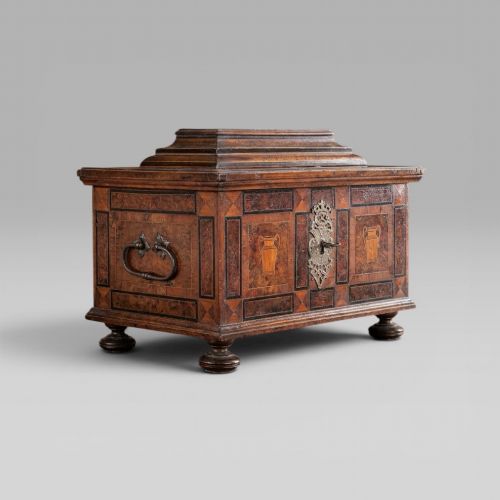
When you search for an antique wood jewellery casket, you encounter lidded boxes and decorative caskets fashioned from timbers including rosewood, walnut, coromandel, and mahogany. These pieces span centuries of production, appearing in styles from Regency and William IV to Black Forest, Anglo-Indian, and Tunbridge Ware.
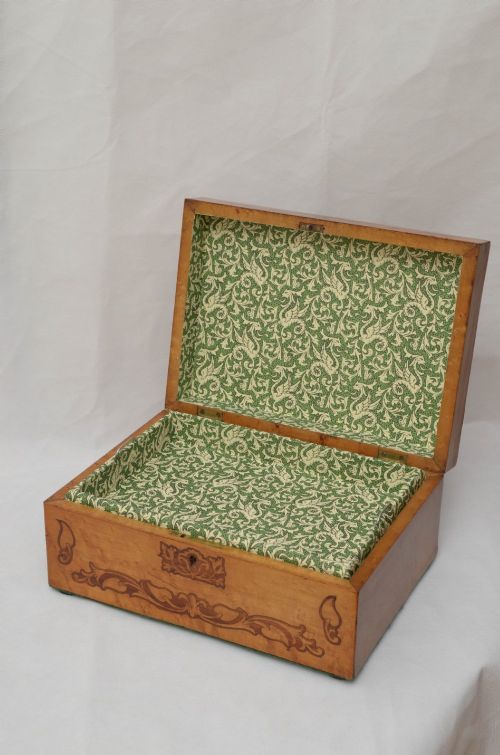
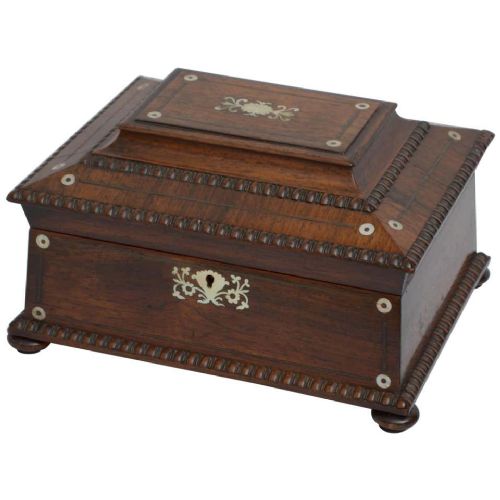
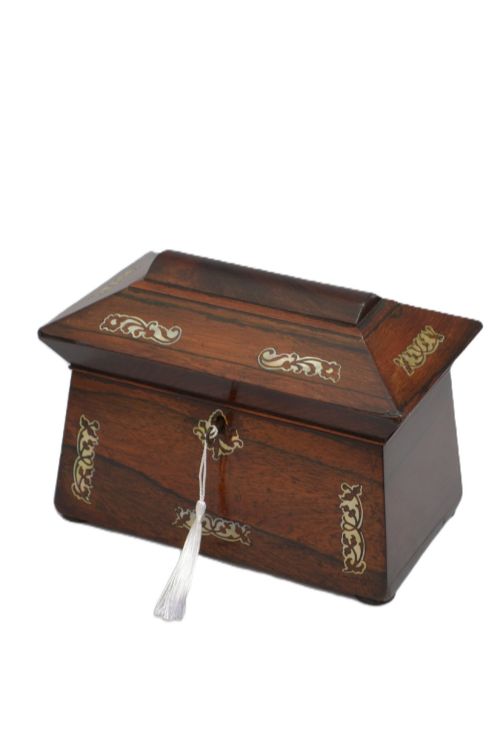
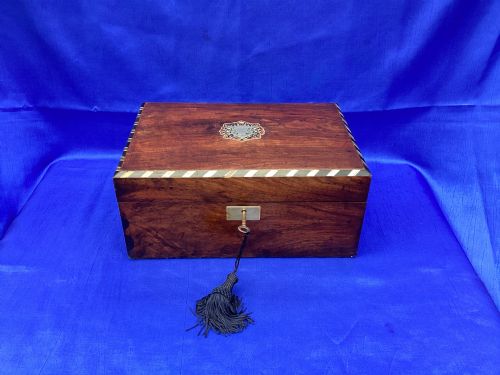
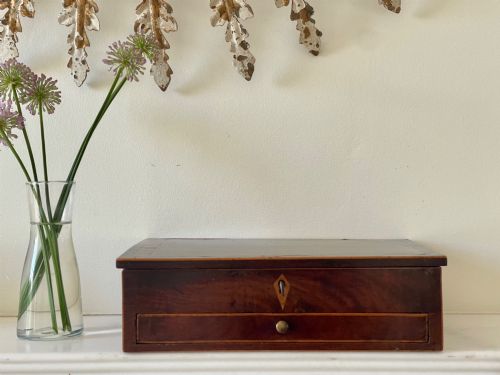
The most common forms on this page include fitted jewellery boxes with internal trays, work boxes, and sarcophagus-shaped caskets. Many incorporate compartments for scent bottles or small trinkets, reflecting the personal storage needs of Georgian and Victorian owners.
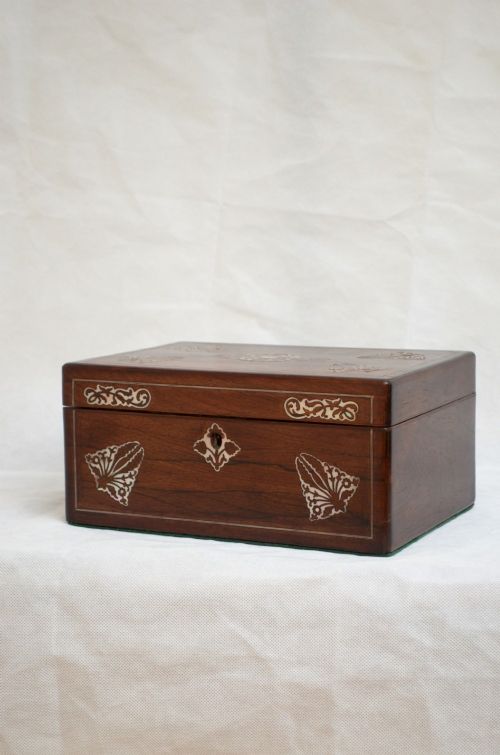
Origins range across England, continental Europe, and further afield, yielding boxes mounted in brass, inlaid with mother-of-pearl, or carved with naturalistic motifs. Each container provides a tangible link to historical cabinetry and domestic organisation.
How they were made
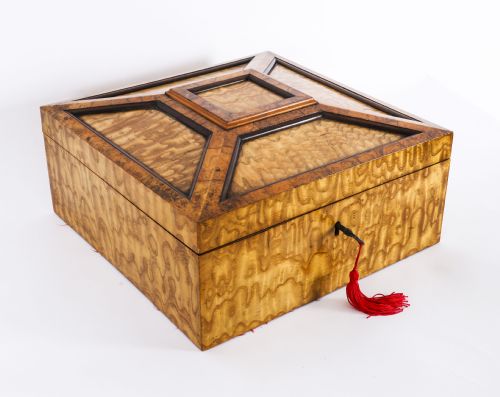
Cabinet makers constructed these caskets using dense hardwoods like ebony, rosewood, and coromandel, often over a secondary timber core. Surfaces frequently display decorative veneers such as burr maple, burr walnut, and flame mahogany, selected for their striking grain patterns.
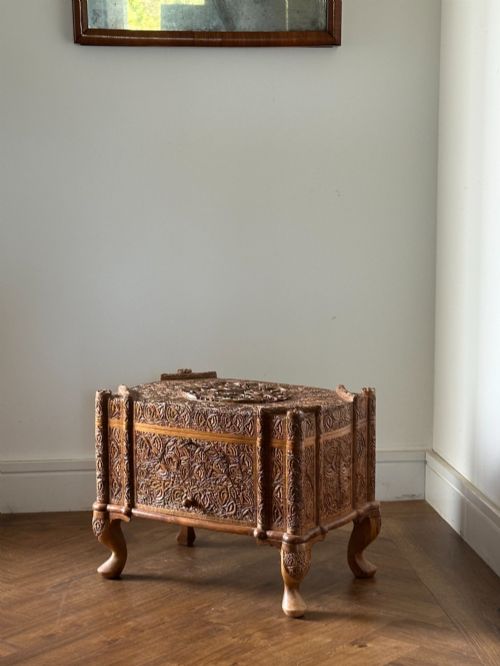
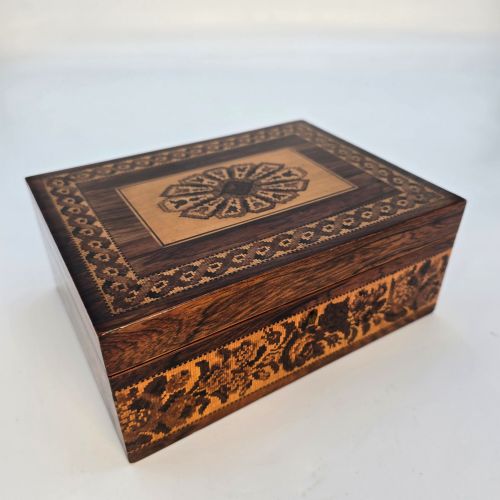
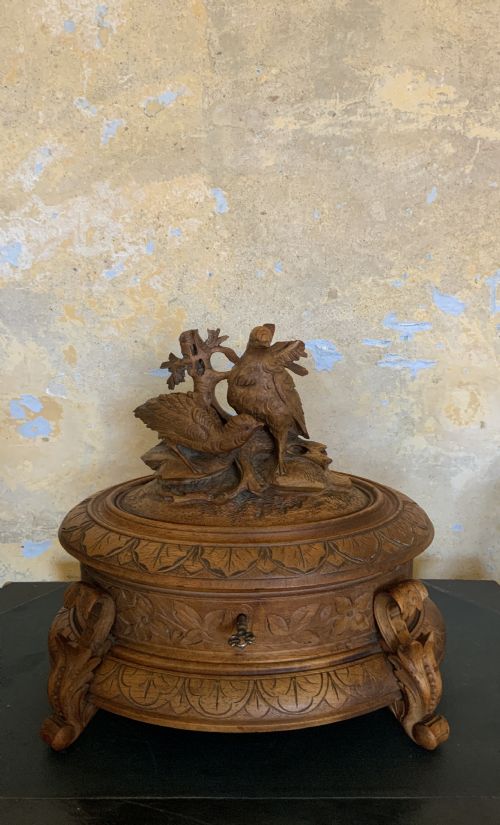
Inlay techniques include Tunbridge Ware marquetry, parquetry, and the integration of mother-of-pearl or metal stringing into the wood surface. Carved examples, notably from the Black Forest and India, demonstrate intricate relief work in walnut and sandalwood.
Secret drawers hidden behind false panel walls remind us that Victorians loved locking away their deepest, darkest chocolate stashes.
What varies in quality
Construction standards separate standard utilitarian boxes from high-end pieces, visible in the precision of the mitred joints and the stability of the timber substrate. Superior items use expensive exotic veneers matched symmetrically across the lid and sides.
Internal fittings dictate execution quality, where boxes featuring custom velvet or silk linings, lift-out trays, and secret drawers outclass simple empty compartments. The integration of solid brass hardware and working locks with original keys further elevates the standard of a casket.
Tahan Paris·Edmund Nye
The Antique Wood Jewellery Casket Glossary
- Tunbridge Ware
- Woodworking characterised by mosaic marquetry, forming minute geometric patterns or pictorial scenes from many natural-coloured woods. This technique was principally centred in Kent during the nineteenth century.
- Coromandel
- A dense, heavy cabinet wood imported from Asia, featuring dark brown heartwood with dramatic black streaks. It was frequently utilised for luxury Victorian stationery and jewellery boxes.
- Black Forest
- A term describing deeply carved wooden caskets and decorative objects produced in the mountainous regions of central Europe. These items typically depict natural motifs such as foliage and animals.
- Marquetry
- The art of applying small pieces of veneer to a structure to form decorative patterns or pictures. Craftsmen cut contrasting woods to fit precisely together before gluing them to the box carcass.
- Sarcophagus
- A box shape featuring a sloped lid rising to a flat top, mimicking ancient stone tombs. This silhouette proved popular for Regency and Victorian jewellery caskets.
Antique Wood Jewellery Casket: Frequently Asked Questions
What is an antique wood jewellery casket used for?
These boxes served historical owners as secure repositories for rings, necklaces, watches, and small personal valuables. Interiors often contained fitted compartments, trays, and velvet linings to protect delicate items.
Today, buyers utilise them on dressing tables or sideboards for daily storage of modern jewellery and keepsakes. Their decorative exteriors also allow them to function as standalone display pieces in a room.
How do I date an antique wood jewellery casket?
Dating relies on observing the combination of timber choices, construction methods, and decorative styles present in the piece. Regency boxes often feature sarcophagus silhouettes and brass inlay, while Victorian examples frequently utilise coromandel or rosewood with fitted velvet interiors.
Hardware such as hinges and lock plates also provides chronological clues, alongside any maker's marks or paper labels pasted inside the lid. Comparing the grain, veneer thickness, and secondary woods helps narrow the decade of manufacture.
How should I care for a wood jewellery casket?
Keep wooden caskets away from direct sunlight and strong heat sources to prevent the dry timbers from splitting or the delicate veneers from lifting. Maintaining a stable indoor humidity preserves the structural integrity of the box.
Dust the exterior gently with a dry cloth and avoid harsh chemical polishes that can damage antique finishes. Leather-lined or papered interiors benefit from occasional airing rather than liquid cleaning.
What is the difference between a box and a casket?
While terms often overlap in historic descriptions, a box typically denotes a simpler rectangular container with a flat or hinged lid designed for utility. Caskets frequently imply a more elaborate architectural form, such as a sarcophagus shape or heavily carved surfaces.
Caskets also tended to house higher-status items like precious jewels, whereas smaller boxes served general trinket storage. Both varieties share similar cabinet-making techniques across different periods.