




Antique Wood Gate Leg Table
An antique wood gate leg table is a versatile folding piece that expands easily, combining solid timber construction with historic utility.
Antique Wood Gate Leg Table
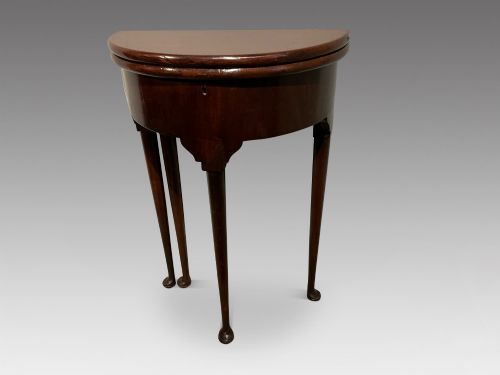
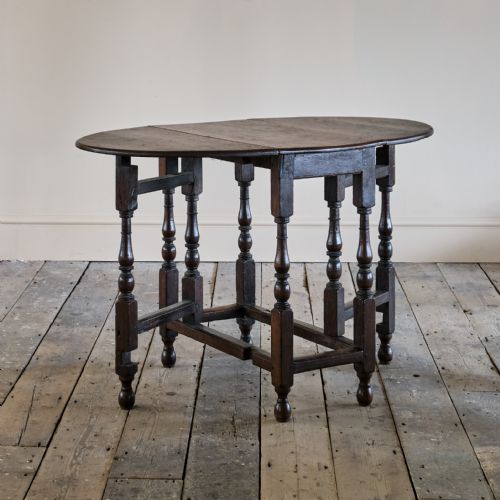
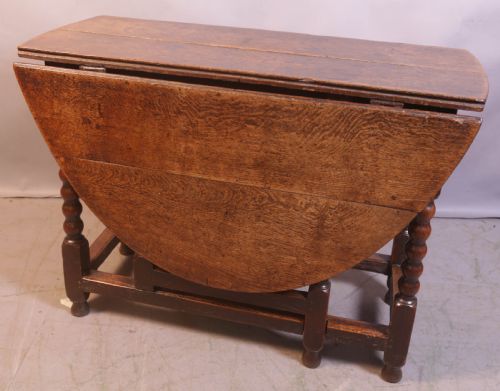
An antique wood gate leg table is a folding form featuring hinged leaves supported by swinging legs that pivot outwards to hold the surface. These pieces serve as dining tables, occasional tables, side tables, and coffee tables depending on their overall scale and proportions. The selection includes examples spanning from the seventeenth century through to the twentieth century, reflecting shifting domestic needs over several eras.
Oak and mahogany dominate the offerings, appearing across seventeenth-century, eighteenth-century, and nineteenth-century periods alongside fruitwood and walnut. Buyers frequently encounter oval formats and rectangular dining proportions, as well as smaller occasional versions including spider leg variants and Sutherland tables. Origins range across English periods like Georgian, Edwardian, and Jacobean, alongside French provincial examples.
The form adapts readily to modern interiors as a compact side table or an extended dining surface. Drop-leaf actions allow the wings to fold down flat, saving floor space when the furniture is not in use. This practical design remains central to why collectors and homeowners seek out these tables today.
How they were made
Cabinet makers utilised solid timbers including oak, mahogany, fruitwood, and walnut for the framework and top surfaces. Timber inlay and brass fittings occasionally appear to accent the structure or secure the drop leaves. Joinery relied on traditional framing methods to support the pivoting gate legs under daily weight.
Turning techniques shaped the structural supports, producing spiral, columnar, or slender spider legs that swing outward on wooden or metal hinges. The leaves were joined to the fixed centre top with rule joints or plain butt hinges to ensure smooth folding action. Surfaces were finished with polishes or waxes that highlighted the natural grain of the wood.
Some antique gate leg tables hide clever drop leaves designed to turn a massive dining surface into a narrow console against the wall.
What varies in quality
The choice of primary timber and the crispness of the turned leg supports dictate the visual standing of each piece. Tables constructed from dense seventeenth-century oak or figured eighteenth-century mahogany display greater substance than later commercial iterations. Finer examples maintain original hinges and stable pivot mechanisms that keep the drop leaves level when extended.
Proportion and scale separate simpler country pieces from refined urban cabinet work. Well-balanced gate assemblies operate smoothly without dragging on the floorboards, showing careful alignment between the fixed frame and the swinging legs. The preservation of surface patination over centuries further defines the character of superior examples.
The Antique Wood Gate Leg Table Glossary
- Gate leg
- A table design featuring hinged leaves supported by one or more swinging legs that pivot like a gate. This mechanism provides sturdy support when open and allows the leaves to drop when closed.
- Drop leaf
- A hinged section of a table top that folds down to reduce the overall footprint of the furniture. These leaves require dependable knuckle joints or rule joints to meet the central board evenly.
- Spider leg
- A table variant characterised by exceptionally slender turned supports, commonly found on lightweight occasional and tea tables from the Edwardian and Georgian periods.
- Sutherland table
- A narrow-format drop leg table with exceptionally thin leaves that fold down almost vertically against a very small central fixed top. This form maximises space-saving utility in smaller rooms.
- Rule joint
- A moulded joint connecting a table top to its drop leaf, designed to hide the gap and hinge mechanism when the leaf is raised. It creates a clean line along the meeting edges.
Antique Wood Gate Leg Table: Frequently Asked Questions
How do I date a gate leg table?
Dating relies on timber choice, construction methods, and leg turning styles seen across different eras. Seventeenth-century pieces typically feature heavy oak frames with columnar turnings, while eighteenth-century examples frequently utilise mahogany with slender supports.
Later Victorian and Edwardian versions often display lighter timbers and machine-made hardware. Comparing the patination and joint construction helps place the piece within a specific historical period.
Are these tables sturdy enough for daily dining?
Solid timber construction and robust pivot gates provide reliable support for regular meals when the leaves are fully extended. The swinging legs distribute weight evenly across the floor surface.
Proper alignment of the hinges ensures the leaves remain level during use. Maintenance involves checking the pivot joints periodically to keep the mechanism stable.
How do I care for the wood surface?
Preserving the finish requires regular dusting with a soft cloth and occasional applications of appropriate furniture wax. Keeping the timber away from direct heat sources prevents the wood from drying out or splitting.
Using coasters and placemats protects the polish from moisture and thermal marks. Gentle maintenance preserves the natural patination developed over centuries.
What is the difference between a spider leg and a standard gate leg?
Spider leg tables feature exceptionally thin, delicate turned supports rather than the heavier structural posts found on traditional dining versions. This lighter construction suits occasional, side, and coffee table formats rather than heavy dining use.
Standard gate legs provide greater load-bearing capacity for larger dining surfaces. Both utilise the same pivoting action to support folding leaves.