


Antique Wood Bedstead
An antique wood bedstead brings substantial presence to a bedroom, offering solid timbers and traditional joinery built to last.
Antique Wood Bedstead
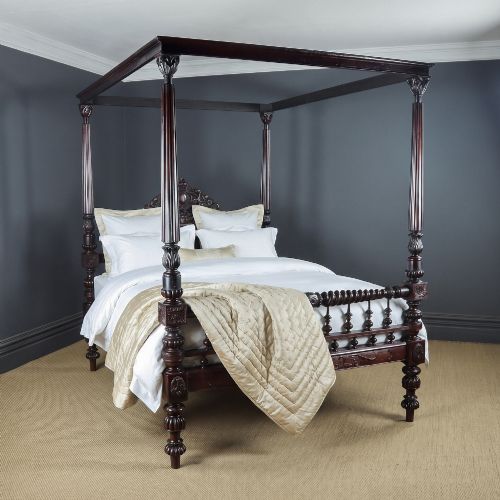
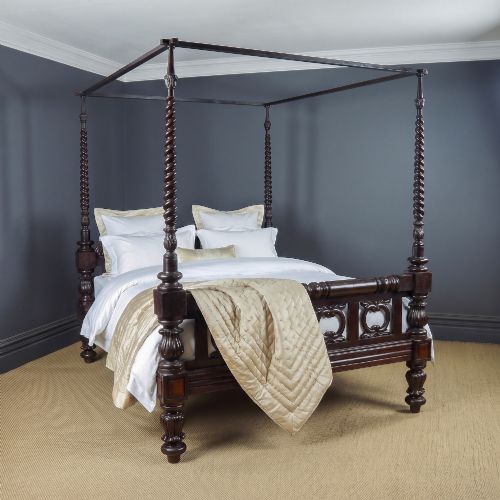
An antique wood bedstead is a sturdy framework designed to support a mattress, appearing in forms such as single beds, double beds, king sizes, and grand four-poster structures. Buyers seeking an antique wood bedstead encounter various formats spanning the nineteenth century, the Edwardian era, and the Art Deco period.
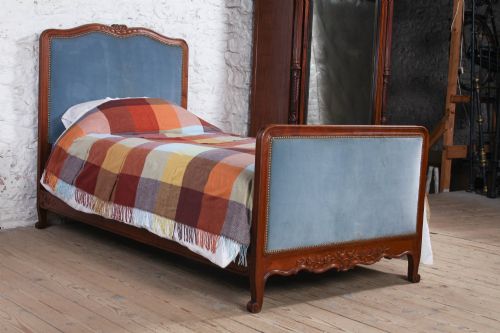
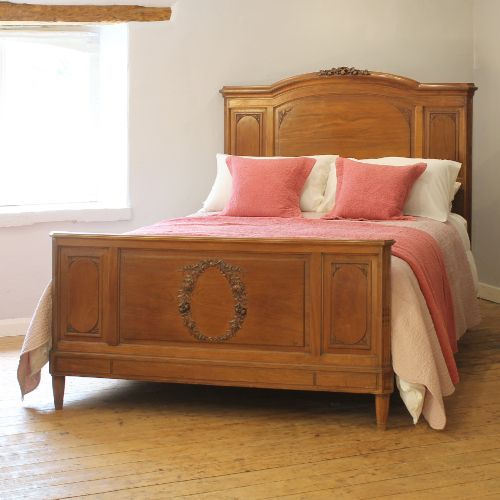
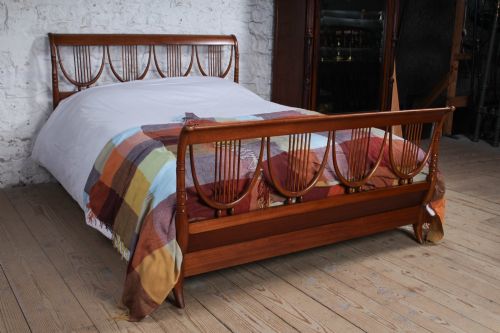
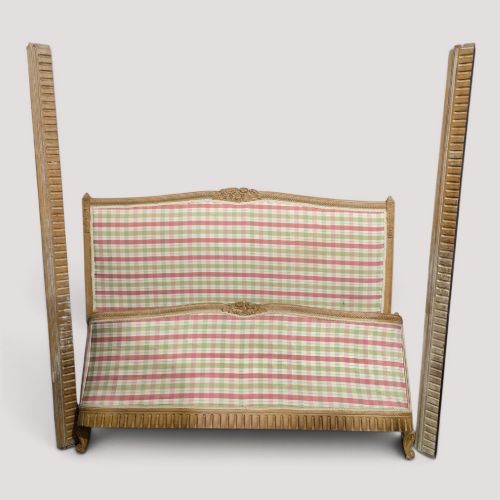
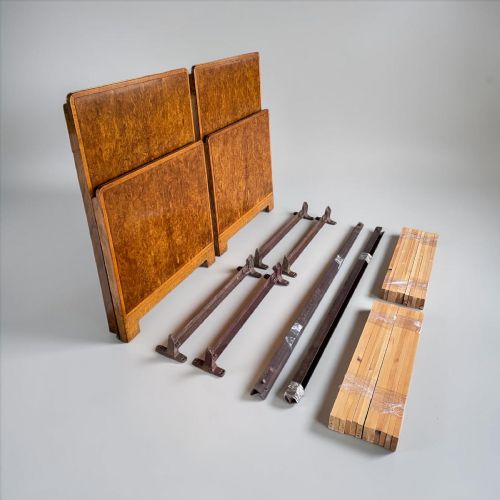
The selection ranges from French walnut styles and carved Victorian designs to streamlined Art Deco bird's eye maple and mahogany frames. Most examples originate from British, French, or colonial workshops, utilising hardwoods shaped by regional cabinetmakers.
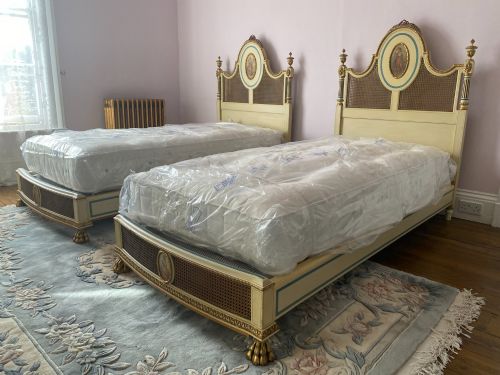
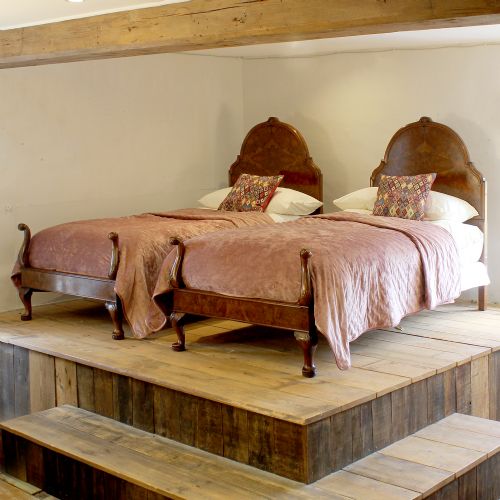
Single beds and pairs frequently emerge from Edwardian workshops, while larger double and king formats showcase heavier nineteenth-century turning and paneling. Each piece reflects the sleeping customs and interior fashions of its specific decade.
Materials and construction methods
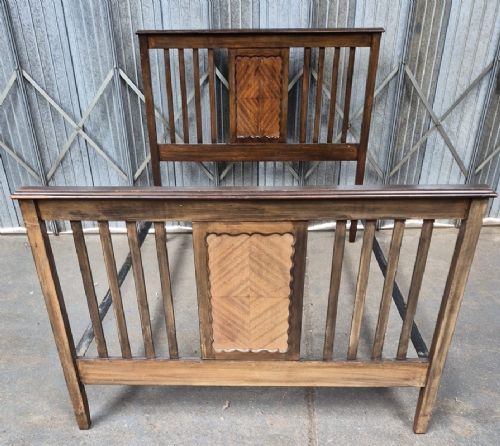
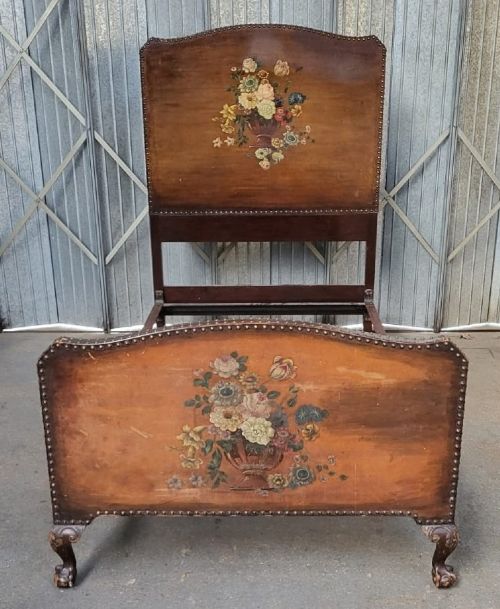
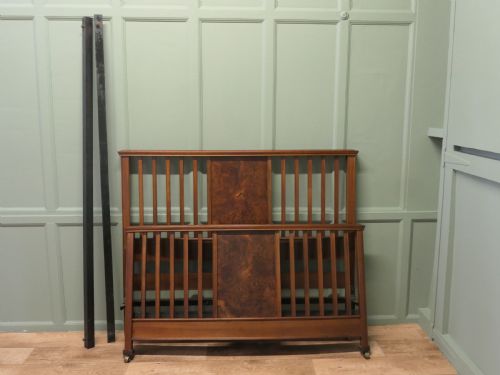
Makers constructed these bedsteads using dense timbers such as mahogany, walnut, burr walnut, oak, and satinwood, occasionally applying decorative veneers like macassar ebony. Selected pieces feature hand-painted surfaces, faux bamboo turning, or carved details executed in the Louis XV and Georgian styles.
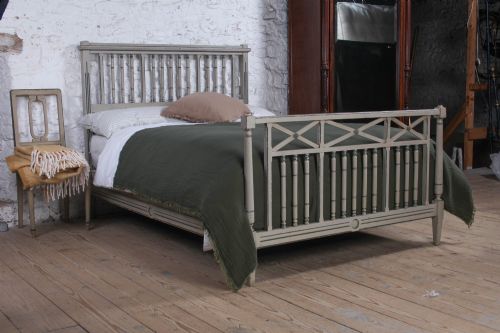
Structural integrity relied on traditional mortise and tenon joints, heavy side rails, and bolted connections that allowed the large frames to be assembled and dismantled. Four-poster variants incorporated overhead testers and substantial vertical posts secured to heavy headboards and footboards.
Antique Wood Bedstead Retail Price Guide 2026
Typical asking prices for wood bedstead among the pieces listed under this phrase on Sellingantiques today, from the lower quarter to the upper quarter. They describe what is for sale here now, not the wider market.
Period styles span seventeenth-century oak tester frames, ornate Victorian four-posters, and streamlined Art Deco geometric designs.
Factors of construction and finish
Quality in these frames rests on the selection of timber figures, such as the rich grain in burr walnut or the warm depth of figured mahogany. Superior examples display crisp, hand-carved ornamentation rather than superficial factory moulding, with stable timber movement and sound structural joints.
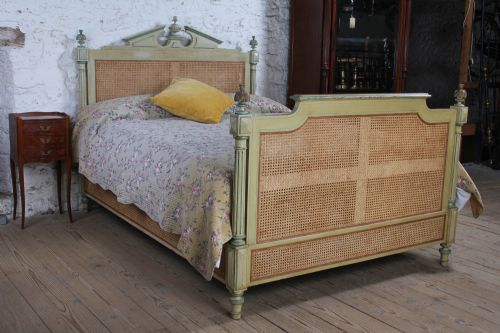
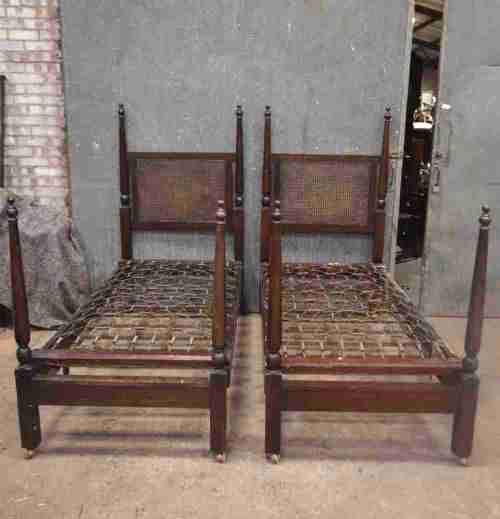
The refinement of secondary elements - such as inlaid satinwood stringing, fitted bergere cane panels, or original painted finishes - distinguishes standard utility furniture from high-status commissions. Well-executed proportions and intact original hardware elevate a piece above simpler vernacular items.
Stanley Webb Davies
The Antique Wood Bedstead Glossary
- Bedstead
- The framework of a bed consisting of headboard, footboard, and side rails. It excludes the mattress and base springs.
- Four poster
- A bed with four vertical columns supporting a tester or canopy top. These grand structures often feature carved posts and paneled headboards.
- Tester
- The flat wooden canopy or ceiling suspended above a four-poster bed. It occasionally carries decorative moulding or drapery cornices.
- Bergere
- A type of upholstered furniture featuring woven cane panels. In bedframes, cane work typically appears inset into headboards or footboards.
Antique Wood Bedstead: Frequently Asked Questions
Will an antique wood bedstead fit modern mattresses?
Many older bedframes were built to non-standard sizing conventions, particularly nineteenth-century French and British models. Adapting standard modern mattresses may require custom sizing or minor internal adjustments to the side rails.
Buyers should measure the internal width and length precisely before purchasing bedding. Some frames accommodate standard UK or European mattress dimensions with minimal clearance.
How do I assemble a four poster bed?
These large structures require a systematic approach, starting with the heavy footboard, headboard, and side rails locked together with iron bolts. The vertical posts and overhead tester are then aligned and secured to complete the rigid skeleton.
Due to the weight of dense hardwoods like oak and mahogany, assembly is strictly a two-person task. Professional installation ensures the frame remains square and structurally stable.
How do I care for polished wood finishes?
Maintain timber surfaces by applying quality beeswax periodically to nourish the grain and protect against dryness. Avoid placing frames near direct heat sources or strong sunlight, which can warp old wood and fade veneers.
Dust regularly with a soft, dry cloth rather than using silicone sprays. Gentle cleaning preserves the natural patina accumulated over the centuries.
How do I identify Edwardian from Victorian beds?
Victorian bedsteads generally display heavier proportions, darker mahogany or walnut timbers, and deep, elaborate carvings. Edwardian examples often favor lighter satinwood, simpler painted finishes, or neoclassical revival motifs.
Examination of the internal construction timbers and hardware fasteners also helps reveal the manufacturing era. Regional stylistic preferences further assist in dating specific pieces.