


Antique Wingback Settee
An antique wingback settee offers deep comfort and historic presence, grounding a room with high sides and upholstered shelter.
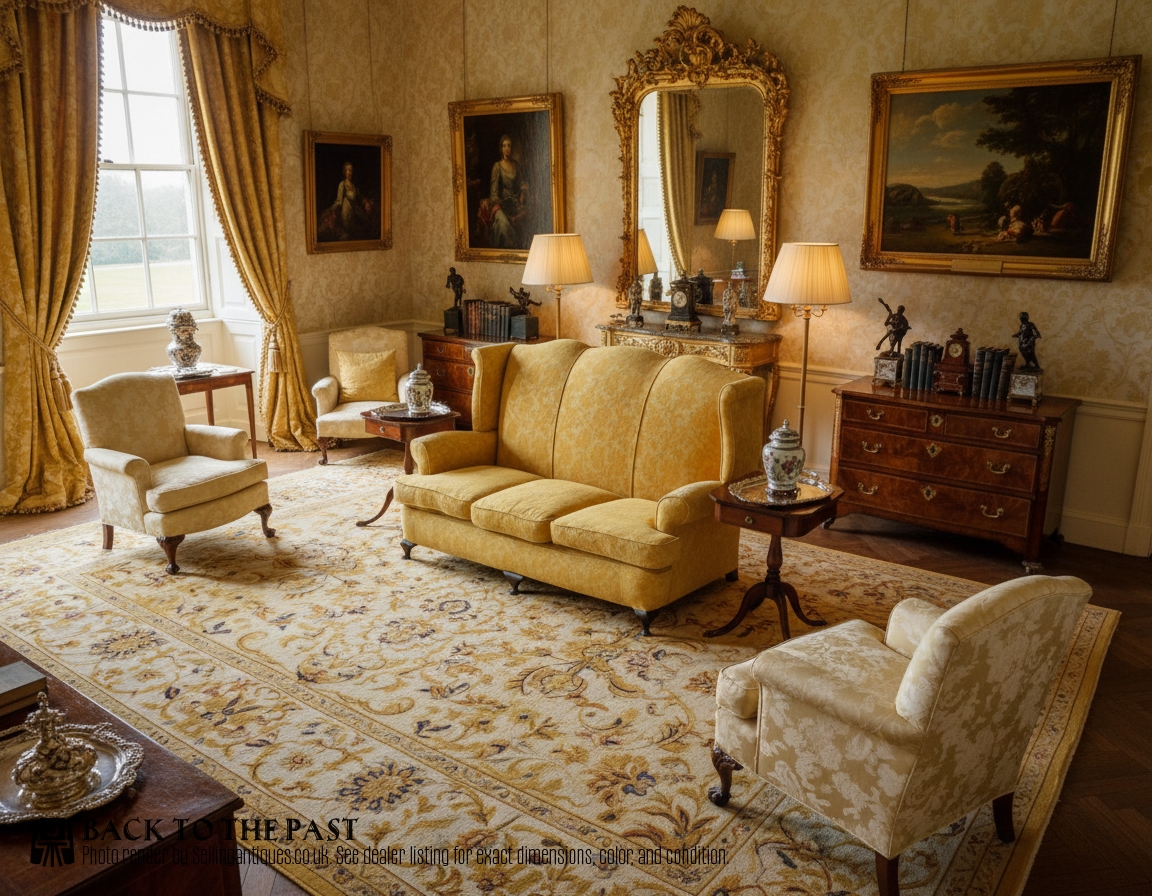
Antique Wingback Settee
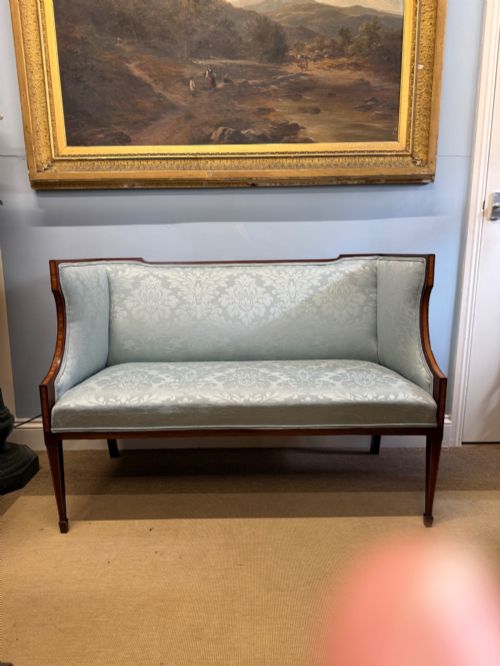
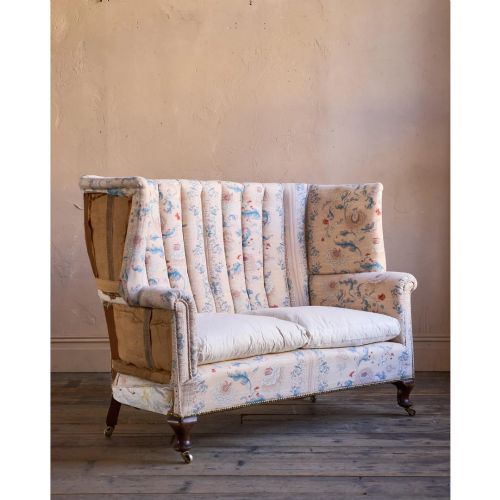
An antique wingback settee combines the enclosed, draught-excluding sides of a traditional fireside chair with extended seating for two or three people. The pieces found here span from the seventeenth century through to the Edwardian period and the nineteen-thirties, taking forms such as salon suites, two-seater sofas and three-seat sofas.
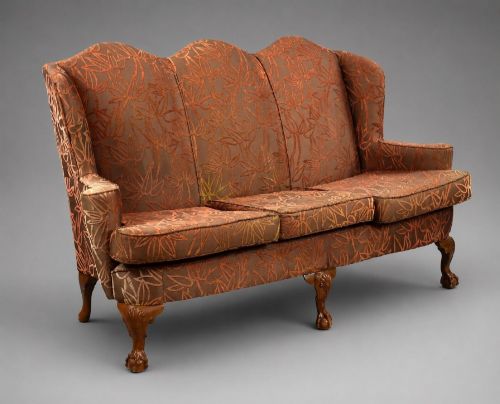
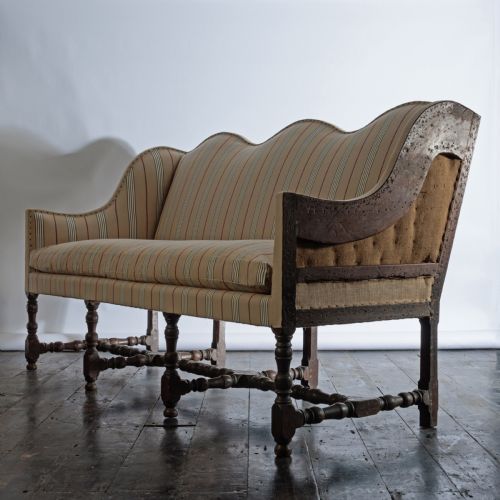
The styles represented across these listings include Victorian, Edwardian, Queen Anne style, seventeenth-century Baroque, Arts and Crafts, Georgian revival and Louis XVI style. Buyers encounter variations that range from early timber-framed seating to later upholstered library and salon pieces.
Makers and retailers of the past adapted these tall-backed forms for formal entertaining and domestic comfort, producing both intimate two-seaters and larger multi-seat variations. The resulting seating offers a distinct silhouette defined by protective upholstered wings and supportive backs.
Materials and construction
The structural frames rely on timbers such as mahogany, walnut, hardwood and general wood, sometimes embellished with satinwood stringing or fluted detailing. These dense woods provide the rigid skeleton necessary to support deep upholstery and heavy daily use.
Upholstery materials recorded in the evidence include hand-dyed leather, brown leather, damask fabric and standard fabric, paired occasionally with brass elements. These textiles and hides are secured to heavy frames designed to withstand decades of shifting weight and wear.
A barrel-back suite provides enough enclosed seating to hide several adults from draughts entirely.
What separates the finest examples
Quality in these settees rests upon the fidelity of the period style and the integrity of the underlying timber frame. Pieces that faithfully echo seventeenth-century Baroque or Queen Anne proportions demonstrate a surer command of historical design than generic later revivals.
The treatment of the primary covering material also marks out the superior piece. Hand-dyed leather and rich damask fabrics display depth and texture that elevate the presence of the furniture within a room.
The Antique Wingback Settee Glossary
- Wingback
- A chair or settee featuring protective side panels attached to the arms or back, originally designed to deflect draughts from a hearth. These wings define the silhouette of the piece.
- Baroque
- An ornate European style spanning the seventeenth century, known for dramatic forms and rich ornamentation. It appears in heavier, more sculptural frames.
- Damask
- A reversible figured fabric traditionally woven on a jacquard loom, used extensively for upholstery. It provides a textured pattern with a subtle sheen.
- Satinwood
- A durable, light-coloured exotic timber often used for decorative banding and inlay on mahogany furniture. It creates a contrasting visual border on the woodwork.
Antique Wingback Settee: Frequently Asked Questions
How do I date an antique settee?
Dating relies on identifying the underlying period style, such as Queen Anne, Georgian revival or Louis XVI, alongside the timber used.
Examining the woodwork, upholstery choices and frame construction provides further clues to whether a piece originates from the seventeenth century, the Victorian era or the early twentieth century.
Where were these settees used?
Historically, such seating stood in principal reception rooms, grand libraries and formal parlours where warmth and comfort were paramount.
The high sides trapped heat from open fires, making them focal points in domestic gathering spaces.
How do I care for leather upholstery?
Leather-upholstered pieces require protection from direct sunlight and excessive heat to prevent the hide from drying and cracking.
Regular, gentle dusting and occasional conditioning maintain the suppleness of hand-dyed leathers found on nineteenth-century examples.
What is the difference between a settee and a sofa?
In historical terminology, the two terms often overlap, though settee traditionally denotes a formal, upholstered wooden-framed seat for two or more.
Many listings use the words interchangeably to describe extended seating units with upholstered backs and arms.