

Antique Wine Rummers
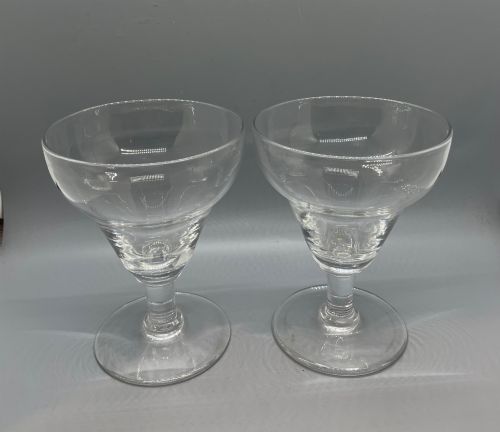
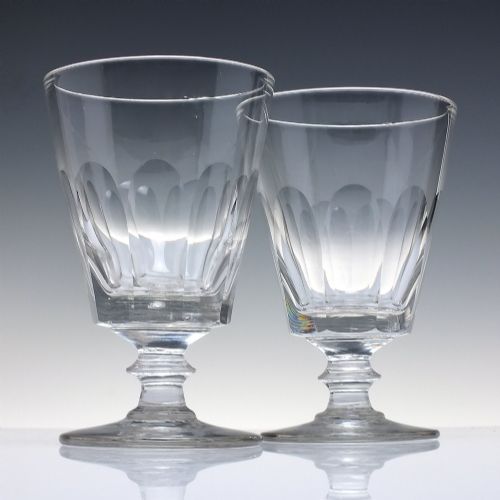
Antique wine rummers are sturdy historical drinking vessels that bring tactile weight and distinct character to a table.
Antique Wine Rummers
When you search for antique wine rummers, you encounter heavy drinking vessels designed for robust toasts and daily tavern use rather than delicate sipping. These glasses bridge the gap between traditional goblets and modern stemware, offering a reassuring heft in the hand.
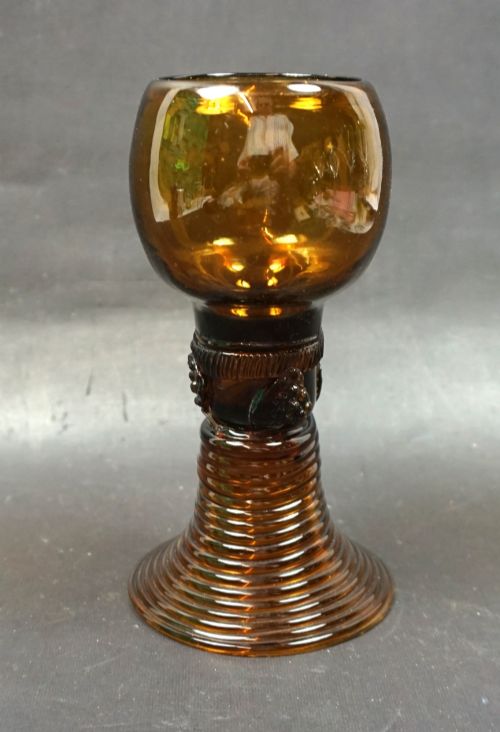
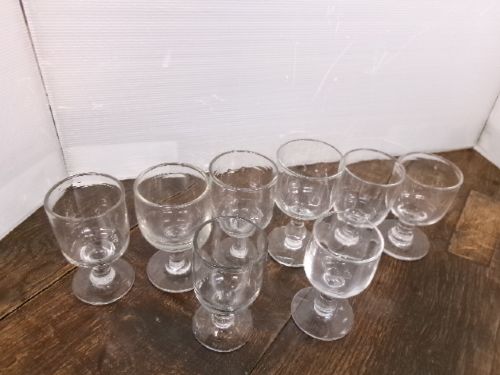
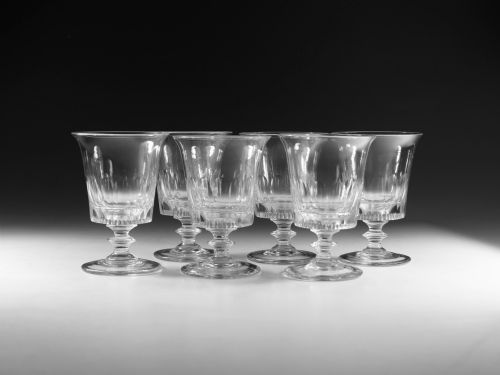
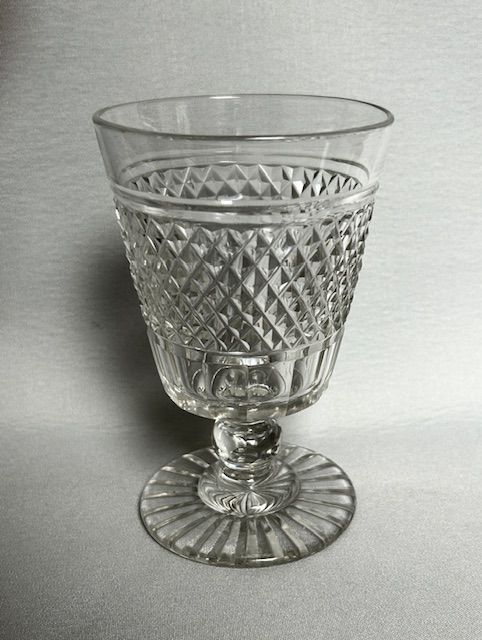
The selection on this page spans the Georgian, Regency, and Victorian eras, alongside continental European examples such as German roemers and Bohemian styles. You will find single pieces, matched pairs, and larger sets suitable for actual use.
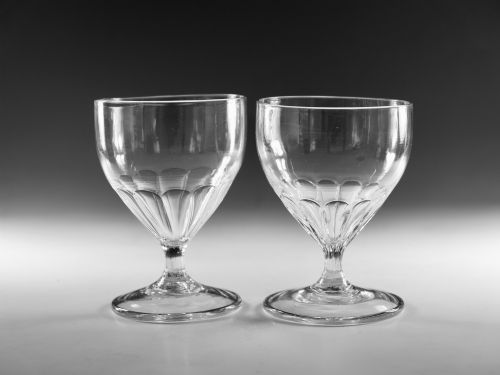
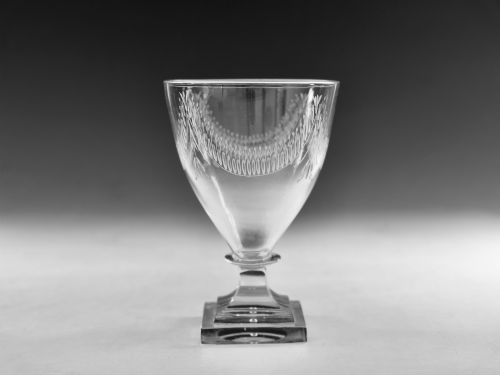
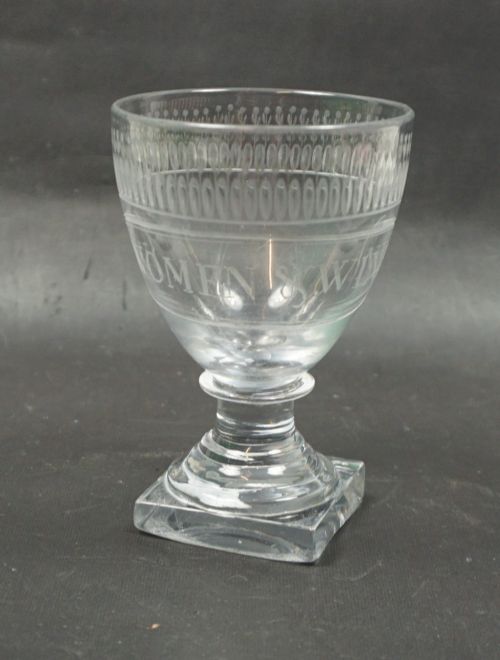
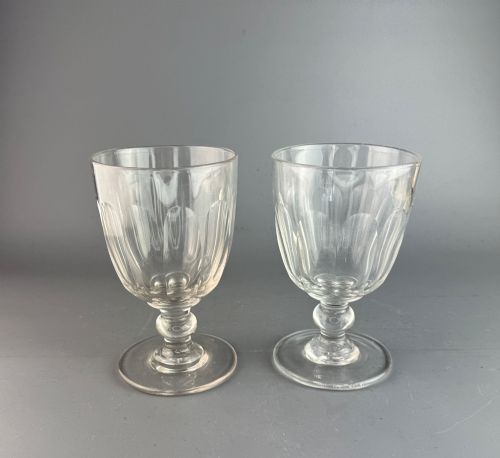
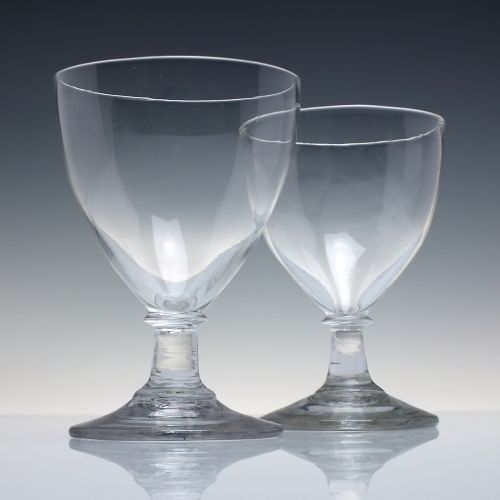
Forms vary from ogee and pan top bowls to square lemon squeezer feet and hollow stems. English export pieces sit alongside French opalescent vessels and heavily enamelled continental wine glasses.
How they were made
Craftsmen shaped these items using lead crystal, flint glass, and clear or coloured glass, often formed by hand-blowing molten material into moulds or free-hand manipulation. The inclusion of lead gave the metal a heavier feel and a clearer ring when tapped.
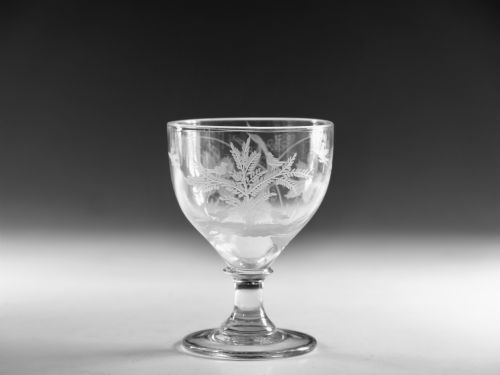
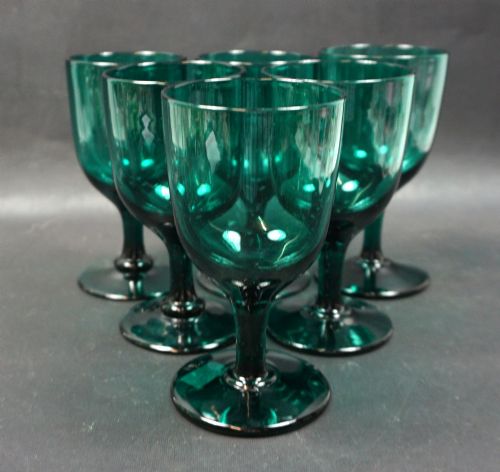
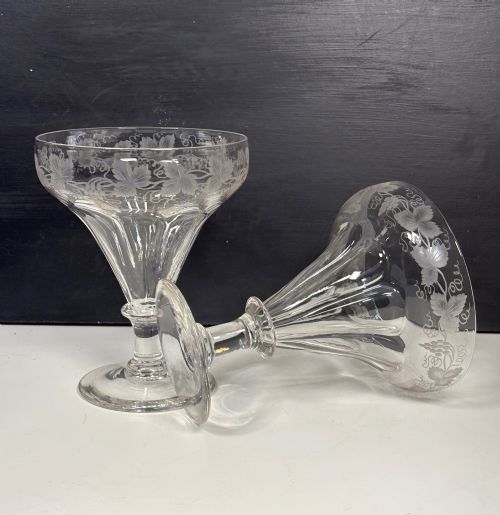
Decoration relied on physical alteration and surface work, including hobnail cutting, geometric facets, and wheel-engraved monograms or hunting scenes. Coloured variants utilised mineral oxides in the batch, producing characteristic amber, green, amethyst, and turquoise hues.
Stems and feet were applied separately, resulting in varied formations like baluster profiles, coiled feet, and square bases moulded to resemble citrus squeezers.
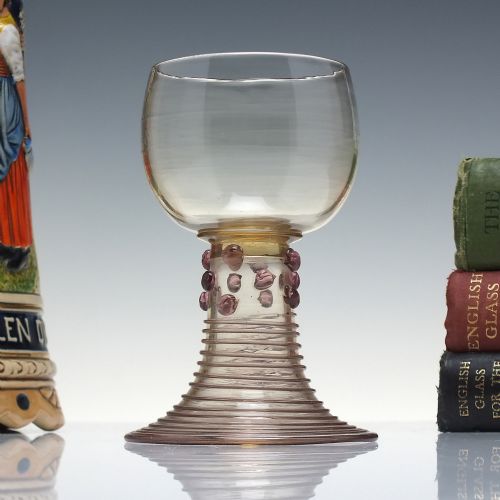
The inventory includes German roemers alongside English ogee and pan top rummer forms.
What varies in quality
Quality rests upon the purity of the metal and the precision of the glassmaker's hand. Early lead crystal displays a deep refractive clarity, whereas ordinary utility glass might contain tiny air bubbles and striations from simpler batch mixing.
Execution of decorative work separates standard utility ware from finer parlor pieces. Crisp, deep wheel-engraving and symmetrical facet cuts demonstrate greater skill than shallow surface scratching or uneven mould seams.
Frits Hechert
The Antique Wine Rummers Glossary
- Rummer
- A large, heavy drinking glass popular for wine and punch during the Georgian and Victorian periods. These vessels usually feature a short stem and a capacious bowl.
- Roemer
- A continental European drinking vessel, typically made of green or amber glass, featuring a wide bowl atop a ribbed or prunted hollow stem. They derive from traditional Germanic forms.
- Lemon squeezer base
- A square, moulded glass foot with indented corners that resembles the kitchen tool of the same name. This style appears frequently on Georgian rummers.
- Ogee
- An S-curve profile creating a bowl that curves inward at the rim and outward below. This shape helped retain aromas in heavier wines.
- Hobnail
- A raised, faceted pattern cut into the glass surface resembling the hobnails used in sturdy boots. It provides both decorative texture and a secure grip.
Antique Wine Rummers: Frequently Asked Questions
What were rummers used for?
These glasses served primarily for hearty toasts, ale, punch, and robust wines during communal gatherings and formal dinners.
Their substantial capacity and thick walls made them durable enough for regular tavern and household service.
How do I date an old rummer?
Dating relies on observing manufacturing traits such as pontil marks, bowl shapes, and stem construction. Georgian examples often feature thick lead metal and square lemon squeezer feet.
Victorian pieces frequently display heavier press-moulded patterns and taller, straighter bowl profiles.
Can I use antique rummers daily?
Many buyers enjoy using these sturdy historical glasses for everyday dining and special toasts alike. Hand washing in lukewarm water keeps the old glass safe from thermal shock.
Their solid construction means they handle regular use better than thin modern crystal.
Why are some rummers green?
Coloured glass variants, particularly green and amber, originated from mineral impurities in the batch or intentional metal oxides. Bristol green and German forest glass traditions heavily influenced these hues.
Export pieces often utilised these distinctive colours for continental markets.