

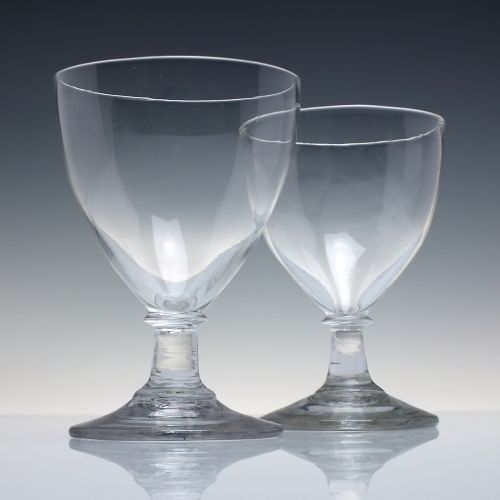

Antique Wine Glasses Pair
When you search for an antique wine glasses pair, you find matching vessels of lead crystal, coloured glass and cut glass designed for the dining table.
Antique Wine Glasses Pair
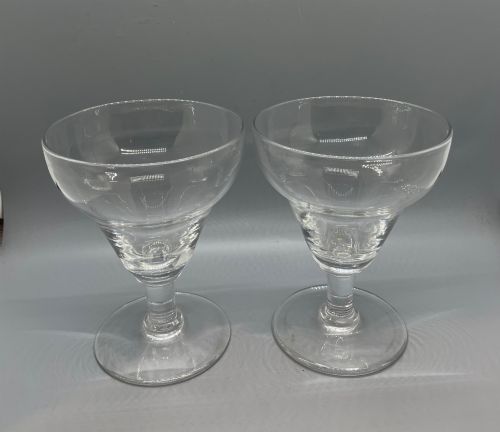
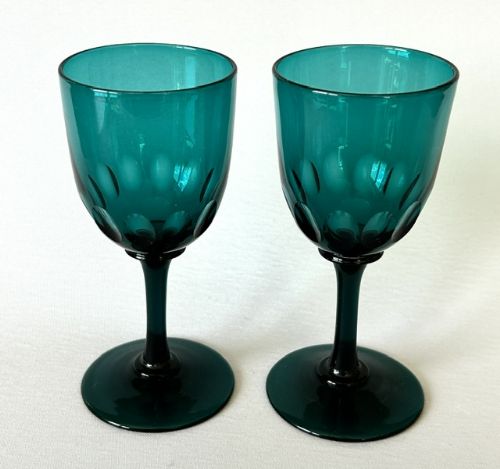
An antique wine glasses pair typically comprises matched drinking vessels intended for table service, spanning periods from the eighteenth century through the Edwardian era. You will frequently encounter nineteenth-century Victorian green glass variants, alongside Georgian lead crystal and twentieth-century hock glasses.
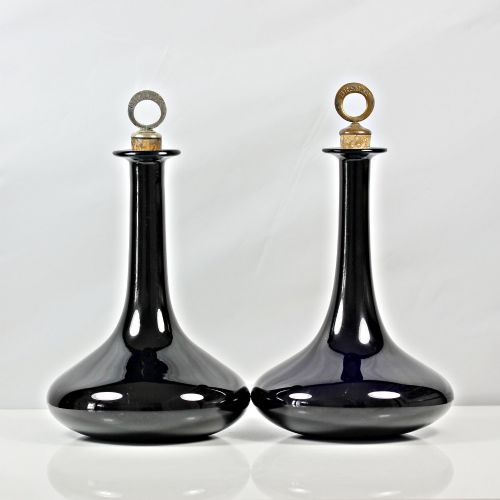
The selection extends beyond standard wine goblets to encompass rummers, flutes and hock glasses in distinctive shades such as cranberry, amber and turquoise. These matched pairs demonstrate the historical preference for symmetrical table settings during formal dining.
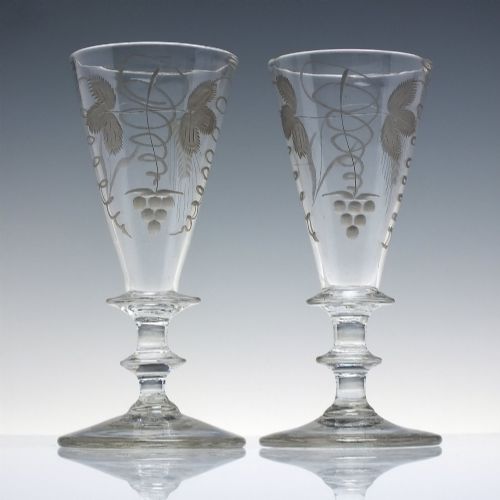
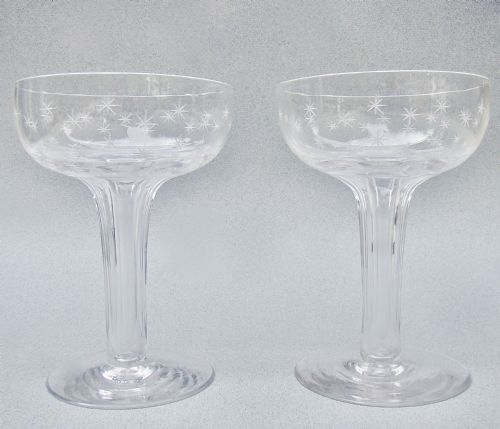
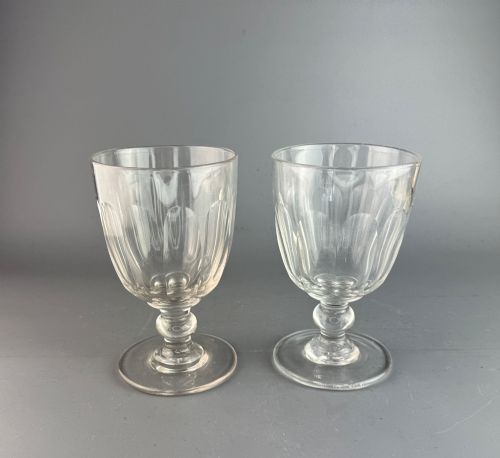
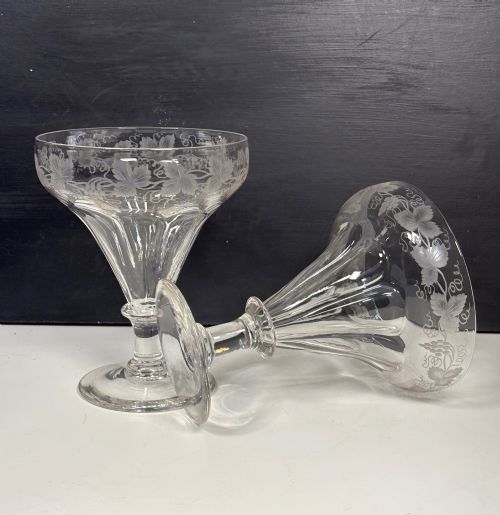
Formations range from plain stem goblets and ovoid bowls to hollow stem champagne glasses and engraved barley styles. Each matched pair reflects the prevailing social rituals of its specific period, from Georgian toasts to Victorian entertaining.
Materials and production techniques
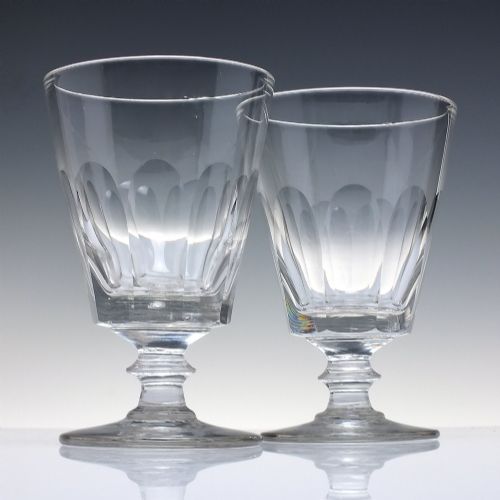
Makers utilised lead crystal, clear glass and coloured glass, shaping them through blowing and cutting techniques. Heavy lead glass provided the stability and clarity necessary for deep wheel-engraved decoration and pillar cutting.
Coloured glass was achieved by applying overlays, such as cranberry or green over crystal, which workers then cut through to reveal the contrasting layer beneath. Acid cutting, star-etching and enamelling were also applied to surface decoration on nineteenth and early twentieth-century vessels.
Several Victorian glasses feature engraved spiders and butterflies delicately scaling the crystal bowls.
Assessing quality in matched pairs
Quality rests upon the precision of the glass cutting, the clarity of the metal, and how closely the two pieces match in height, weight and colour density. Hand-blown items display subtle individual variations while maintaining strict symmetry as a set.
Engraving depth and clarity distinguish superior examples, particularly where birds, vines or geometric motifs adorn the bowl. The resonance of the metal and the absence of cloudiness in the material further separate standard production from masterwork glass.
Baccarat·Stevens & Williams·Theresienthal·Moser·Josephinenhutte·Richardson·Joseph Keller·Salviati
The Antique Wine Glasses Pair Glossary
- Rummer
- A large, sturdy drinking glass popular in the eighteenth and nineteenth centuries, often used for ale, wine or punch. These vessels typically feature a short stem and a capacious bowl.
- Hock glass
- A tall glass traditionally used for German white wine, frequently characterised by coloured bowls and ornate stems. They appear in shades like green, amber and blue.
- Prussian style
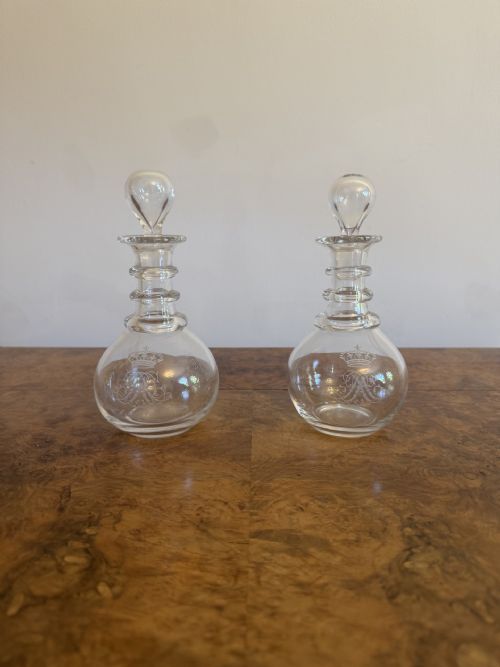
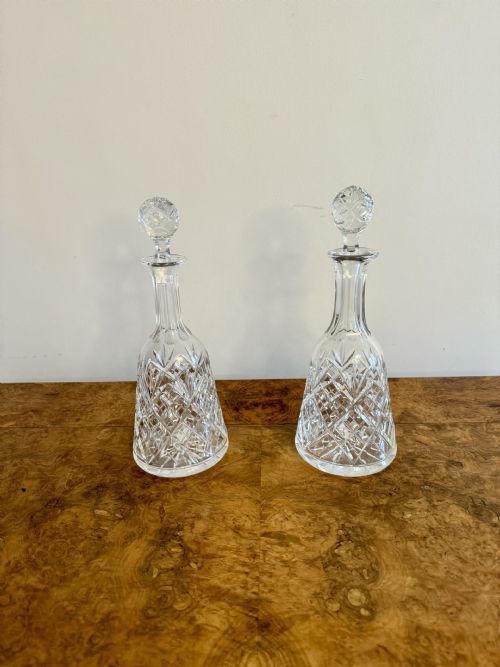
- A decanter shape featuring three distinctive horizontal neck rings, widening towards the base for stability. This form became standard during the Georgian and Regency periods.
- Overlay glass
- A technique where a layer of coloured glass is fused over a clear or contrasting body, then partially cut away to create patterns. This method produces dramatic colour contrast.
- Lead crystal
- Glass containing lead oxide, which increases weight, refractive index and brilliance. It allows for sharper facet cutting than standard soda-lime glass.
Antique Wine Glasses Pair: Frequently Asked Questions
Were these pairs used daily?
Many pairs served during formal dinners, celebrations and evening gatherings rather than everyday meals. Their survival in matched pairs suggests they were carefully stored between significant occasions.
Wealthy households kept specialised glassware for claret, hock, champagne and liqueurs. This curation protected delicate items from routine wear and tear.
How can I date my wine glasses?
Examine the weight, pontil mark on the base, and the style of the bowl and stem to determine the manufacturing period. Georgian pieces often feature heavier lead metal and plain stems, while Victorian examples frequently showcase vibrant colours and detailed engraving.
Comparing the silhouette and decorative techniques against documented examples helps narrow the decade of production. Stylistic shifts from Regency neoclassical lines to Victorian ornamentation provide reliable chronological markers.
Why are some antique glasses coloured?
Coloured glass was created by adding metallic oxides to the molten batch, a technique favoured during the Georgian and Victorian eras to add visual variety to the table. Shades like green, cranberry and amber became particularly fashionable for specific wines.
These rich hues also helped mask sediment in older wines before modern filtration methods were common. Makers utilised different mineral combinations to achieve distinct tones across various European glasshouses.