








Georgian Knopped Glass Stemware
Georgian knopped glass stemware brings tactile weight and optical brilliance to the table, uniting sturdy balusters and intricate air twists in drinking vessels designed for daily service or formal toast.
Georgian Knopped Glass Stemware
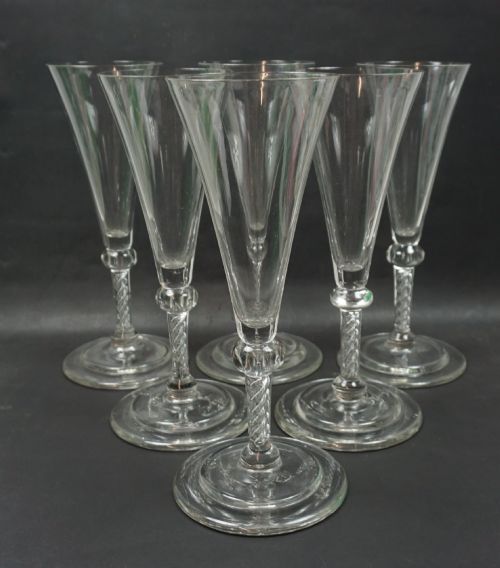
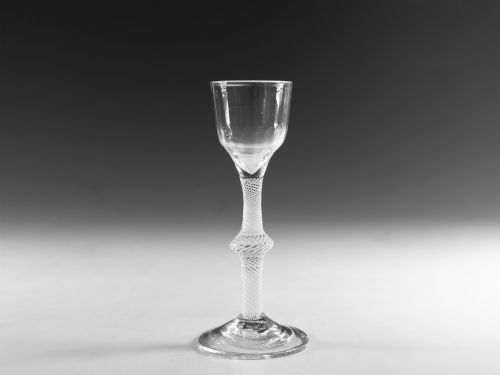
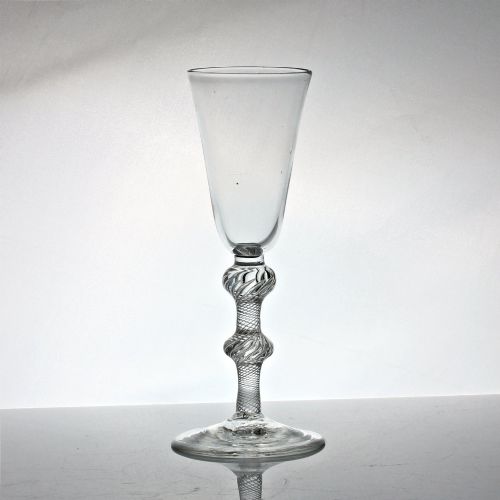
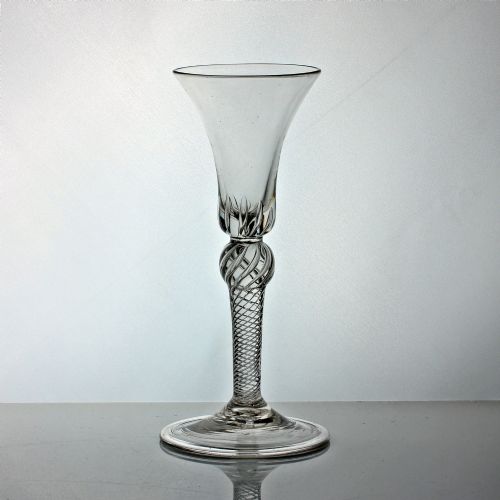
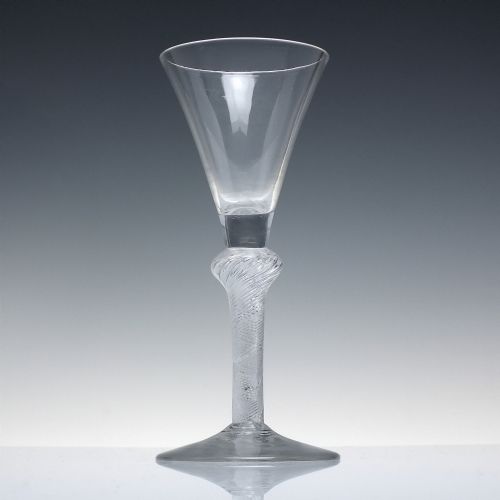
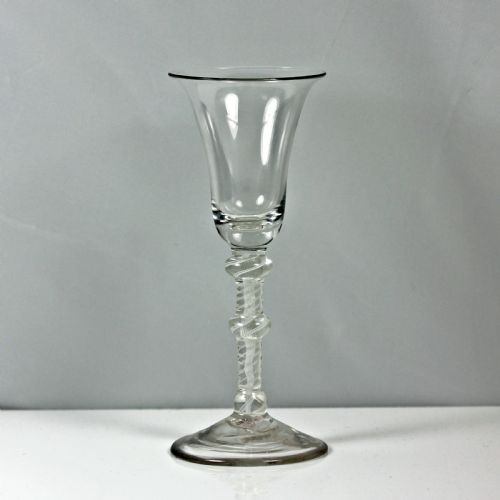
Georgian knopped glass stemware comprises drinking vessels, wine glasses, rummers, and flutes originating predominantly from the eighteenth century, alongside occasional Georgian Revival interpretations. A buyer searching this phrase encounters robust baluster wine glasses, slender air twist stems, and opaque twist variations featuring single, double, triple, or four distinct knops along the stem.
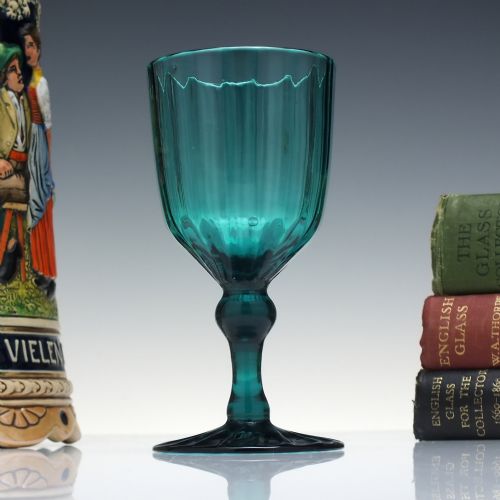
The assortment spans diverse bowl configurations, including bell bowls, cup bowls, pan top bowls, and rib-moulded or nut-moulded Liege forms. Dates extend from the early eighteenth century under Queen Anne and George II through to Regency armorial rummers and later twentieth-century air twist revivals.
Materials and construction
Maker operations utilised lead glass, lead crystal, flint glass, and clear glass, shaped through hand-blowing and mould-blowing techniques. Clear metal and dense lead crystal provide the essential refractive quality required for deep optical clarity.
Stems integrate complex internal structures, such as air-teared bubbles, multi-spiral air twists, and double-series opaque white enamel twists. Knops are formed by gathering and tooling the molten metal directly onto the stem, while feet frequently exhibit folded rims for added structural strength.
Listings feature lead glass and lead crystal alongside hand-blown clear metal, spanning periods from early eighteenth-century Queen Anne balusters to twentieth-century revivals.
Quality factors
Quality rests in the precision of the glassmaker's manipulation, distinguishing simple drawn stems from intricate multi-knop or multi-spiral twists requiring advanced thermal control. Heavier weight, balanced proportions between foot, stem, and bowl, and superior metal clarity elevate the standing of a vessel.
Additional distinction lies in decorative execution, where finely engraved armorials, crisp rib-moulding, or well-defined air tears surpass plain, unadorned counterparts in visual interest and technical difficulty.
The Georgian Knopped Glass Stemware Glossary
- Knop
- A thickened projection or knob formed on the stem of a drinking glass. It provides a secure grip and decorative interruption.
- Baluster
- A heavy, robust stem type derived from architectural forms, common in early eighteenth-century drinking vessels. These stems often feature swelling nodes and substantial proportions.
- Air twist
- A stem containing an internal spiral of elongated air bubbles trapped within the glass. This optical effect is achieved by drawing twisted canes or air beads.
- Opaque twist
- A stem incorporating internal threads of white enamel glass twisted into a spiral pattern. Double series versions combine outer white threads with inner gauze elements.
- Folded foot
- A glass foot where the outer rim is turned underneath during formation to create a thickened, rounded edge. This technique adds durability to the base.
Georgian Knopped Glass Stemware: Frequently Asked Questions
What is a knopped glass stem?
A knopped glass stem incorporates one or more prominent rounded nodes or swellings shaped along its vertical length. These raised sections serve both a decorative purpose and provide a secure finger grip.
Craftsmen formed these protuberances by manipulating the hot metal during the blowing and drawing process. Different styles employ single, double, or multiple knops to vary the visual weight of the vessel.
How do air twists and opaque twists differ?
Air twists contain spiralling threads of trapped air enclosed within the clear glass stem. Opaque twists substitute these air voids with solid threads of white enamel glass.
Both techniques require precise manipulation while the metal is hot to maintain an even, continuous spiral down the shaft. Opaque twists often appear in single or double series configurations combining different thread thicknesses.
Were these glasses used for wine?
These vessels functioned primarily for serving wine, ale, spirits, and gin during formal dining and social gatherings. Different bowl shapes, such as bell, cup, or pan top forms, suited specific beverages.
Larger rummers and goblets accommodated heavier pours or communal toasts. Smaller capacity glasses reflected the cost and potency of the drinks served in past centuries.
How do you date early glass stemware?
Dating relies on observing changes in stem construction, metal composition, and bowl morphology over time. Heavy baluster forms typically indicate early eighteenth-century production, while lighter air and opaque twists gained popularity around the middle decades.
Foot construction, pontil marks, and decorative engraving styles provide further chronological markers. Revivals from later periods often display different glass weights and manufacturing signatures.