




Antique Wine Bottle Caddy
An antique wine bottle caddy keeps fine vintages secure and close at hand during formal dining.
Antique Wine Bottle Caddy
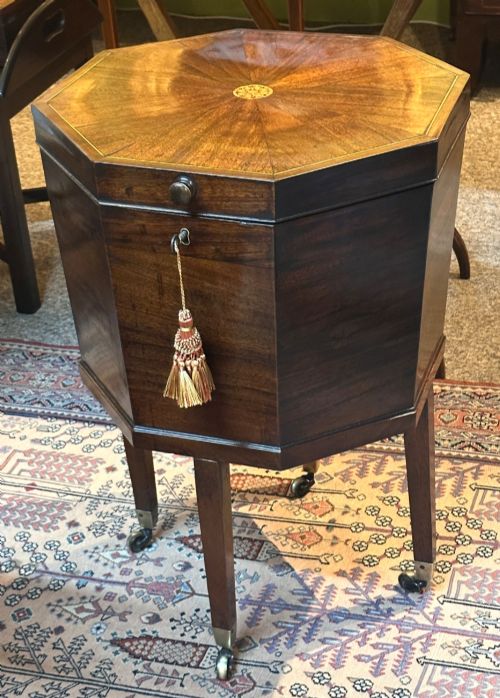
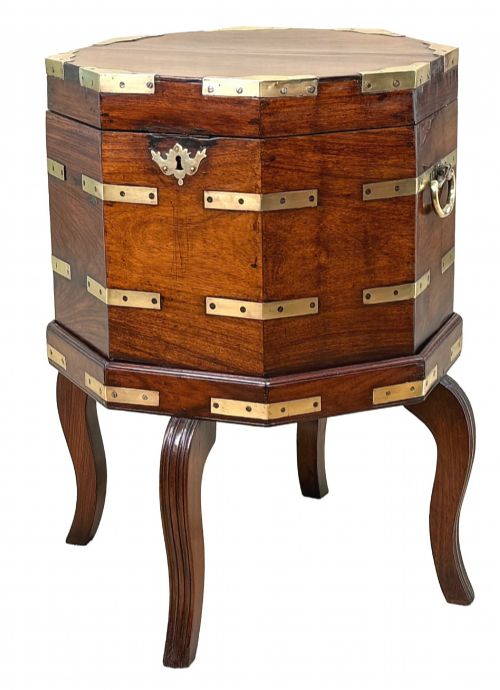
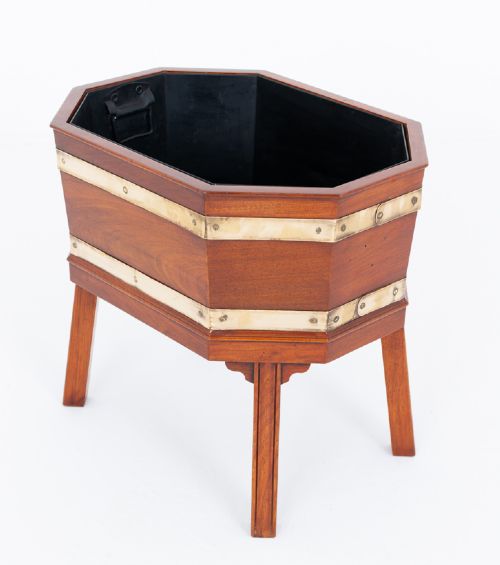
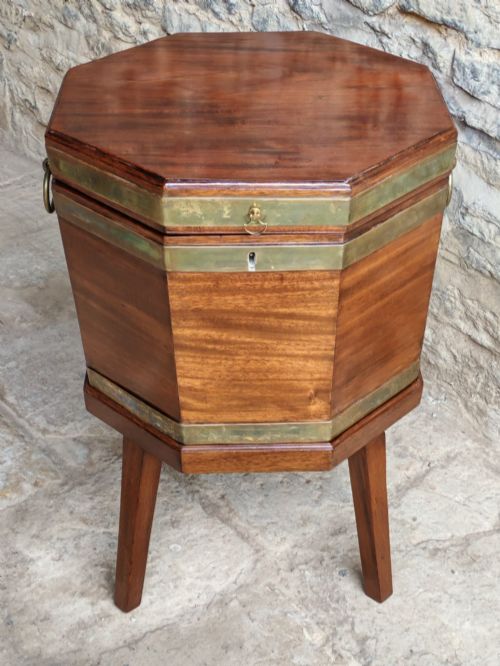
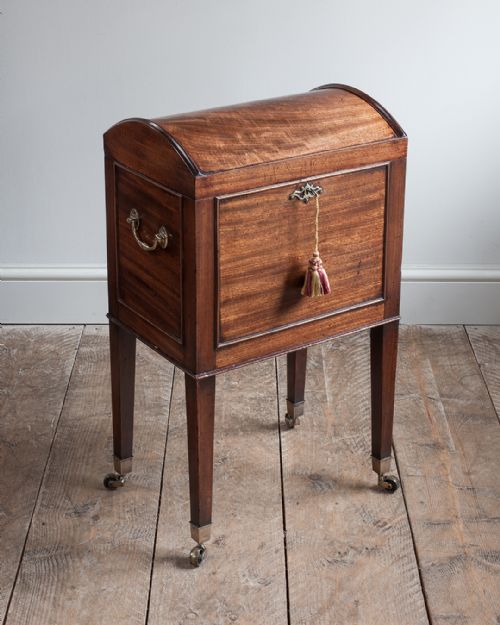
An antique wine bottle caddy is designed to hold, carry, or chill multiple bottles during a meal, appearing in forms ranging from partitioned carriers and freestanding stands to lidded box cellarettes. When searching for an antique wine bottle caddy, buyers most frequently encounter Georgian and nineteenth-century mahogany pieces, often octagonal or sarcophagus-shaped.
The objects serve the practical purpose of moving heavy glass and liquid from sideboard to table without spilling. Surviving examples reflect the evolving social rituals of dining across the eighteenth and nineteenth centuries.
Materials and construction
Cabinetmakers built these pieces primarily from solid mahogany and mahogany veneers, occasionally incorporating exotic timbers such as padouk, satinwood, and figured elm. Wood inlay, brass banding, and swing handles provided both structural reinforcement and decorative contrast.
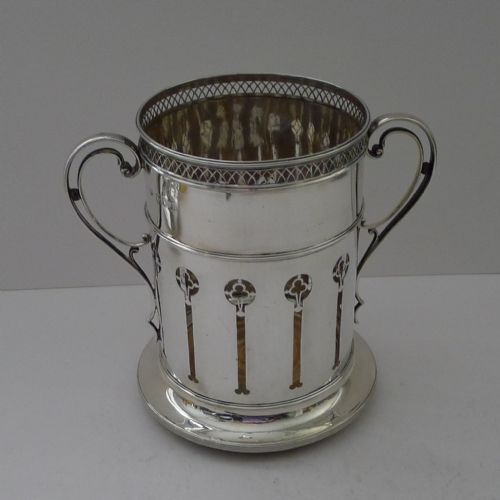
Metal versions utilise silver plate and solid sterling silver, often featuring cast mounts and central carrying shields. Interior lead linings appear in cooling vessels designed to hold ice around the bottles.
Early sommelier cases doubled as travel trunks, ensuring that fine claret survived bumpy carriage rides across the empire.
Assessment of quality
Quality rests upon the crispness of joinery, the selection of timber with rich figuring or patina, and the integration of original brass fitments. Pieces bearing documented workshop attributions or complex multi-section frames command particular attention from collectors.
Simpler carrier frames rely on the balance of the handle and the gauge of the metalwork or timber thickness. Finer boxes display precise wood inlay and well-fitted internal partitions rather than generic secondary woods.
Gillows·James Dixon
The Antique Wine Bottle Caddy Glossary
- Cellarette
- A lockable container designed to hold wine bottles near the dining table. They frequently take octagonal, box, or sarcophagus forms.
- Wine cooler
- A vessel lined to hold ice and water for chilling wine at table. Many double as bottle holders in larger dining suites.
- Padouk
- A heavy tropical timber exhibiting a reddish-brown tone. Makers utilised it in colonial pieces destined for British homes.
- Sarcophagus shaped
- A monumental casket form with a domed lid and flared base. Cabinetmakers favoured this profile during the Regency and William IV periods.
Antique Wine Bottle Caddy: Frequently Asked Questions
How were antique wine bottle caddies used?
Servants filled the wooden boxes with ice or positioned partitioned carriers on the dining floor or sideboard to keep multiple vintages accessible.
Guests selected their bottles from the stand during long meals without needing to fetch fresh stock from the cellar.
What woods appear most often?
Mahogany dominates the surviving examples, appearing in both solid boards and finely figured veneers across Georgian and Victorian periods.
Cabinetmakers also selected satinwood, padouk, and elm for specific regional or decorative commissions.
How do I date a cellarette?
Stylistic markers such as brass banding, tapered legs, or sarcophagus silhouettes align pieces with Georgian, Regency, or Victorian design phases.
Timber choice and interior construction methods provide further clues to the decade of manufacture.
Can I use them for modern bottles?
Most standard modern wine and champagne bottles fit comfortably into eighteenth and nineteenth century frame partitions and cooling wells.
Larger contemporary bottle shapes may require checking internal carrier diameters before placement.