


Antique Wine Accessories
Antique wine accessories bring functional craftsmanship to the table, offering silver funnels, coasters, and labels that transform pouring and serving drinks into a deliberate ritual.
Antique Wine Accessories
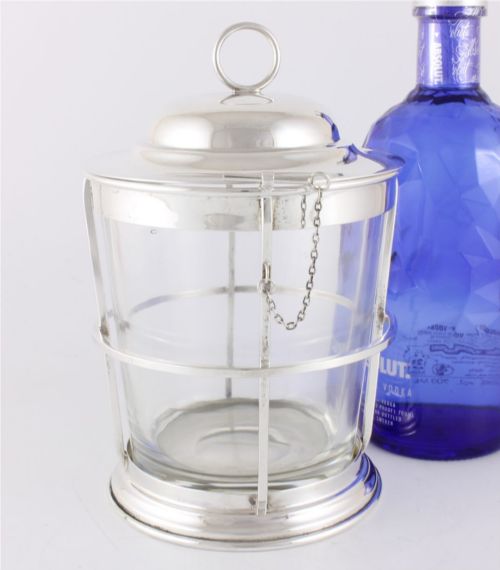
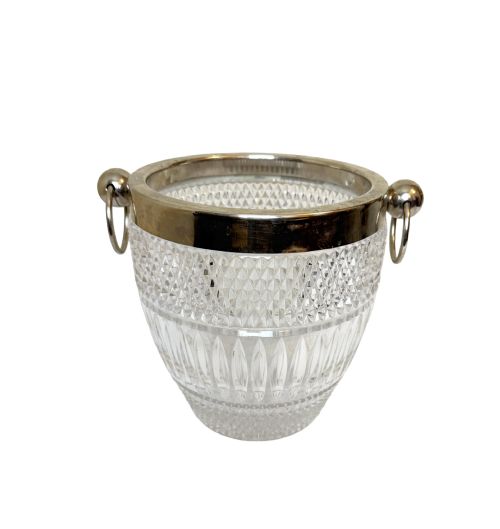
When you search for antique wine accessories, you encounter a range of items designed for serving and preserving bottles, spanning from Georgian dining rooms to mid-twentieth-century bars. The most common forms on this page include sterling silver and silver-plated wine coasters, decanter labels, wine funnels, and ice buckets.
The objects derive from periods such as the Georgian, Victorian, Regency, and Edwardian eras, reflecting the shifting social habits of British and continental dining. Makers and manufacturers adapted these implements for port, sherry, claret, and champagne, producing practical utensils that doubled as table decoration.
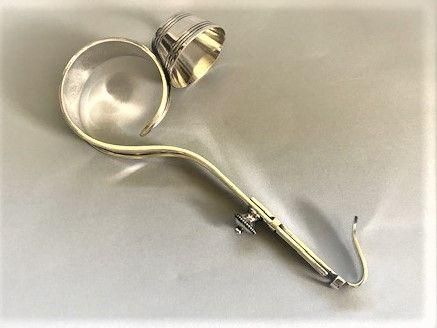
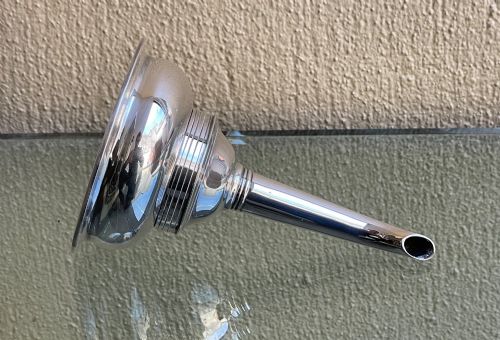
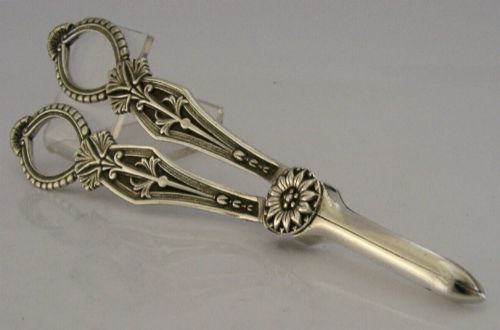
Among these pieces, wine coasters in silver plate, mahogany, and treen appear frequently alongside silver funnels with pierced bowls. Collectors also find specialised barware such as grape shears, toddy lifters, and bottle cradles that complete a traditional service.
How they were made
Silversmiths constructed funnels, coasters, and labels using sterling silver or Old Sheffield plate, often employing piercing, chasing, and engraving to render vine leaves and gadroon borders. Heavier items combined cast sterling elements with turned wood bases in mahogany or oak.
Makers utilised cut glass and crystal for ice bucket liners and toddy lifters, pairing them with brass, copper, and silver-plated mounts. Treen pieces and papier-mâché items received turned wooden construction and hand-gilded decoration.
Listings feature materials spanning sterling silver, silver plate, mahogany, cut glass, copper, and papier-mâché across multiple centuries.
What varies in quality
The gauge of the metal separates standard production from superior pieces, particularly in wine funnels and coasters where substantial weight indicates better durability. Thicker silver plate resists wear down to the base metal better than thin electroplate.
Refinement in chasing and the crispness of hallmarks or maker marks distinguish workshops such as those of Solomon Hougham from unmarked commercial output. Original matching pairs of coasters and intact glass liners retain more integrity than mismatched assemblies.
PH Vogel·Lowe & Sone·Solomon Hougham·Brook & Son·Christofle·James Dixon & Sons
The Antique Wine Accessories Glossary
- Wine Funnel
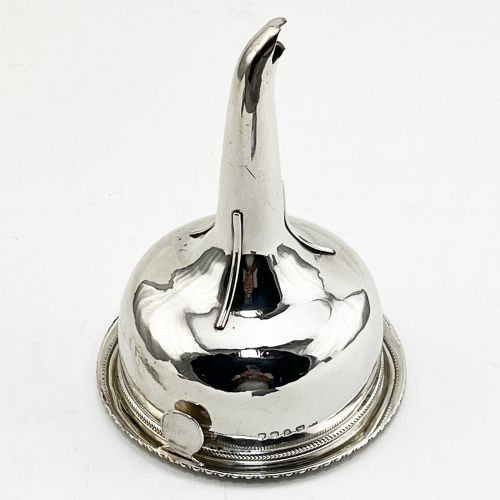
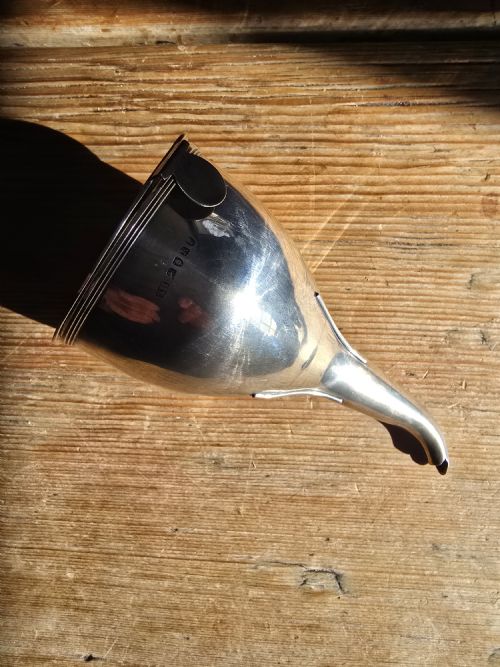
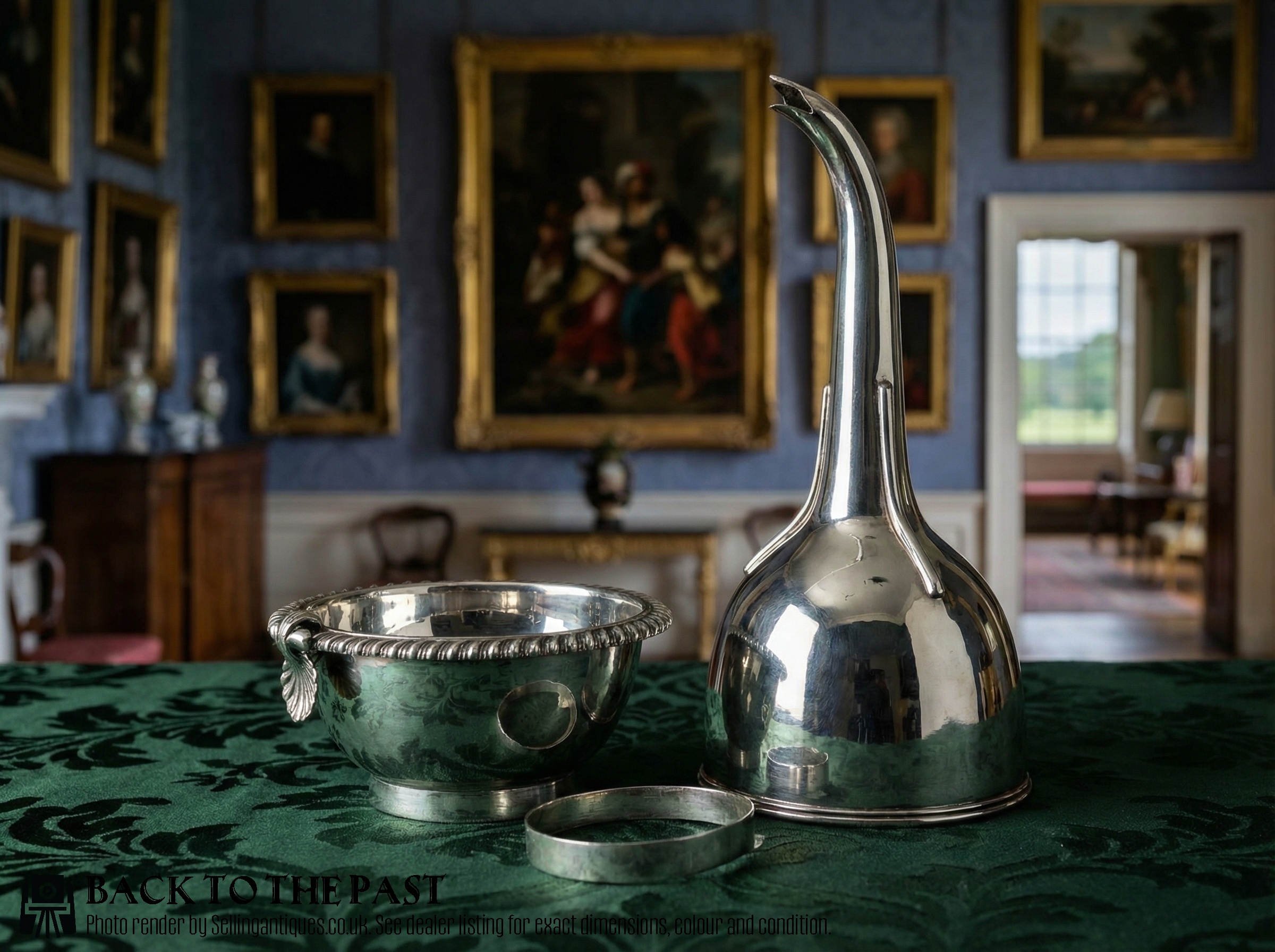
- A portable funnel with a removable pierced strainer used to decant wine and catch sediment. These often separate into two or three parts for cleaning.
- Decanter Label
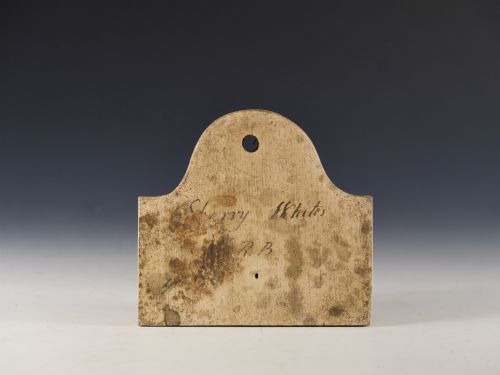
- A small tag suspended by a chain around the neck of a bottle or decanter to identify the contents. Examples are stamped or cast with names like sherry, port, or claret.
- Wine Coaster
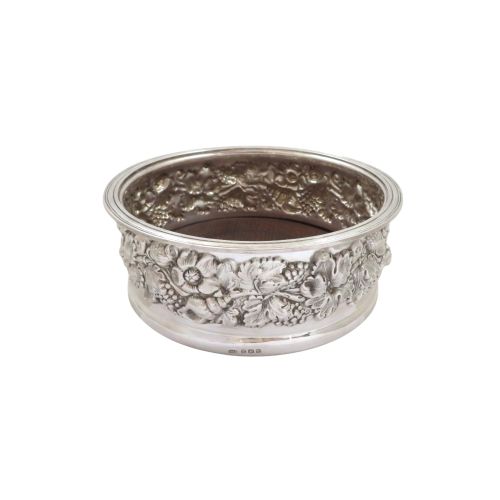
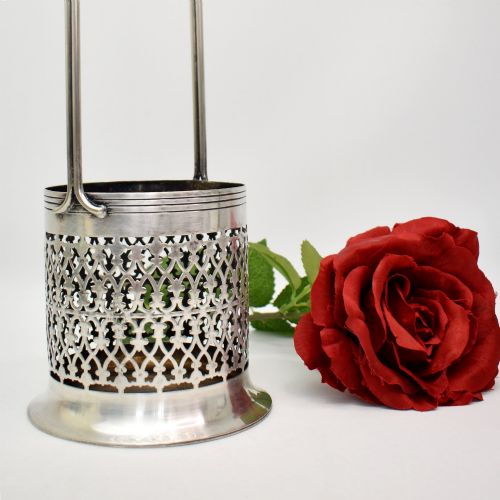
- A small disc or tray with a raised rim, placed under a wine bottle to protect the table surface. They frequently feature turned mahogany bases fitted with silver-plated or sterling galleries.
- Toddy Lifter
- A small glass pipelining tool used to transfer hot punch or toddy from a communal bowl to individual glasses. Users seal the top hole with a thumb to lift the liquid.
- Old Sheffield Plate
- A composite material formed by fusing a sheet of silver to a copper ingot before rolling. This technique predates modern electroplating.
Antique Wine Accessories: Frequently Asked Questions
How do I identify a decanter label's age?
Makers marked silver decanter labels with assay office symbols, date letters, and monarch's heads during the Georgian and Victorian periods.
Style also indicates era, moving from plain rectangles to cast vine leaves and Gothic Revival motifs.
Are silver plated coasters durable?
Silver plated items manufactured with thick gauge metal withstand regular handling and polishing across generations.
Careful cleaning preserves the underlying plating from wearing away at the raised edges.
What are wooden bottle coasters made from?
Coasters utilise turned timbers like mahogany and oak, frequently centred with brass buttons or fitted with silver-plated rims.
Treen and papier-mâché versions provide lighter alternatives for nineteenth-century dining tables.