


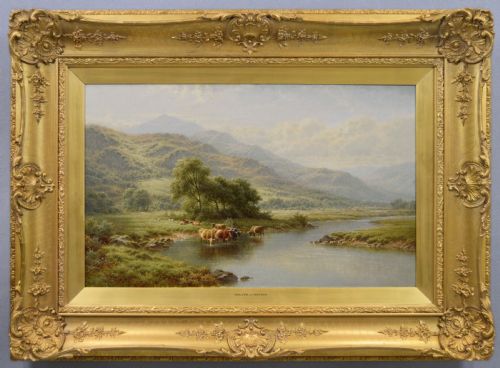


Antique Welsh Fine Art
These pieces of antique welsh fine art bring nineteenth-century landscapes and vernacular craft into your home.
Antique Welsh Fine Art
When you search for antique welsh fine art, you encounter oil paintings, watercolours, and carved wooden lovespoons from the eighteenth, nineteenth, and early twentieth centuries. These works capture the mountains, rivers, and rural life of Wales through the eyes of both local painters and visiting artists.
The oil paintings and watercolours on this page predominantly depict Welsh scenery, including views near the River Conwy, Snowdonia, and Cardigan Bay. Alongside these framed pictures, you find traditional folk art objects such as sprung iron rushlight holders and carved fruitwood spoons.
The selection bridges academic Victorian landscape painting and vernacular Welsh craft. Most items date from the Victorian period and the late Georgian era, reflecting a time when artists increasingly turned to the Welsh countryside for inspiration.
How they were made
Painters of this era worked primarily in oil on canvas or applied watercolour to paper, capturing atmospheric light and weather across the Welsh landscape. Frames were typically constructed from wood and finished with gesso and gilt, sometimes complemented by glass to protect watercolours.
Some nineteenth-century artists clearly struggled to paint docile cattle, rendering Welsh cows with the athletic intensity of racehorses.
What varies in quality
The distinction between ordinary and exceptional works rests upon the artist's handling of light, brushwork precision, and the specificity of the location recorded. Named nineteenth-century painters command attention through their ability to render distinct topography and atmospheric depth rather than generic pastoral scenes.
In carved and forged items, quality is evident in the crispness of the initialling and polychrome wax details on lovespoons, or the balanced tension of the sprung iron in rushlight holders. Greater care in material selection and execution elevates individual pieces above standard domestic wares.
Cornelius Pearson·Thomas Spinks·Sidney Richard Percy·Charles Leslie·Herbert Royle·Samuel Sidley·Walter J Watson·David Bates·Thomas Swift Hutton·Alfred Provis·George Parson Norman·James Poole·Lucy Kemp Welch·William Mander·Henry Bright
The Antique Welsh Fine Art Glossary
- Gesso
- A plaster mix applied to wood frames before gilding. It provides a smooth surface for the application of gold leaf.
- Rushlight holder
- A weighted iron stand with a spring mechanism to grip rush pith dipped in fat. These served as portable indoor lighting before candles became common.
- Vernacular art
- Objects and paintings created by local artisans or self-taught makers using regional traditions. These pieces reflect everyday rural culture rather than academic fine art conventions.
- Giltwood
- Timber carved and coated with gold leaf or gold paint. It frequently surrounds nineteenth-century oil paintings and watercolours.
- Polychrome
- Decorated in multiple colours. In folk art, this often involves tinted wax inlay on carved wooden surfaces.
Antique Welsh Fine Art: Frequently Asked Questions
What subjects appear in these Welsh paintings?
The canvases and watercolours depict rivers, mountain ranges, and rural cottages across North and South Wales. Artists frequently recorded specific sites such as the Conwy River, Snowdonia, and Cader Idris.
These landscapes often feature incidental figures, cattle, or local inhabitants engaged in daily tasks. The focus rests heavily on the dramatic topography and changing weather of the Welsh countryside.
How do I date a nineteenth-century landscape?
Makers and artists often inscribed dates, titles, or signatures directly onto the canvas or verso. Stylistic markers such as Victorian framing methods and pigment composition also assist with dating.
Examine the stretcher frames and canvas types for further clues. Documentation or exhibition labels on the reverse provide definitive chronological anchors.
Where should I hang an oil painting?
Select an interior wall away from direct sunlight and fluctuating heat sources. Natural daylight reveals the subtle brushwork and varnish layers without causing fading.
Ensure the wall supports the weight of the heavy giltwood frames commonly found on these works. Adequate spacing allows the regional landscapes to command the room.
What is a Welsh lovespoon?
A lovespoon is a traditional carved wooden spoon presented as a token of affection or engagement. Makers fashioned them from single pieces of timber, incorporating intricate symbols.
Examples often feature initialling, chain links, and polychrome wax decoration. They represent a distinct branch of Welsh folk art distinct from painted fine art.