
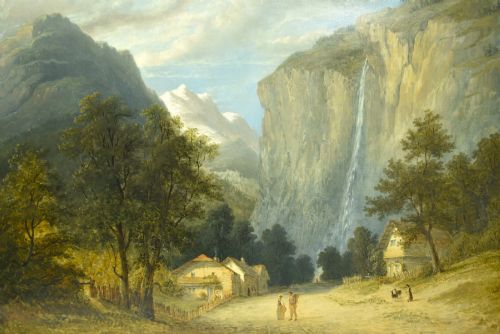


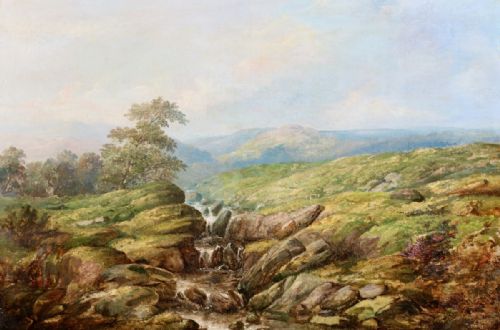


Antique Waterfall Oil Painting
An antique waterfall oil painting captures nineteenth-century landscape scenes with rushing water, bringing the drama of nature indoors.
Antique Waterfall Oil Painting
An antique waterfall oil painting represents a specific branch of nineteenth-century landscape art, focusing on cascades, rivers, and rugged terrain. These works capture locations from British, Swiss, and North American settings, often framing the water with wooded glens, mountains, or architectural ruins.
The pieces appearing on this page span the Victorian era, utilising styles such as Romanticism, Victorian Naturalism, and Continental realism. Buyers frequently encounter framed canvases depicting specific geographical landmarks like Swiss falls or Welsh valleys, painted by listed artists or competent regional schools.
How they were made
Artists painted these works primarily using oil pigments spread across stretched canvas or prepared wooden boards. Canvas provided a flexible support for large landscape vistas, allowing painters to build texture and depth across mountainous backgrounds and rushing rivers.
Frames form an integral part of the construction, commonly fashioned from wood, gesso, and gilded material. Original giltwood and solid wood frames protect the canvas while adding the heavy ornamentation typical of nineteenth-century presentation.
Materials recorded across these landscapes include oil on canvas, wood panels, gesso, and original gilded wood frames.
What varies in quality
Quality rests heavily on the handling of light and water movement, distinguishing master handwork from formulaic studio production. Superior examples capture the specific atmospheric conditions of spray, mist, and rushing force rather than relying on generic formulas.
The framing and provenance equally influence the standing of a piece. Original gilt frames that match the age of the canvas and documented signatures from recognised nineteenth-century painters elevate a work above unsigned school pieces.
Alexandre Le Bihan·Clarence Henry Roe·William Mellor·John Syer junior·Frederick Richard Lee·James Poole·Peter de Wint·Axel Nordgren·William James Smith Crampton
The Antique Waterfall Oil Painting Glossary
- Gesso
- A plaster-like mixture applied to wooden frame mouldings before gilding. It provides a smooth base for intricate decorative carving.
- Continental School
- A term used for nineteenth-century artists trained in mainland Europe rather than Britain. These works often show distinct approaches to light and alpine topography.
- Giltwood
- Timber that has been coated with a thin layer of gold leaf or gold paint. It frames many Victorian landscape paintings.
- Romanticism
- An artistic movement emphasising emotion, individualism, and the sublime power of nature. Waterfall scenes frequently embody this dramatic aesthetic.
- Victorian Naturalism
- A detailed style of painting focusing on accurate observation of the natural world. Artists sought to render foliage, rocks, and water with precise realism.
Antique Waterfall Oil Painting: Frequently Asked Questions
Where were these paintings hung originally?
Nineteenth-century collectors displayed these landscapes in domestic reception rooms and parlours, where large gilded frames projected status and refined taste.
Today, they suit traditional interiors, libraries, or studies, continuing their original purpose as focal points for wall display.
How do I identify the period?
Period indicators include the canvas preparation, stretcher construction, and the style of the original wooden frame. Victorian works frequently utilise heavy gesso mouldings and specific nineteenth-century pigment mixtures.
Signatures, artist registry records, and inscriptions on the reverse also help date the work to specific decades like the eighteen-seventies or eighteen-eighties.
Are these works signed?
Some canvases bear clear signatures from identifiable nineteenth-century painters, while others remain attributed to British or Continental schools.
Unsigned works rely on stylistic evidence, brushwork technique, and framing style to suggest their origin and approximate date of creation.
How do I care for an oil painting?
Keep the canvas away from direct sunlight and dramatic fluctuations in household temperature. Dust the surface and the gilded frame gently with a dry, soft brush.
Avoid using water or chemical cleaners on the paint layer or the fragile gesso frame mouldings.