

Antique Waterfall Bookshelf
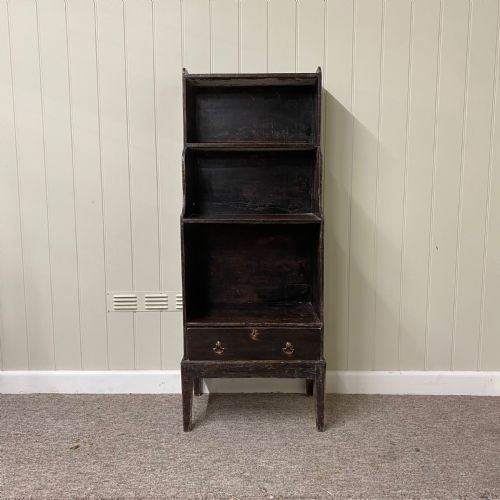
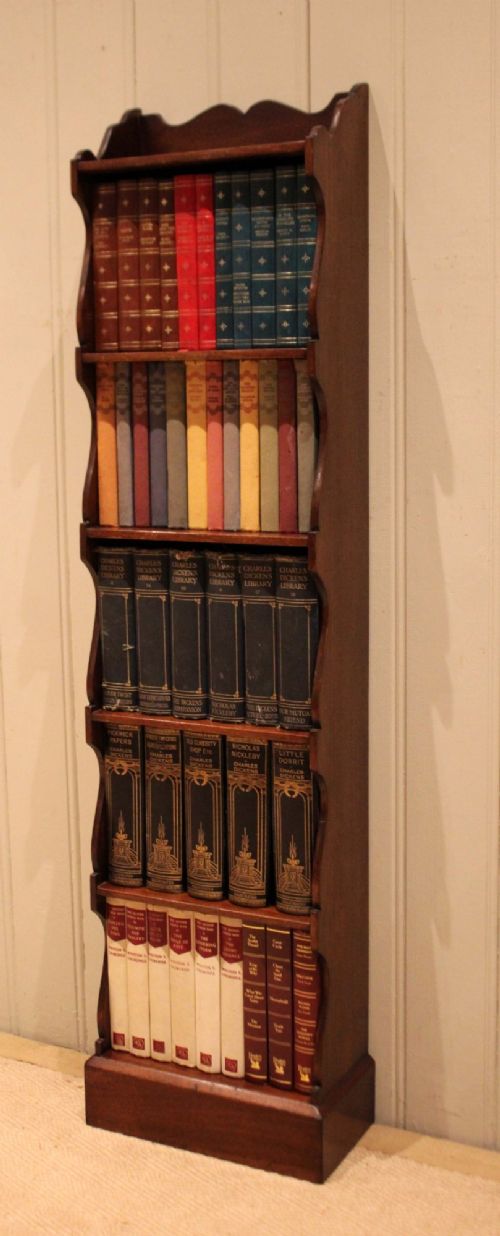
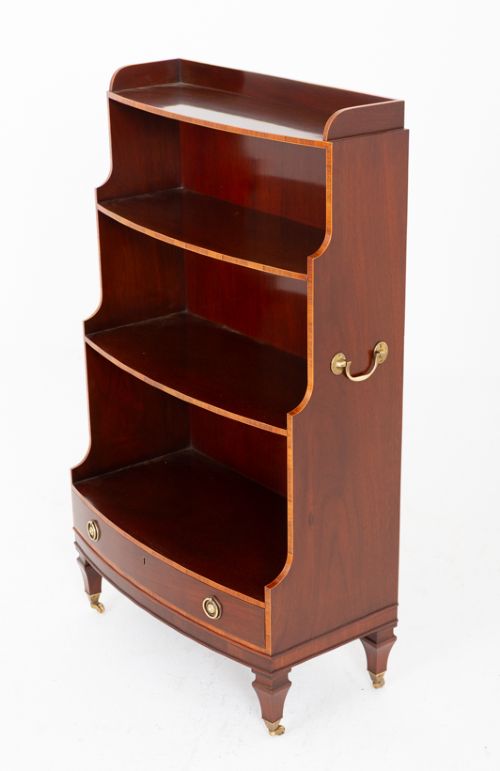
An antique waterfall bookshelf brings stepped, open tiers of timber into a room to hold books and display objects with practical elegance.

Antique Waterfall Bookshelf
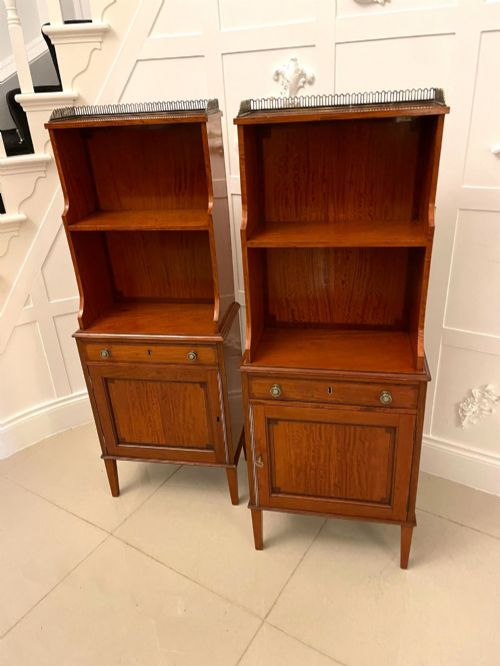
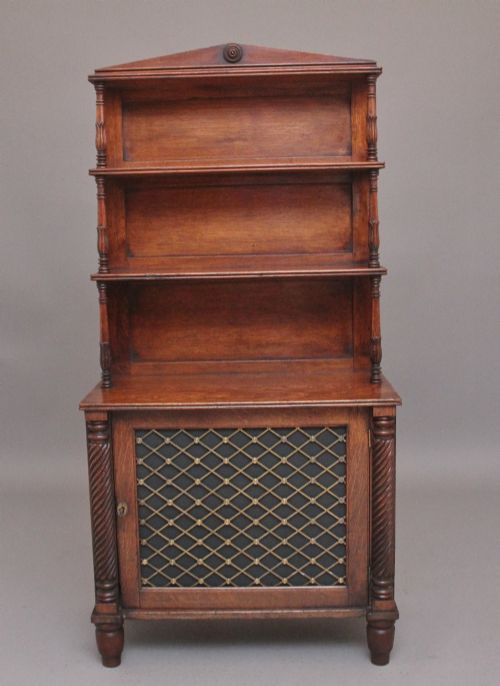
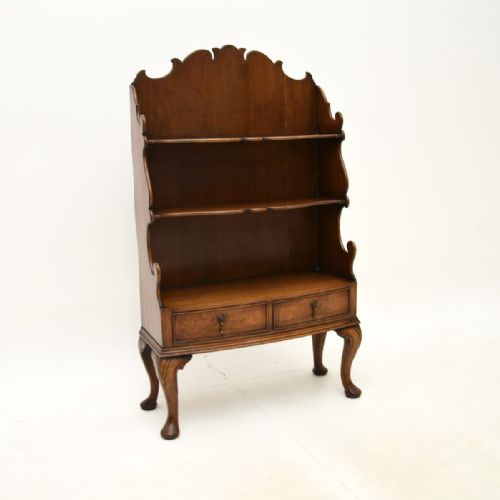
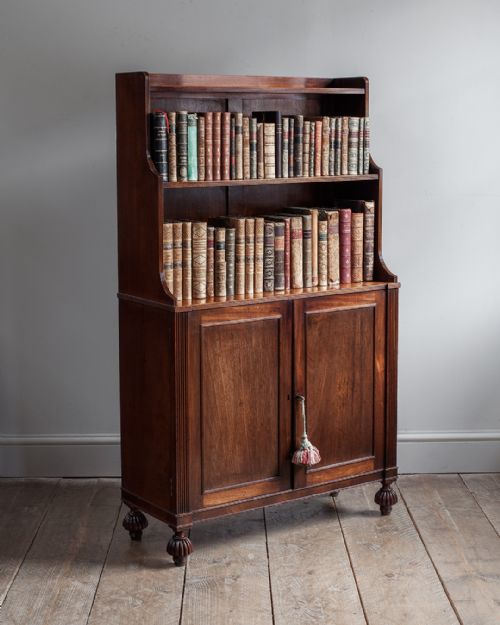
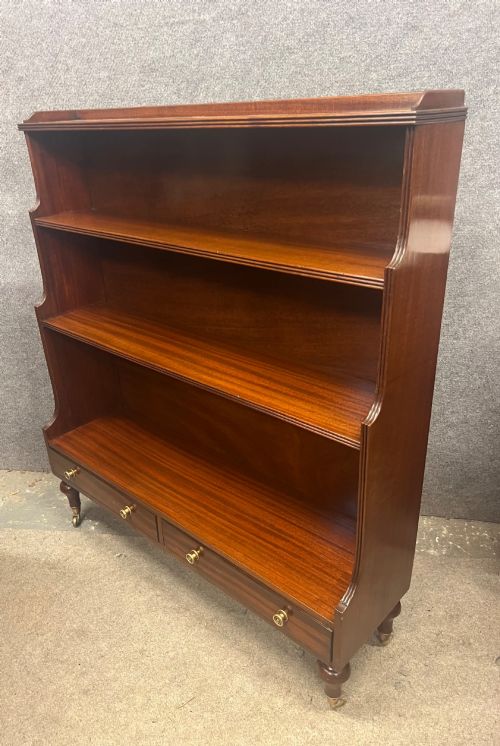
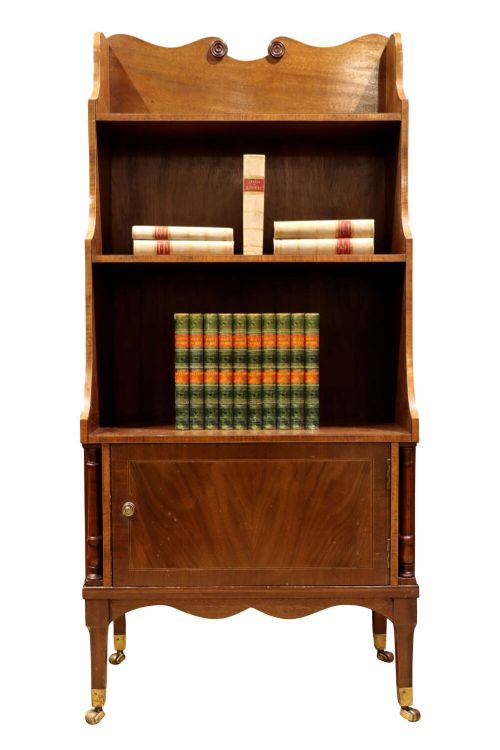
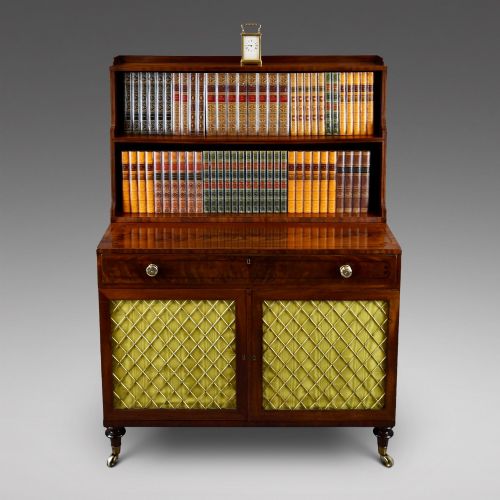
Makers and cabinetmakers built these pieces across several distinct periods, including the Georgian, Regency, Victorian, and Edwardian eras. Pieces often arrive as freestanding library furniture or lower bedside cabinets, while pairs appear occasionally alongside single items. The stepped arrangement prioritises display space without dominating floor area, making them adaptable for different rooms.
Materials and Construction
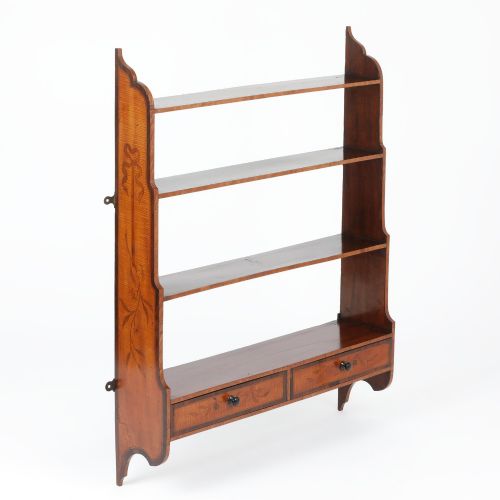
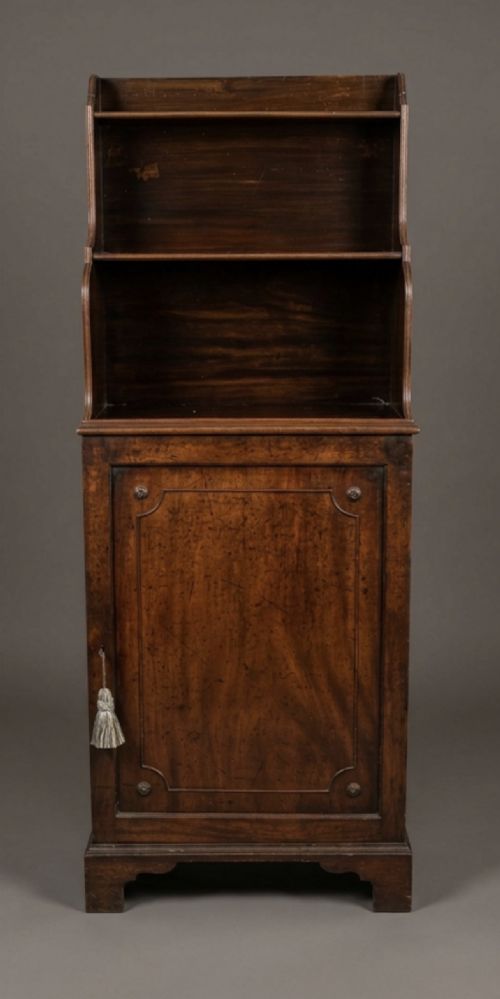
Cabinetmakers utilised dense tropical hardwoods such as mahogany and rosewood, frequently incorporating decorative crossbanding, boxwood stringing, and inlaid details to frame the stepped shelves. Satinwood and yew wood also appear in finer examples, offering lighter contrasting tones against darker grains.
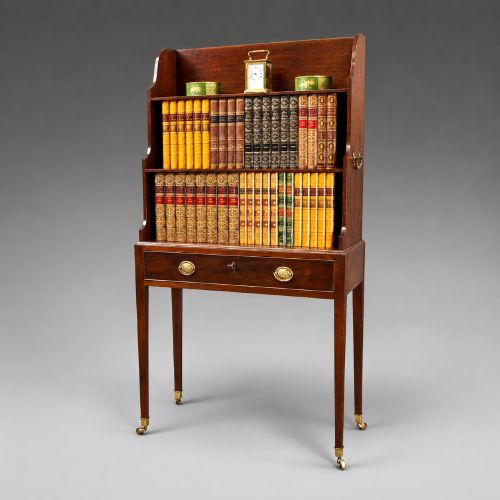
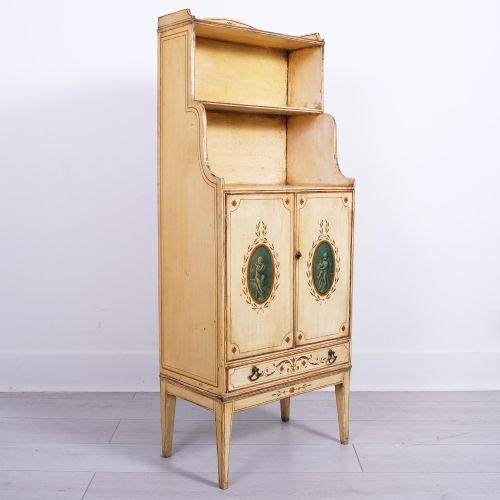
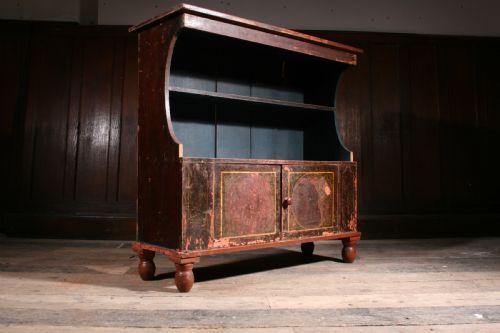
Structural additions include brass castors for mobility on larger library pieces, fret-cut panels on oak variants, and painted finishes applied directly to timber. Cupboard bases and lower drawer sections add enclosed storage beneath the open cascading tiers.
Antique Waterfall Bookshelf Retail Price Guide 2026
Typical asking prices for waterfall bookshelf among the pieces listed under this phrase on Sellingantiques today, from the lower quarter to the upper quarter. They describe what is for sale here now, not the wider market.
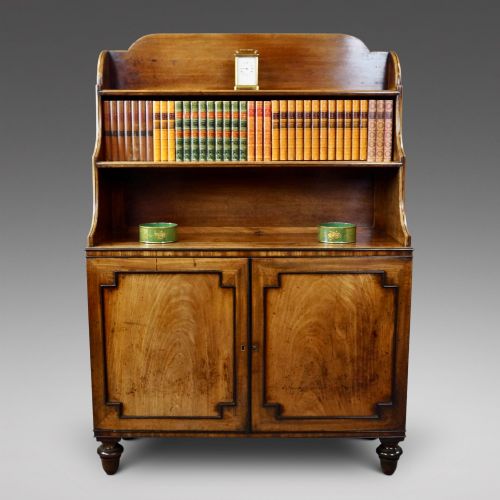
Some shelves roll easily on brass castors, ready to follow you around the library.
Differentiating Quality in Tiers and Timbers
The sophistication of the design dictates distinction, moving from plain oak or painted pine versions to intricately inlaid satinwood, rosewood, or mahogany pieces. Maker attribution and matched pairs elevate the standing of specific examples within the range.
Gillows·Shapland & Petter
The Antique Waterfall Bookshelf Glossary
- Waterfall bookcase
- A set of open shelves stepped back progressively from bottom to top. This form maximises visible storage and display space.
- Crossbanding
- A border of veneer laid with the grain running perpendicular to the main surface. This technique frames panels and shelves with contrasting grain patterns.
- Stringing
- A thin inlay of light-coloured wood inserted into dark timber to create decorative outlines. It defines edges on shelves and cabinet doors.
- Etagere
- A piece of furniture consisting of a set of open shelves for displaying small objects. These open tiers function similarly to cascading bookshelf designs.
- Simulated rosewood
- Painted or stained timber finished to imitate the grain and colour of genuine rosewood. Cabinetmakers utilised this method to achieve expensive appearances affordably.
Antique Waterfall Bookshelf: Frequently Asked Questions
What is a waterfall bookshelf?
A waterfall bookshelf is a tiered storage piece where each upper shelf is narrower than the one below, forming a stepped profile resembling cascading water.
Cabinetmakers designed these open shelves to hold books and display decorative objects efficiently while occupying minimal floor space.
How were these bookcases used?
Owners placed these bookcases in libraries, studies, and parlours to keep frequently read volumes within easy reach and to display small ornaments.
Larger versions with lower cupboards provided enclosed storage for additional papers or household items beneath the open display tiers.
How do I date an antique bookshelf?
Dating relies on identifying the timber choices, decorative inlay techniques, and prevailing cabinetmaking styles associated with periods like the Georgian, Regency, or Edwardian eras.
Examining construction methods and secondary woods inside drawers or backing boards helps confirm the manufacturing period.
Are these bookcases freestanding?
Many examples are freestanding pieces designed to stand against a wall or function as low bedside cabinets within a room.
Other variations include hanging shelves intended to be secured directly to a wall to save floor space.