


Antique Watercolour Interior Painting
An antique watercolour interior painting captures domestic and civic life from the nineteenth and early twentieth centuries through delicate washes of pigment on paper.
Antique Watercolour Interior Painting
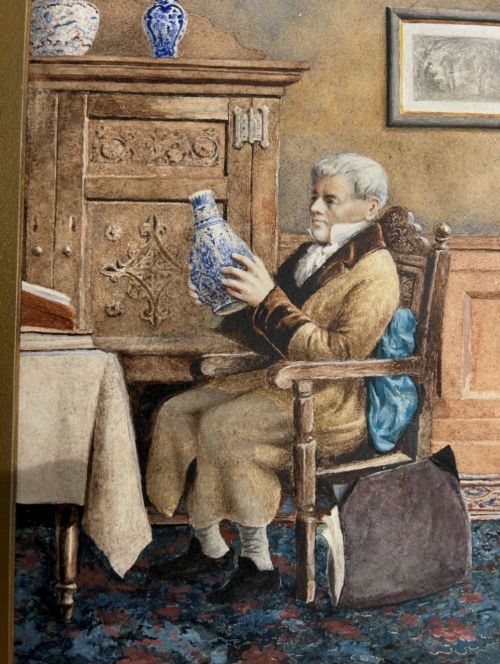
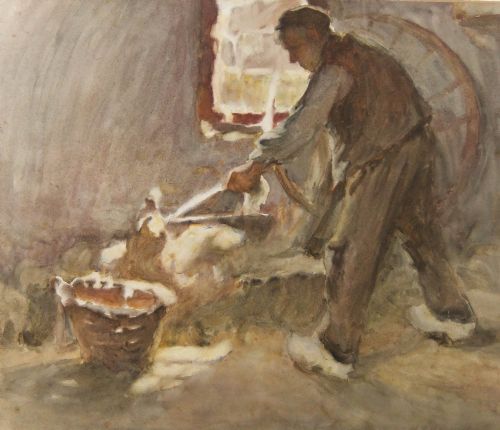
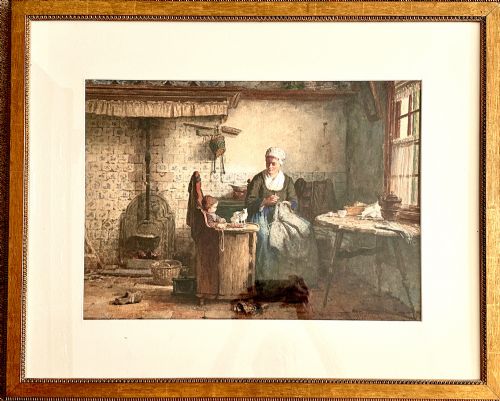
An antique watercolour interior painting depicts scenes within domestic rooms, country houses, cottages, inns, and grand ecclesiastical spaces such as cathedrals. These works record intimate domestic moments, from a blacksmith at work to figures reading by a fireside, alongside grand architectural interiors like long galleries and church naves.
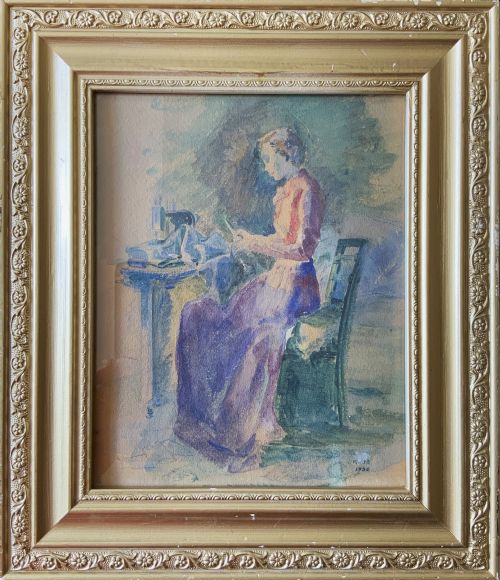
The selection ranges from Victorian genre scenes and naive folk art to British impressionism and pieces tied to the Scottish School. Buyers encounter works produced across the nineteenth century and into the early decades of the twentieth century, framed under glass in wood and gilt frames.
Domestic genre subjects predominate, populated by seated ladies, children, musicians, and craftsmen engaged in daily routines. Architectural studies of church interiors and historic houses also appear frequently alongside original wallpaper designs created for interior design firms.
How they were made
Artists applied water-soluble pigment onto paper supports, sometimes utilising bodycolour or sepia ink to build depth and contrast. The transparent nature of watercolour required precise brushwork, as lighter tones were preserved by leaving the white paper untouched beneath thin washes of colour.
Finished sheets were secured behind glass and mounted within wooden frames, occasionally enhanced with gold leaf moulding or gilt wood accents to protect the delicate pigment from environmental damage.
Several interiors quietly star domestic animals, including goldfish and observant dogs supervising family life from the hearthrug.
What varies in quality
Mastery of perspective and spatial depth distinguishes accomplished interior views from simpler compositions, particularly when artists render complex architectural elements like vaulted cathedral ceilings or wood-panelled long galleries. The ability to capture natural light filtering through windows or illuminating a dark fireside defines the technical skill of the hand.
The treatment of human figures within the space determines the artistic standing of a piece; expressive faces and natural postures elevate genre scenes above stiff or formulaic portraiture. Furthermore, the handling of secondary details, such as furnishings, paintings on the wall, and textiles, adds texture and credibility to the depicted room.
Henry Silkstone Hopwood·Hendrik Valkenberg·James Hayllar·George Kilburne·Robert Eadie·Roland Batchelor·Leonardo Morello·Henry Spernon Tozer·John R. Houston·Owen Bowen·Margaret Thompson·George Cattermole·K B Curtis·Dorofield Hardy·Charles James Barraud·Ernest Forbes·W H Sweet·James Shaw Crompton·F Stanfield·A McArthur·Arnold Willms
The Antique Watercolour Interior Painting Glossary
- Watercolour
- A painting method in which natural pigments are suspended in a water-soluble binder and applied to paper. This medium relies on the luminosity of the underlying paper showing through translucent washes.
- Genre painting
- Artwork depicting scenes from everyday life, typically featuring ordinary people engaged in domestic tasks or social pastimes. These works offer a window into historical fashions and domestic interiors.
- Gilt wood
- Wood that has been coated with a thin layer of gold leaf or metallic powder. Frames made this way often complement antique works on paper.
- Sepia
- A brown pigment derived from the ink sac of the cuttlefish, frequently used for monochrome drawings and tonal interior studies. Artists favoured it for establishing deep shadows and atmospheric warmth.
- Bodycolour
- Watercolour paint mixed with a white pigment to make it opaque rather than transparent. This technique allows artists to add highlights and solid passages over translucent washes.
Antique Watercolour Interior Painting: Frequently Asked Questions
What periods do these interior paintings cover?
The available selection spans from the nineteenth century through the Edwardian era and into the 1930s. Many pieces reflect Victorian tastes and early twentieth-century British and Scottish artistic traditions.
Dates range from mid-nineteenth-century architectural studies to works produced around the First World War and slightly beyond.
How should I care for an antique watercolour?
Watercolours are sensitive to bright light and damp conditions, which can cause the pigments to fade and the paper to discolour. Hang your painting away from direct sunlight and areas prone to high humidity.
Ensure the framing remains sealed to protect the paper surface from dust and atmospheric pollutants over time.
What types of rooms are usually depicted?
Artists painted a wide variety of spaces, ranging from modest cottage interiors and smithies to grand country house drawing rooms and long galleries. Cathedral interiors and church architecture also feature prominently among architectural studies.
These settings provide a record of historic domestic decor, furniture, and room layouts from past centuries.
Are these paintings signed by the artists?
Many of the works bear signatures, monograms, or attribution to listed artists and specific English or Scottish schools. Some historical pieces remain unsigned or attributed to broader schools of the period.
Signatures help place works within the output of known watercolourists active during the Victorian and Edwardian periods.